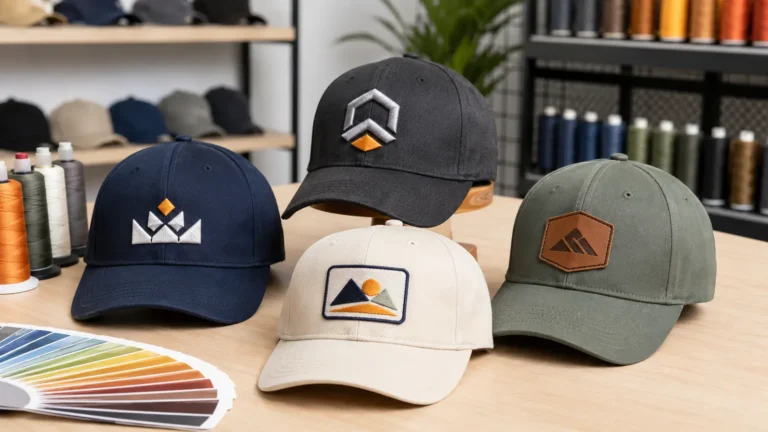
Baseball Cap Logo Ideas and Decoration Methods
A logo can turn a baseball cap into a team identifier, a retail product, a staff uniform or a useful promotional item. Yet a strong digital logo does not automatically become a strong cap decoration. The curved crown, center seam, fabric, cap profile and production method all change how the artwork looks when worn.
For buyers ordering custom caps in volume, the important decision is not simply “embroidered or printed.” It is how the logo concept, placement, scale, cap construction and decoration method work together. A bold monogram may suit 3D puff embroidery, while a detailed crest may reproduce more accurately as a woven patch. A tonal corporate mark may need only flat embroidery. A photographic graphic may require a transfer rather than stitches.
This guide explains practical baseball cap logo ideas and decoration methods for sports teams, schools, apparel brands, distributors, corporate programs and promotional buyers. It also shows what to include in a quotation request, how to review a sample and how to avoid expensive artwork revisions after production begins.
Quick Answer: The most reliable baseball cap logo ideas use simplified shapes, clear contrast and a size matched to the crown. Flat embroidery is the most versatile choice for many team and corporate logos. 3D puff works best for bold letters and thick shapes. Woven patches suit fine detail, embroidered patches create a classic textured look, rubber/PVC patches add a modern dimensional surface, leather-style patches support a heritage or outdoor aesthetic, and heat transfers reproduce gradients or complex color efficiently. The right method depends on the artwork, cap fabric, placement, quantity, target look and care expectations.
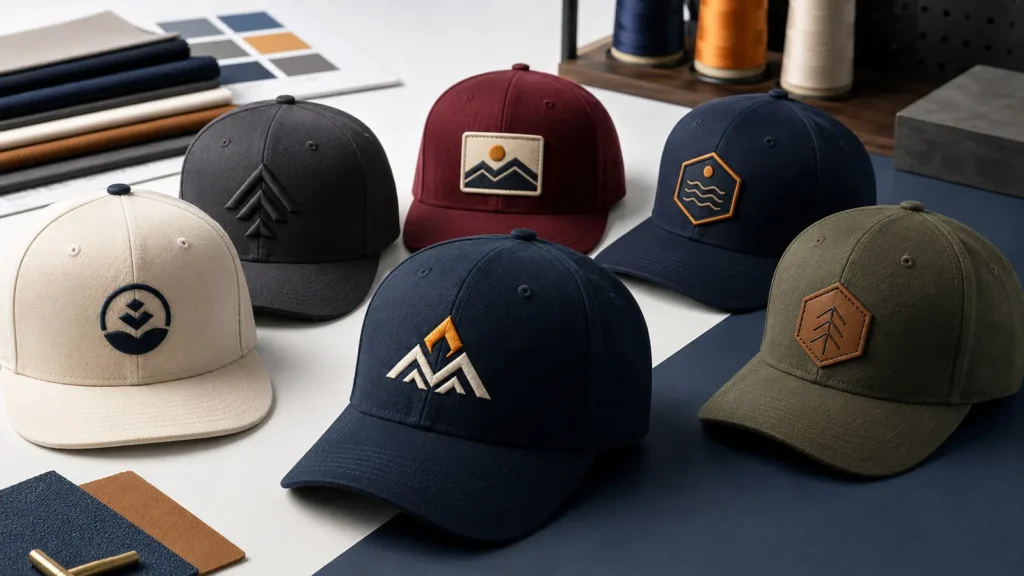
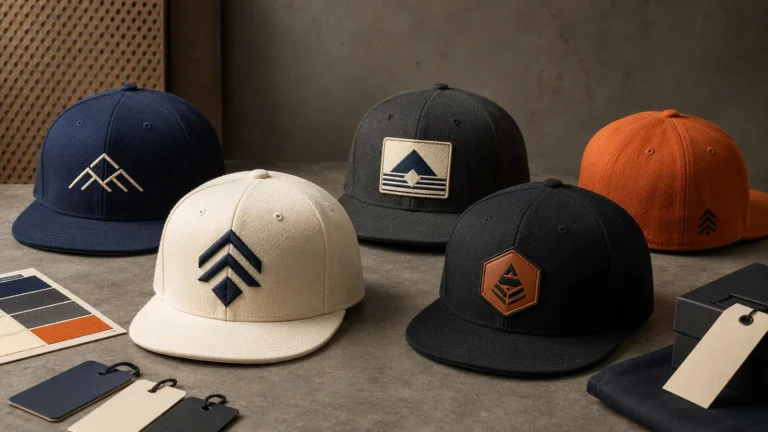
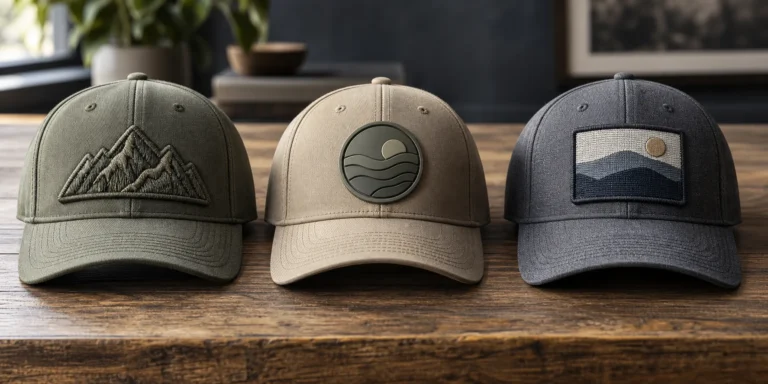
Different logo structures and decoration materials create different visual weight, texture and brand positioning.
Why Logo and Decoration Decisions Matter in Bulk Cap Orders
A cap is a three-dimensional product, not a flat canvas. Its front may contain a center seam, buckram, curved panels and a limited embroidery field. Side panels narrow toward the top. The back may include an opening, mesh, elastic or an adjustable closure. These physical features influence every logo decision.
In a bulk order, every compromise repeats across the full quantity. A design that is too wide may wrap around the crown, small letters may close during embroidery, and a heavy patch may distort a soft cap. Select the logo and production method together rather than forcing existing artwork into an unsuitable process.
Baseball Cap Logo Ideas at a Glance
The following directions cover many B2B use cases without relying on short-lived fashion effects.
| Logo idea | Visual character | Suitable buyers | Common decoration choices | Main artwork caution |
|---|---|---|---|---|
| Initial or monogram | Clear, compact, recognizable | Teams, schools, clubs, private labels | Flat embroidery, 3D puff, patch | Keep letter spacing open |
| Simplified mascot | Energetic and distinctive | Sports teams, academies, fan merchandise | Flat embroidery, woven or embroidered patch | Reduce tiny facial details |
| Geometric emblem | Modern and flexible | Corporate programs, activewear brands | Flat embroidery, rubber patch, transfer | Test negative spaces |
| Heritage crest | Established and traditional | Schools, clubs, hospitality, lifestyle brands | Woven or embroidered patch | Avoid miniature text |
| Wordmark or script | Direct brand recognition | Apparel brands, events, teams | Flat embroidery, appliqué-style patch | Thick strokes and simplify flourishes |
| Tonal logo | Subtle and premium | Corporate uniforms, retail collections | Flat embroidery, debossed patch | Confirm visibility in real light |
| Small side icon | Understated secondary branding | Private label, retail, staff caps | Flat embroidery, small patch | Keep the mark simple |
| Coordinates, year or short number | Commemorative and collectible | Events, clubs, anniversaries | Flat embroidery, woven patch | Do not overload the front |
| Pattern or all-over graphic | Expressive and fashion-led | Streetwear and private-label collections | Sublimation on suitable panels or printed fabric | Plan before cap assembly |
| Badge system | Adaptable across teams or departments | Leagues, schools, franchises | Patch family with shared shape | Control version naming and colors |
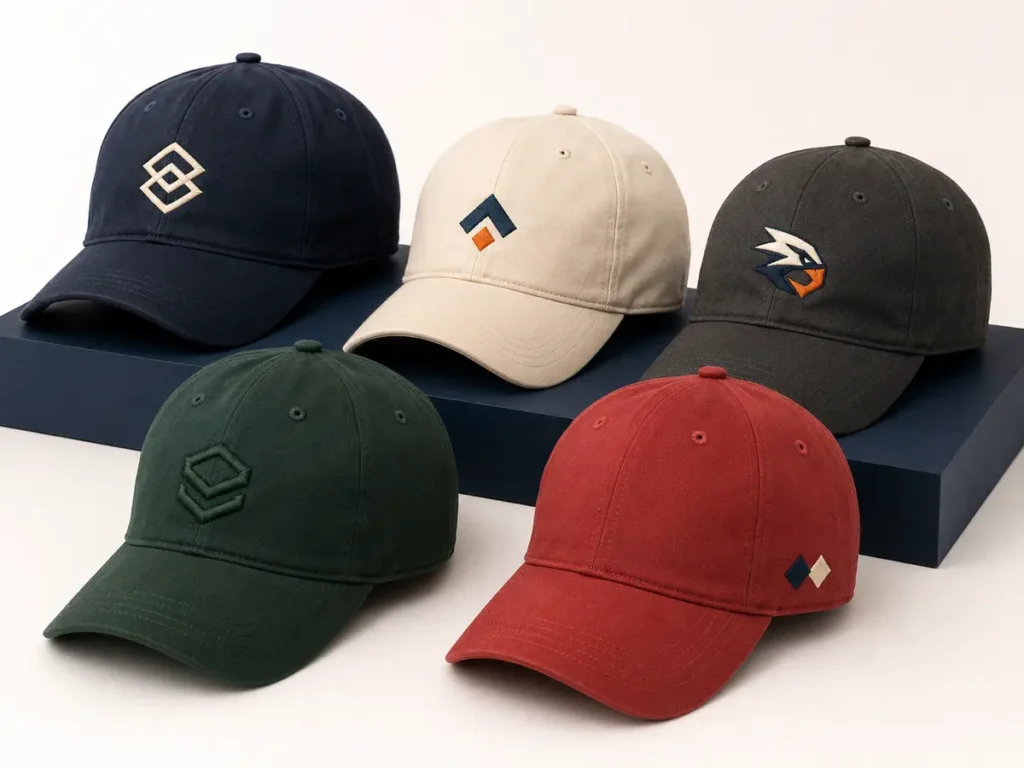
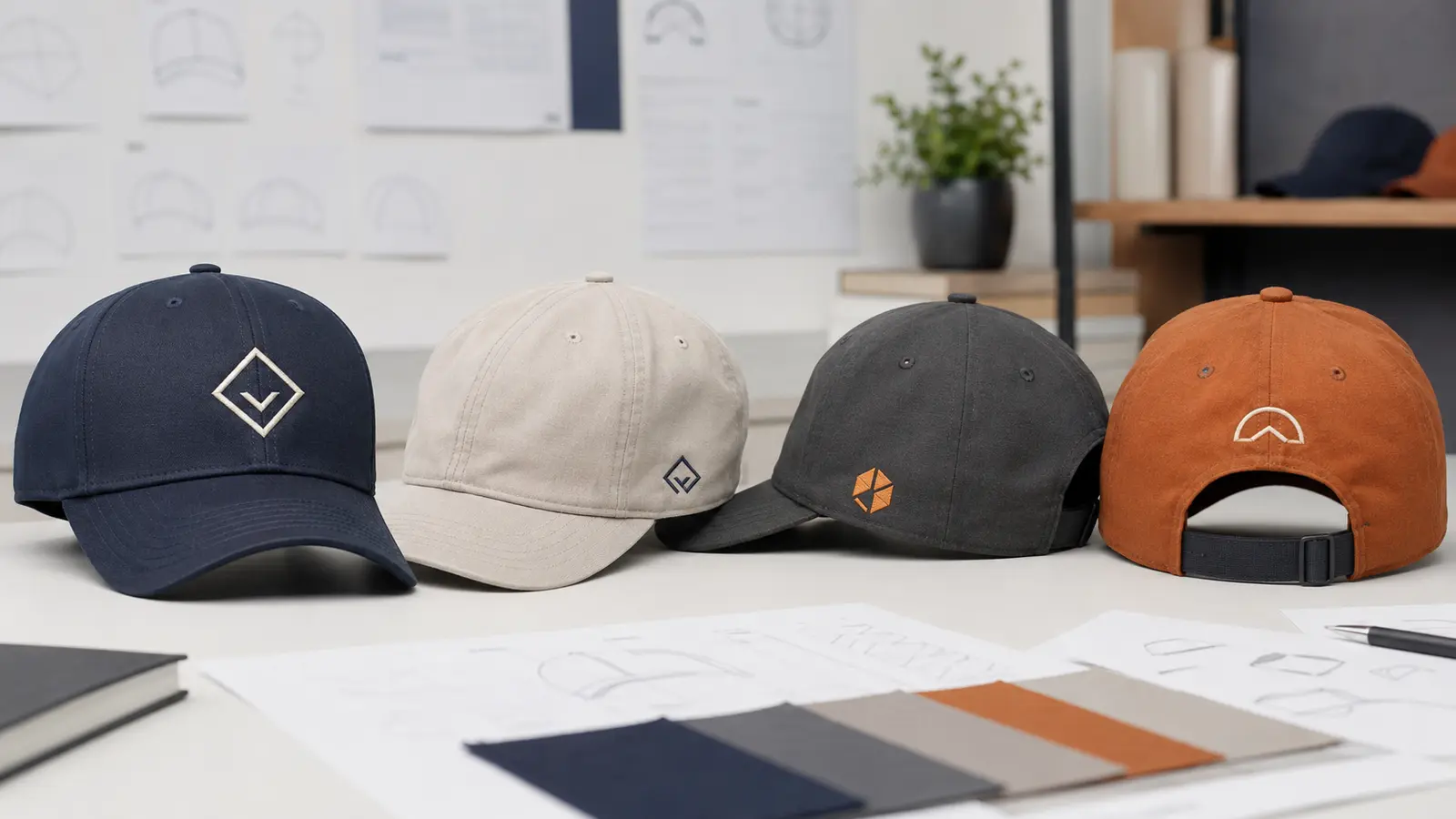
A logo family can range from bold front emblems to subtle tonal or side-panel branding.
1. Monograms and Initial-Based Marks
Monograms are among the most practical cap logo ideas because they remain recognizable at a relatively small size. They can be athletic, collegiate, minimal or luxury-oriented depending on the letter construction.
For embroidery, avoid hairline strokes and tight overlaps. Preserve negative space between interlocking letters. Build a cap-optimized variant with wider strokes and fewer small details.
2. Simplified Mascots and Team Symbols
Mascot logos give sports caps energy and fan appeal, but an illustration designed for a screen may contain too many outlines, shadows and facial features. The cap version should prioritize the silhouette, one or two defining features and a limited color system.
A simplified mascot can be directly embroidered. A detailed version may perform better as a woven patch or transfer. Review it at actual production size.
3. Crests, Shields and Badge Shapes
Crests organize several elements inside a controlled boundary. They suit schools, clubs, hospitality teams and heritage collections. The surrounding shield or circle also creates a natural patch shape.
Avoid overloading a crest with a name, year, motto, icon and border. Keep the core mark visible from normal viewing distance and move supporting information to a secondary placement or label.
4. Tonal and Low-Contrast Branding
Tonal decoration uses a thread or patch color close to the cap color. The result can feel refined and less promotional, which is useful for employee apparel, hospitality, golf, retail capsules and executive gifts.
Low contrast reduces distance visibility. Review the sample under daylight and indoor light; a mark that looks refined close up may disappear in photography or across a room.
5. Front-and-Side Logo Systems
A primary front emblem, small side icon and short back identifier create hierarchy while allowing one base cap to support several teams, locations or product editions.
Where Should a Logo Be Placed on a Baseball Cap?
Front center is the most visible and familiar placement, but it is not the only useful option. Placement should support the logo’s role and the cap construction.
| Placement | Best use | Strength | Production consideration |
|---|---|---|---|
| Front center | Primary team or brand mark | Maximum recognition | Center seam and crown curvature affect artwork |
| Left or right front | Minimal brand mark | Contemporary and understated | Available field is narrower |
| Side panel | Secondary icon, number, flag-inspired original symbol | Adds detail without crowding front | Avoid eyelets and panel seams |
| Back above opening | Short name, symbol or number | Visible when wearer turns | Space varies by closure |
| Back arch | Short word or simple curve | Traditional teamwear look | Letter size can become small |
| Brim top | Fashion or limited-edition detail | Unexpected and visible from above | Curvature and stitching limit method |
| Underbrim | Pattern or hidden message | Distinctive retail feature | Often planned during material production |
| Interior label or tape | Private label and ownership information | Preserves clean exterior | Requires construction-stage planning |
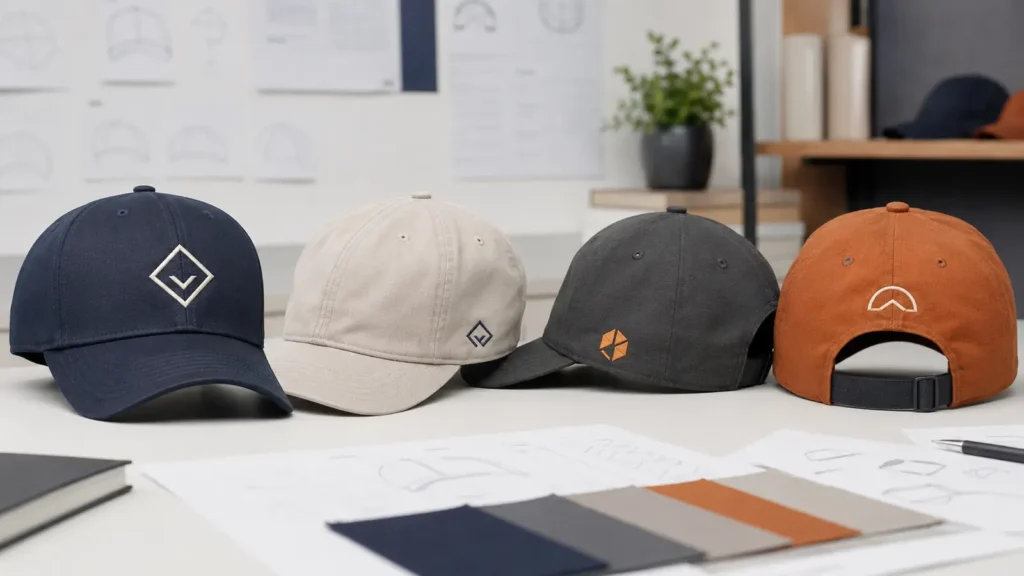
Placement should be reviewed on the actual cap profile because panels, seams and closures change the usable area.
How Large Should a Front Cap Logo Be?
There is no universal ideal dimension. High-profile structured crowns usually accept a taller mark than low-profile or unstructured caps. A wide wordmark may curve around the crown, while a compact badge stays visually centered.
Use proportion rather than a generic maximum:
- Identify the visible front field below the upper crown curve and above the brim seam.
- Leave breathing room around the mark.
- Check whether the center seam cuts through a critical feature.
- Review the design on a cap mockup at realistic scale.
- Confirm exact production dimensions on the pre-production approval.
A supplier may recommend adjustments after reviewing the cap pattern, embroidery frame or application equipment. Treat those recommendations as part of engineering the decoration, not as arbitrary design changes.
Choosing a Decoration Method
The practical comparison below helps narrow the options.
| Method | Visual result | Best artwork | Suitable use cases | Key limitation |
|---|---|---|---|---|
| Flat embroidery | Thread texture, clean and established | Solid shapes, names, simple crests | Teams, schools, corporate, retail | Tiny text and gradients are difficult |
| 3D puff embroidery | Raised, bold and athletic | Thick letters and broad shapes | Sports, streetwear, statement branding | Fine lines and small enclosed areas are unsuitable |
| Woven patch | Smooth, detailed textile badge | Fine lines, small lettering, detailed crests | Clubs, schools, brand collections | Less raised texture than embroidery |
| Embroidered patch | Textured traditional badge | Medium-detail icons and borders | Teamwear, heritage, workwear | Very fine detail may fill in |
| Rubber/PVC patch | Dimensional, modern, matte or soft-touch | Bold multi-level shapes | Outdoor, technical, modern sportswear | Adds thickness and has mold/setup considerations |
| Leather-style patch | Heritage, understated, tactile | Simple debossed or printed marks | Outdoor, lifestyle, corporate gifts | Fine color detail is limited |
| Heat transfer | Smooth, detailed, potentially full color | Gradients, small color areas, complex graphics | Events, promotional programs, short design runs | Heat compatibility and curved application matter |
| Screen print | Graphic, direct ink appearance | Bold one- or few-color art | Fashion caps, flat panels, promotional designs | Seams and curved finished caps complicate printing |
| Sublimation | Integrated all-over or panel graphic | Patterns, gradients, photographic effects | Performance and fashion panels | Works best with suitable polyester-based materials and planned panels |
Flat Embroidery: The Most Versatile Starting Point
Flat embroidery is a reliable choice for many baseball cap logos because it produces a durable textile appearance and works across team, school, corporate and retail programs. It is especially effective for solid shapes, initials, simplified mascots and short wording.
The artwork must be digitized into machine-readable stitch instructions. Madeira describes digitizing as converting artwork into embroidery files a machine can read. Its cap guidance recommends planning stitch direction around the curved structure, commonly from the center outward and bill upward (Madeira USA cap-hooping guidance).
Evaluate thread color, density, backing, small-letter legibility, seam coverage, edge definition, puckering and consistency. A sewn sample reveals how the fabric, thread and crown support interact.
3D Puff Embroidery: Best for Bold Shapes
3D puff embroidery uses foam beneath satin stitches to raise selected areas. It creates strong shelf presence and is common on athletic and streetwear-inspired caps. Madeira lists 3D foam for creating raised effects on caps and other stable fabrics (Madeira USA embroidery supplies).
The method works best with thick block letters, broad outlines, simple monograms and substantial geometric shapes. It is less suitable for tiny wording, narrow serifs, miniature detail, small enclosed counters or gradients.
A hybrid can combine flat embroidery for small details with puff for the main symbol. Identify every raised area in the approval artwork.
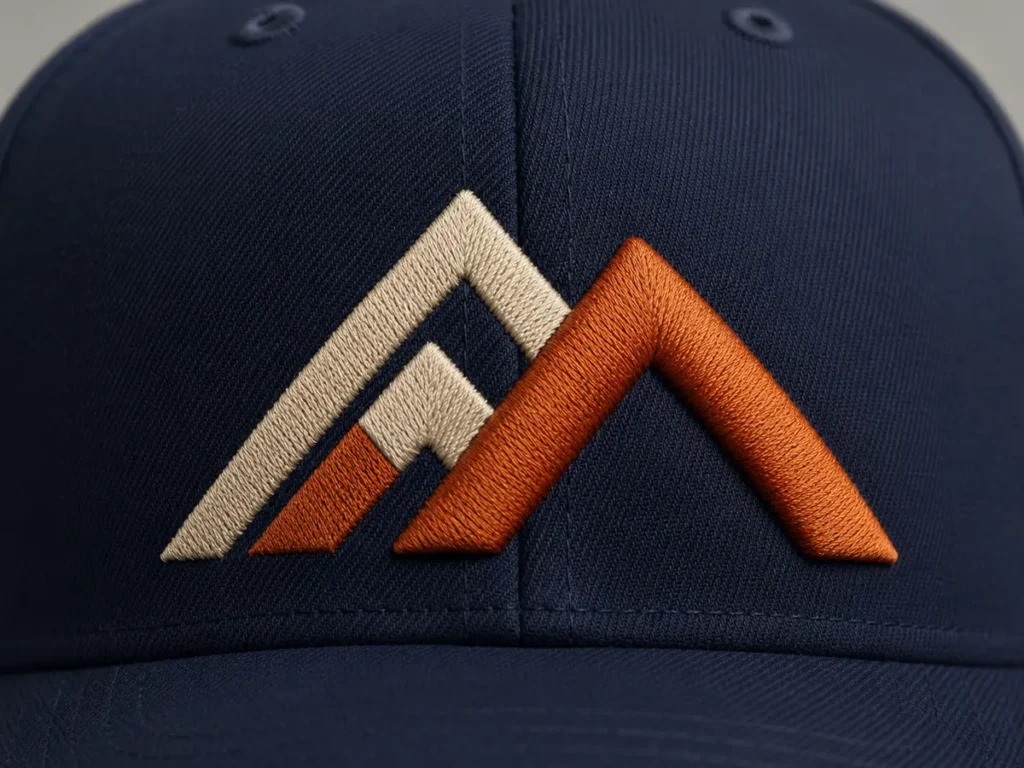
Stitch direction, center-seam behavior and the width of raised elements should be checked on a physical sample.
Woven and Embroidered Patches
Patches let the logo be produced on a controlled base before attachment to the cap. This can help when the cap fabric or crown structure makes direct decoration difficult.
Woven Patches
Woven patches use fine woven threads to reproduce smaller details and smoother shapes than conventional embroidery can typically hold at the same scale. They suit crests, compact lettering and multielement badges. Their surface is flatter and more refined than an embroidered patch.
Choose a woven patch when detail matters more than raised texture. Review its border, base color, attachment, dimensions and crown curvature.
Embroidered Patches
Embroidered patches deliver a classic badge appearance with visible stitch texture. They work well for team, club, workwear and heritage concepts. Madeira’s patch guidance notes that thread-only emblems build a stitched base and typically finish with an outline such as a satin edge (Madeira USA emblem guide).
An embroidered patch can hold a border and medium-detail mark, but small lettering still needs simplification. Evaluate patch stiffness on the selected crown.
Rubber/PVC and Leather-Style Patches
Rubber or PVC patches create a modern dimensional surface with recessed and raised areas. They are useful for technical, outdoor and contemporary sportswear collections. They can separate color fields cleanly and avoid the thread direction visible in embroidery.
Specify patch dimensions, thickness, relief levels, finish, colors, edge shape, attachment and required flexibility.
Leather-style patches create a different message: restrained, natural-looking and heritage-led. The material may be genuine leather, synthetic leather or another leather-look substrate, so the quotation and labeling must identify the actual material rather than using “leather” generically.
Simple debossed, embossed, engraved-look or printed marks usually work better than multicolor detailed illustrations. Confirm the patch shade, edge finish, stitch color and how the material responds to the cap’s care requirements.
Heat Transfer and Printed Logo Methods
Heat transfers are valuable when the artwork contains gradients, many colors or fine graphic detail. They can also support names, numbers and versioned designs without converting every element into stitches.
Application quality depends on the transfer, cap fabric, heat, pressure, time and support under the application area. STAHLS recommends using a platen that fits the hat shape and keeping the transfer stable during pressing; it also shows that front, side, back and brim areas may be decorated when the equipment and product allow it (STAHLS hat-decoration guide, STAHLS cap-press guidance).
Check fabric and coating compatibility, scorching, shine, dye migration, curved-area adhesion, seam interference, edge lifting, surface feel and color.
Screen printing can create a direct, graphic result on suitable panels. It is easier to control on flat fabric before the cap is assembled than across a curved, seamed finished crown. When screen print is proposed, clarify whether the decoration occurs before or after assembly.
Sublimation is most relevant for suitable polyester-based panels and all-over designs. It should usually be planned as part of the cap material and construction, not added as an afterthought to a dark finished cap.
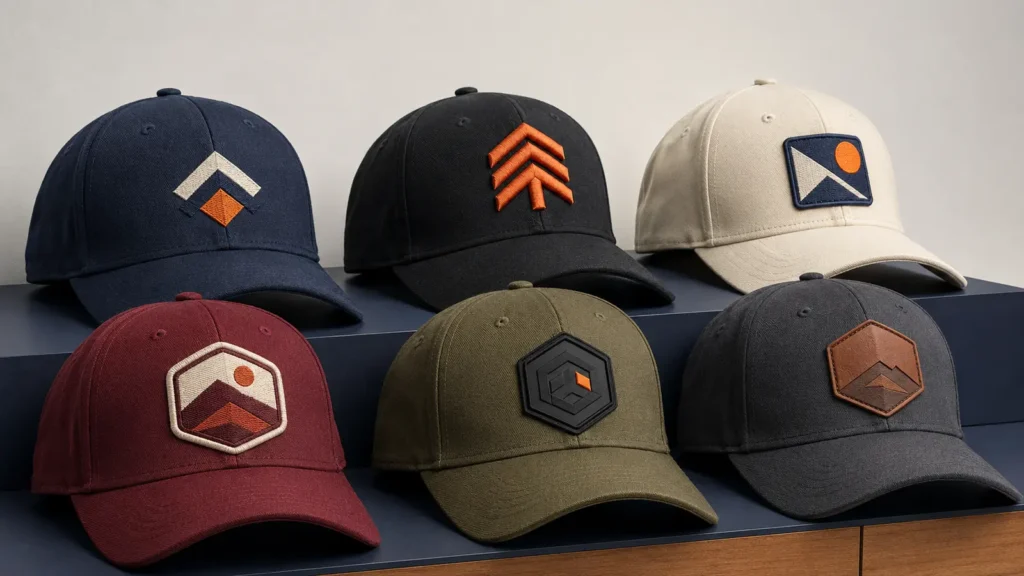
Compare surface texture, relief, edge construction and artwork detail—not only the quoted unit price.
Match the Decoration to the Cap Material
Cap fabric changes both appearance and production behavior.
| Cap material or structure | Decoration considerations |
|---|---|
| Cotton twill | Versatile for embroidery and patches; light unstructured fabric may need careful stabilization |
| Brushed or washed cotton | Soft, casual surface; dense decoration may contrast with the relaxed crown |
| Polyester performance fabric | Check heat sensitivity, coatings, stretch and dye migration before transfers |
| Wool blend | Traditional athletic appearance; evaluate needle, backing and surface texture |
| Trucker mesh | Front foam or twill panel usually carries the primary logo; side mesh offers limited support |
| Corduroy | Ribs affect small detail; bold embroidery or patches usually read more clearly |
| Denim or canvas | Strong visual texture; test needle penetration, density and patch stiffness |
| Waterproof- or water-resistant-finished fabric | Decoration may affect the surface or barrier; do not assume performance remains unchanged |
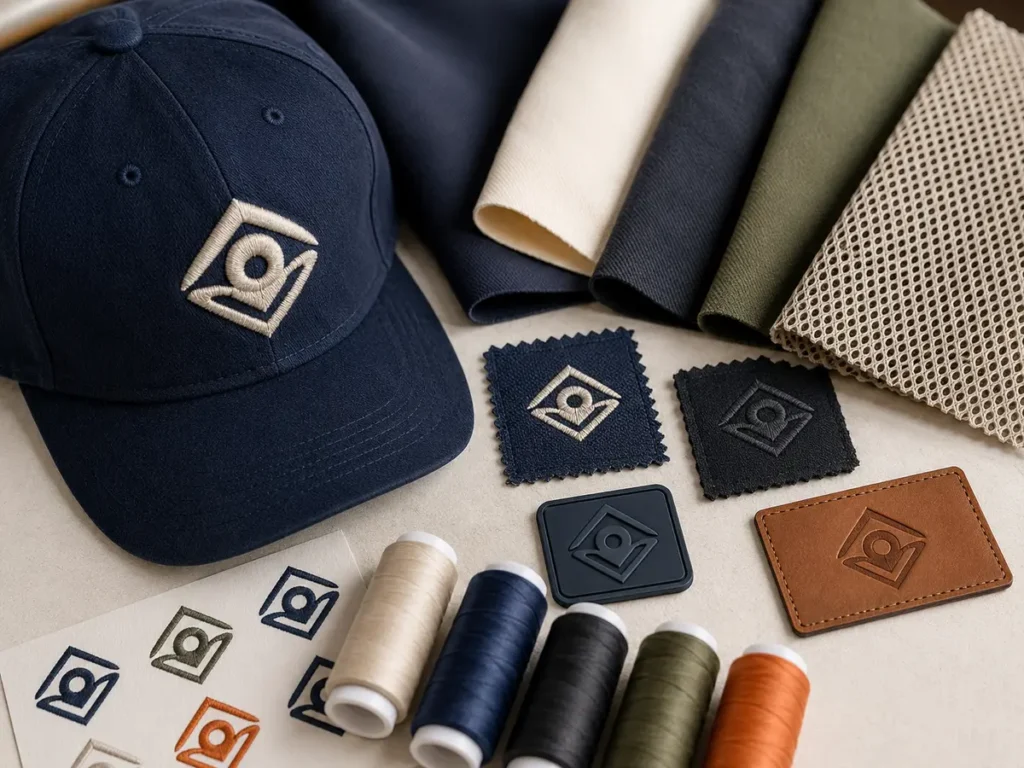
Material selection affects stitch stability, heat compatibility, surface contrast and the final hand feel.
Turn Logo Features into Procurement Decisions
Use the artwork itself to guide the method:
- Bold initials with thick strokes: consider flat or 3D puff embroidery.
- Detailed crest with small internal shapes: consider a woven patch.
- Traditional badge with visible texture: consider an embroidered patch.
- Minimal outdoor symbol: consider a leather-style patch.
- Modern technical emblem with multiple relief levels: consider rubber/PVC.
- Gradient or photographic graphic: consider a suitable transfer or planned sublimated panel.
- Subtle corporate identity: consider tonal flat embroidery.
- Multiple team versions: create a shared badge system and control the changeable fields.
This approach reduces subjective debate. The logo’s smallest detail, number of colors, desired texture, placement and cap structure become measurable inputs to the sourcing decision.
What Affects the Cost of Custom Cap Decoration?
Decoration cost is not determined by one factor. Common drivers include:
- Artwork complexity: More colors, stitch areas, patch levels or detailed cutting can increase setup and production work.
- Decoration size: A larger embroidered area generally requires more stitches and machine time.
- Number of locations: Front, side and back decoration require separate setup and operations.
- Method: Direct embroidery, woven patches, molded patches and transfers have different setup structures.
- Quantity per design: Splitting one order into many logo versions can reduce efficiency.
- Cap construction: Finished-cap access, center seams, mesh, low profiles and specialty brims can change handling.
- Color matching: Custom thread, patch or material colors may require additional development.
- Sample rounds: Repeated artwork changes after sampling add time and cost.
- Private labeling and packaging: Woven labels, hangtags, stickers, individual bags and carton requirements should be quoted together.
- Testing or special requirements: Any buyer-required material, performance or compliance testing must be defined before quotation.
For a comparable quotation, send the same specification to each supplier. A low unit price may exclude digitizing, patch tooling, side decoration, custom labels or packaging.
A Practical Sample and Quality-Control Checklist
Approve the cap as a complete product, not as separate components.
Artwork and Placement
- Is the approved logo version used?
- Does the decoration match the approved dimensions?
- Is it centered or intentionally offset?
- Does the center seam divide the artwork acceptably?
- Are side and back placements clear of eyelets, seams and closures?
Embroidery
- Are small letters open and readable?
- Are outlines registered with fill areas?
- Are puff edges fully covered?
- Is the crown puckered or distorted?
- Are trims and loose threads controlled?
- Is the reverse backing appropriate and tidy?
Patches and Transfers
- Is the patch shape symmetrical?
- Are borders consistent?
- Does the patch sit smoothly on the curved crown?
- Is attachment secure around the complete edge?
- Does a transfer show lifting, wrinkles, scorch marks or unwanted gloss?
Cap Construction
- Are crown height, brim shape and closure correct?
- Does the cap fit match the approved sample?
- Are fabric shade and mesh shade consistent?
- Are labels, hangtags and packaging correct?
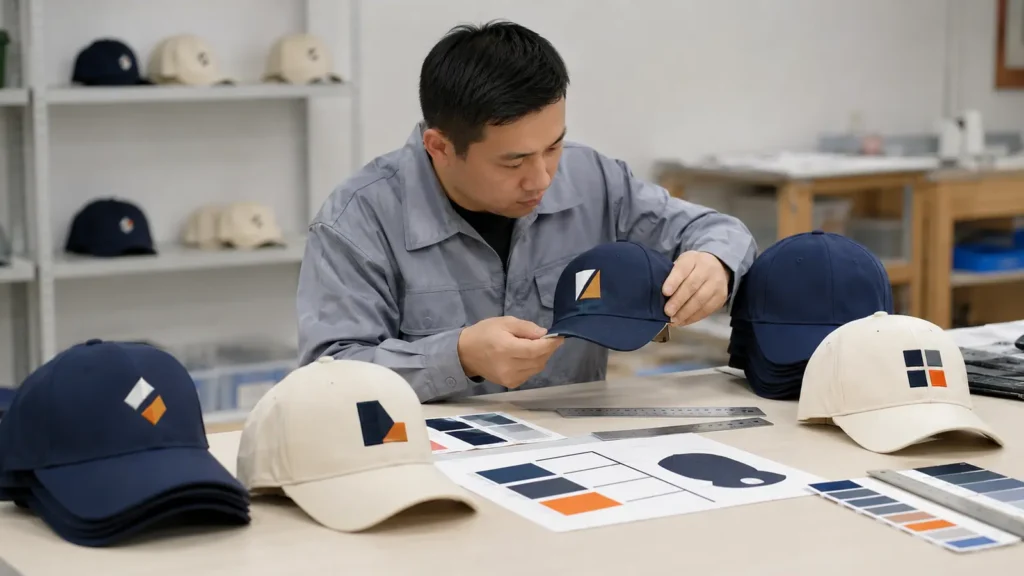
Bulk inspection should compare logo placement, cap symmetry, decoration finish, shade and approved packaging requirements.
For bulk orders, define inspection expectations before production. Agree on the approved sample, tolerance points, packaging standard and process for handling nonconforming pieces.
What to Send a Supplier for an Accurate Quotation
A useful quotation request should include:
- vector logo files such as AI, EPS, editable PDF or SVG where available;
- a high-resolution reference image if vector artwork is unavailable;
- cap style, panel count, crown profile and structure;
- fabric and color requirements;
- quantity by color and size or closure option;
- decoration method preference, if known;
- logo dimensions and placement for each location;
- Pantone or other color references where color matching matters;
- label, hangtag and packaging requirements;
- target market and any buyer-mandated testing;
- sample requirement;
- target delivery date and destination;
- reference images showing the intended visual result.
If the artwork is not production-ready, state that clearly. Ask whether artwork cleanup, embroidery digitizing, patch development and mockups are included.
Planning a custom cap program? Send JIUMU your cap reference, logo file, required quantity, color breakdown, decoration locations, packaging needs and target delivery date. The team can review which methods fit the artwork and prepare a quotation or sampling path. Request a custom cap quotation.
Questions to Ask a Custom Cap Supplier
- Which decoration method do you recommend for this exact logo, and why?
- Which details must be enlarged, simplified or removed?
- What will the final decoration dimensions be?
- How will the center seam affect the design?
- Is the logo applied before or after cap assembly?
- What material, backing or attachment method will be used?
- Are digitizing, patch setup or mold costs included?
- Can the same approved color and decoration file be retained for reorders?
- What sample will be supplied before bulk production?
- Which points are checked during production and final inspection?
- How are multiple team, player, store or department versions controlled?
- What labeling and packaging options are available?
The quality of the supplier’s questions is also informative. A responsible review should consider the artwork, cap construction, fabric, placement and end use—not only request a logo file and quantity.
Common Baseball Cap Logo Mistakes
Using the Full Corporate Logo Without a Cap Version
A long company name and tagline may be clear on a website but unreadable on a crown. Build a simplified emblem or monogram for the cap and reserve the full identity for packaging or a secondary location.
Making Every Detail 3D Puff
Puff works when shapes are broad enough to cover the foam. Applying it to thin lines or small text creates weak edges and crowded forms. Use it selectively.
Ignoring the Center Seam
A seam through a face, letter gap or narrow line can change the mark. Review seam interaction on a realistic mockup and physical sample.
Choosing by Unit Price Alone
Two quotations may describe different patch materials, stitch coverage, cap fabrics, attachments or packaging. Compare the complete specification.
Approving Only a Digital Mockup
A mockup checks direction; a physical sample checks execution. Color, crown curvature, texture, stiffness and small-detail legibility need real-product review.
Overloading the Cap
Front, side, back, brim and underbrim decoration can be effective, but using all of them without hierarchy creates visual noise and additional setup. Give each placement a clear purpose.
Failing to Control Versions
Team, sponsor and department variants can easily be mixed. Use clear filenames, a version table and a signed approval for every change.
Building a Consistent Cap Logo System
For a school, league, corporate group or private-label collection, define a system rather than designing each cap independently.
The system can include:
- a primary front emblem;
- an approved one-color version;
- a small side icon;
- a standard back identifier;
- defined thread or patch colors;
- decoration dimensions by cap profile;
- approved cap colors;
- a rule for sponsor or department variants;
- a master sample and reorder reference.
This makes future extensions easier across custom baseball caps, custom team uniforms, custom team jackets and custom team bags.

A controlled logo system keeps the team recognizable while allowing different cap structures and roles.
Why Work with JIUMU on Custom Baseball Caps?
Established in 2010 and based in Guangdong, China, JIUMU supplies custom hats, teamwear, bags and branded merchandise for B2B buyers in North America, the United Kingdom and Europe.
Relevant capabilities include OEM and ODM development, logo embroidery, heat transfer, screen printing, woven patches, rubber/PVC patches, leather-style patches, fabric sourcing, Pantone color matching, private labels, hangtags, packaging customization, digital mockups, physical samples, bulk quality control and export support.
The typical MOQ is 50 pieces, subject to the cap structure and customization. Buyers should confirm the applicable MOQ and sampling plan for each design.
JIUMU’s practical value is the ability to review the cap, artwork, decoration, labeling and packaging as one coordinated specification. This is especially useful for teams, schools, uniform dealers, promotional companies, retailers and private-label brands that need repeat-order consistency.
Frequently Asked Questions
Final Recommendation
Start with the cap’s purpose and viewing distance. Choose a compact logo idea with a clear silhouette, then match the method to the smallest detail, desired texture, cap material and placement. Use flat embroidery for versatile everyday branding; 3D puff for bold raised forms; woven patches for fine detail; embroidered patches for traditional texture; rubber/PVC for a modern dimensional look; leather-style patches for restrained heritage styling; and transfers or planned printing for gradients and complex graphics.
Most importantly, approve the complete physical cap. A production-ready result depends on the relationship between the artwork, crown, seam, fabric, backing, decoration and attachment—not on any one component.
Sources and Further Reading
- Madeira USA: Step-by-Step Cap Hooping and Digitizing Guidance
- Madeira USA: Emblems, Badges and Patches
- STAHLS: How to Decorate Hats
About JIUMU
Established in 2010 in Guangdong, China, JIUMU supplies custom hats, teamwear, bags and branded merchandise for professional buyers in North America, the United Kingdom and Europe.