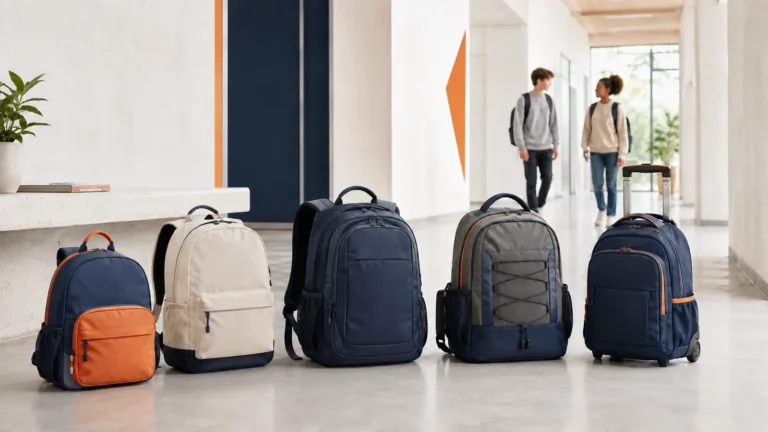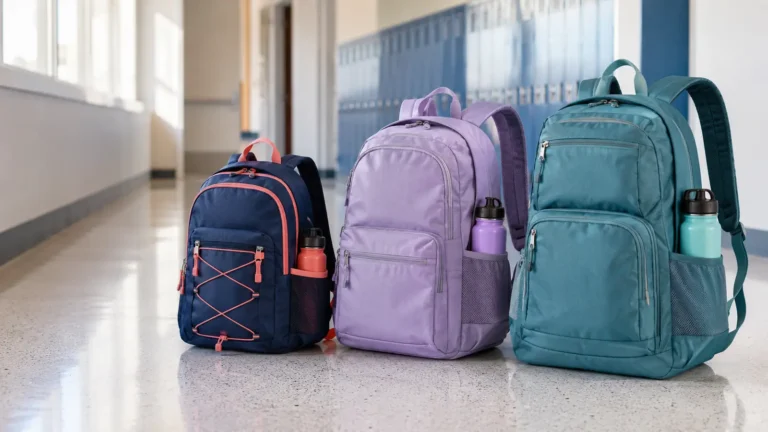
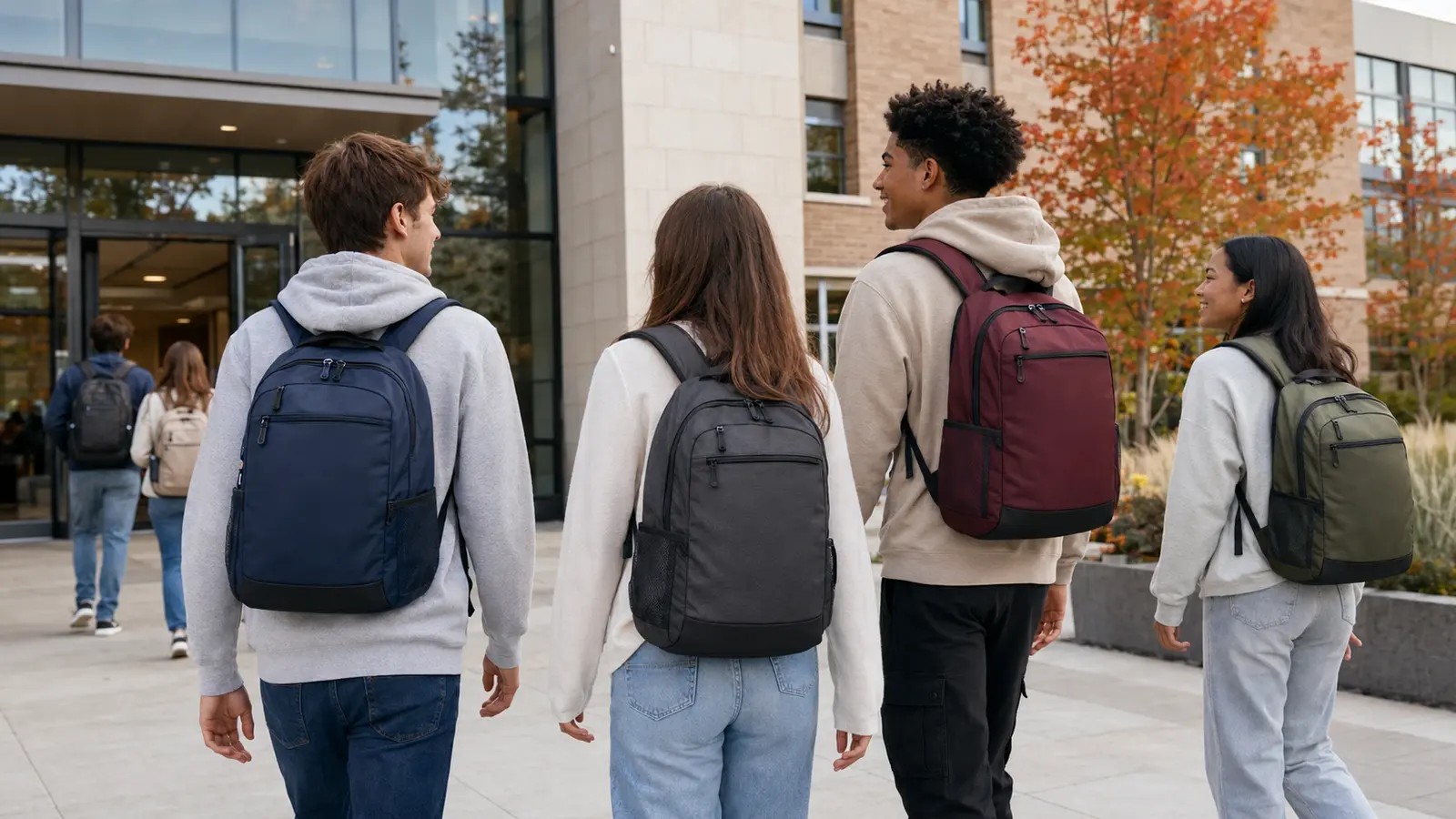
Best Backpacks for High School Students in 2026: A Complete Buyer’s Guide
Choosing a high school backpack involves more than color and price. Students may carry a device, notebooks, water, lunch, clothing, chargers, and personal items across classes and activities. The right backpack must organize that load without becoming oversized or uncomfortable.
For schools, distributors, uniform dealers, sports programs, and private-label brands, the decision is more complex. Buyers must translate student needs into measurable specifications: capacity, device size, fabric, construction, straps, decoration, packaging, testing, and reorder consistency.
This specification-based guide compares backpack types by use case rather than promoting retail brands or claiming one model fits every student.
Quick Answer: What Is the Best Backpack for a High School Student in 2026?
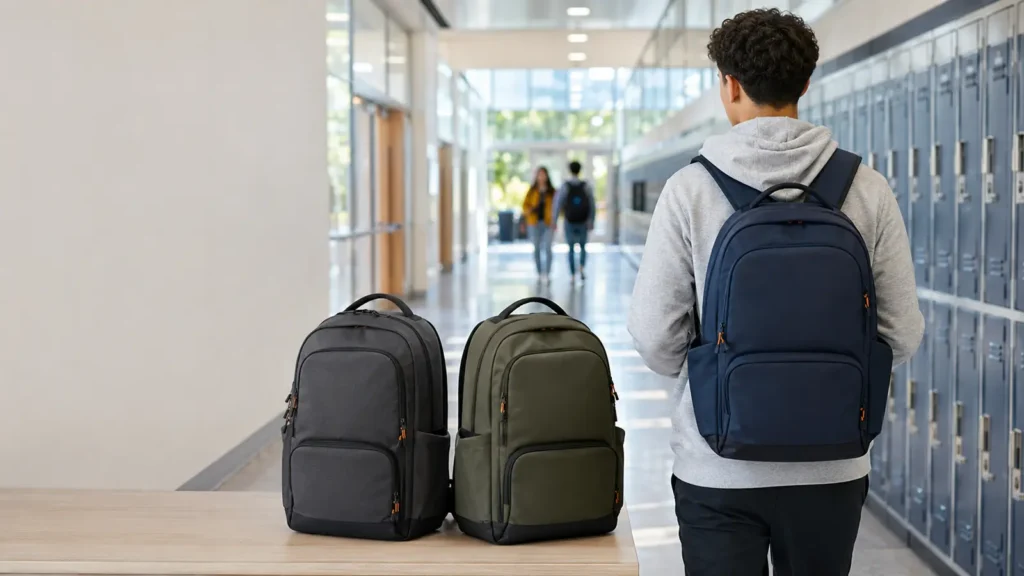
For most high school students, the best all-around choice is a lightweight 24–28 liter backpack with two wide adjustable shoulder straps, a padded back panel, a suspended laptop sleeve sized for the student’s actual device, two main organization zones, a secure bottle pocket, and a reinforced base.
Students who carry sports gear may need 28–32 liters or a separate team bag. Students with a light digital schedule may prefer 20–24 liters. The best capacity is the smallest size that carries the normal school-day load without forcing items, leaving excessive empty volume, or encouraging unnecessary weight.
The American Academy of Pediatrics advises choosing wide, padded shoulder straps and a padded back, using both straps, placing heavier items close to the center of the back, and keeping the packed backpack within roughly 10%–20% of the student’s body weight. This is general guidance, not an individual medical recommendation. Schools and families should respond to discomfort, posture changes, numbness, or recurring pain rather than treating capacity alone as a safety solution.
High School Backpack Selection at a Glance
| Student use case | Recommended backpack type | Practical capacity guide | Priority features | Main trade-off |
|---|---|---|---|---|
| Typical daily classes | All-around campus backpack | 24–28 L | Padded device sleeve, two main zones, bottle pocket, reinforced base | Too many small pockets can add weight |
| Mostly digital learning | Compact laptop backpack | 20–24 L | Suspended sleeve, charger pocket, slim profile | Limited room for lunch or clothing |
| Books plus sports practice | High-capacity school-and-sport backpack | 28–32 L | Separate clothing zone, ventilation, durable base | Can become heavy when fully packed |
| Walking, cycling, or public transit | Commuter school backpack | 22–28 L | Stable fit, weather-resistant finish, reflective details | Coated fabrics may feel stiffer |
| School team or club | Custom team backpack | 24–32 L | Logo placement, player identification, repeat-order colors | Requires artwork and sample approval |
| Shorter student or light schedule | Compact ergonomic backpack | 20–24 L | Shorter back length, adjustable straps, low empty weight | Less expansion capacity |
| Retail or private-label program | Modular custom backpack | Buyer-defined | Validated materials, consistent trims, labeling and packaging | More development decisions upfront |
The capacity figures above are starting points for product development, not universal fit rules. Back dimensions, pocket architecture, fabric stiffness, and the student’s actual load can make two bags with the same stated volume feel very different.
What Makes a High School Backpack “Best” in 2026?
The word “best” should describe fitness for a defined use, not marketing popularity. A useful 2026 evaluation covers seven areas.
1. The bag fits the real school-day load
Begin with what students actually carry on an ordinary day. Measure the largest device, the thickest book group, lunch container, bottle, and any clothing or activity gear. A bag should close without straining the zipper and should not require the student to place a laptop against loose bottles or sharp stationery.
2. The backpack fits the student
The top of the bag should sit in a stable position rather than pulling far behind the shoulders. The body should not extend unnecessarily low or swing while walking. Wide, adjustable shoulder straps help distribute the load, while a padded back panel protects the wearer from hard item edges. Fit remains personal; a large-capacity bag is not automatically more comfortable.
3. The construction supports repeated use
High-wear areas matter more than decorative complexity. Inspect shoulder-strap anchors, the top handle, zipper ends, pocket corners, the base, and the seams around the device sleeve. Reinforcement should be visible and repeatable in bulk production.
4. The organization is understandable
Good organization reduces searching without turning the bag into a maze. For many students, a device zone, main book zone, quick-access pocket, small-item organizer, and bottle pocket are enough. The pocket layout should reflect the school routine.
5. Device protection is designed, not implied
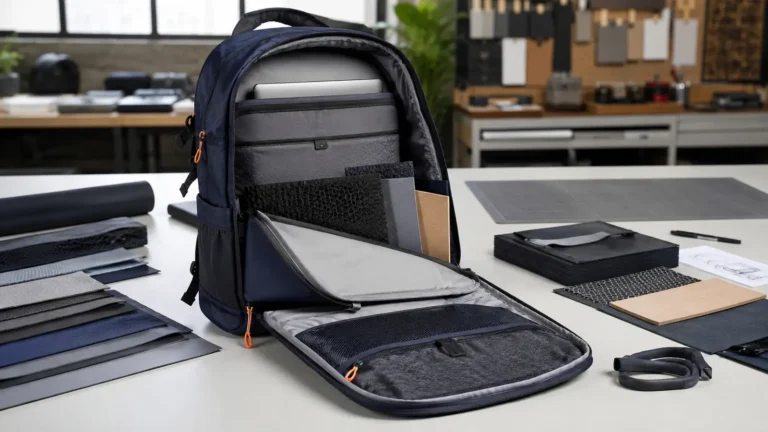
A padded sleeve should match the actual laptop or Chromebook dimensions. A suspended sleeve—one that ends above the bottom of the bag—can reduce direct impact when the bag is set down. Padding should protect the device without consuming excessive capacity.
6. Materials match the environment
Daily car travel, wet urban commuting, sports fields, and locker storage create different requirements. “Waterproof” is a strong claim and should not be used unless the complete product construction supports it and has been tested accordingly. Many school backpacks are more accurately described as having a water-resistant fabric or finish.
7. The product can be maintained and reordered
Schools and B2B buyers also need color consistency, available trims, replaceable artwork files, packaging instructions, and a clear repeat-order process. A fashionable material that cannot be sourced consistently may be a poor choice for a multi-year program.
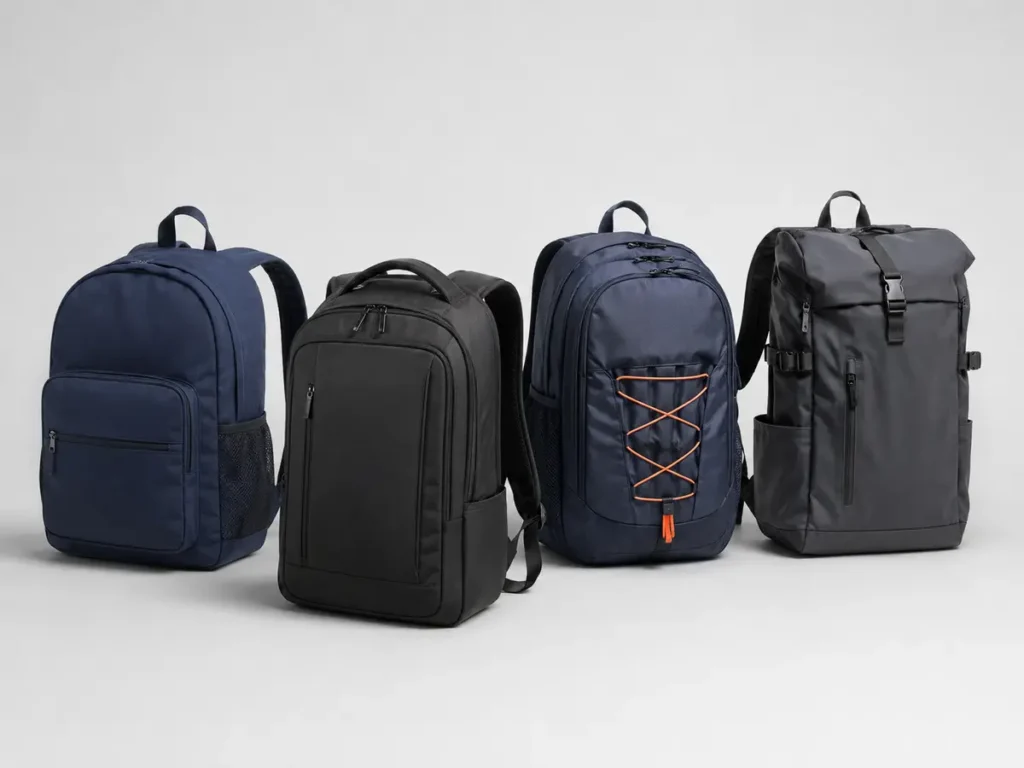
The Seven Best Backpack Types for High School Students
Best overall: the organized everyday campus backpack
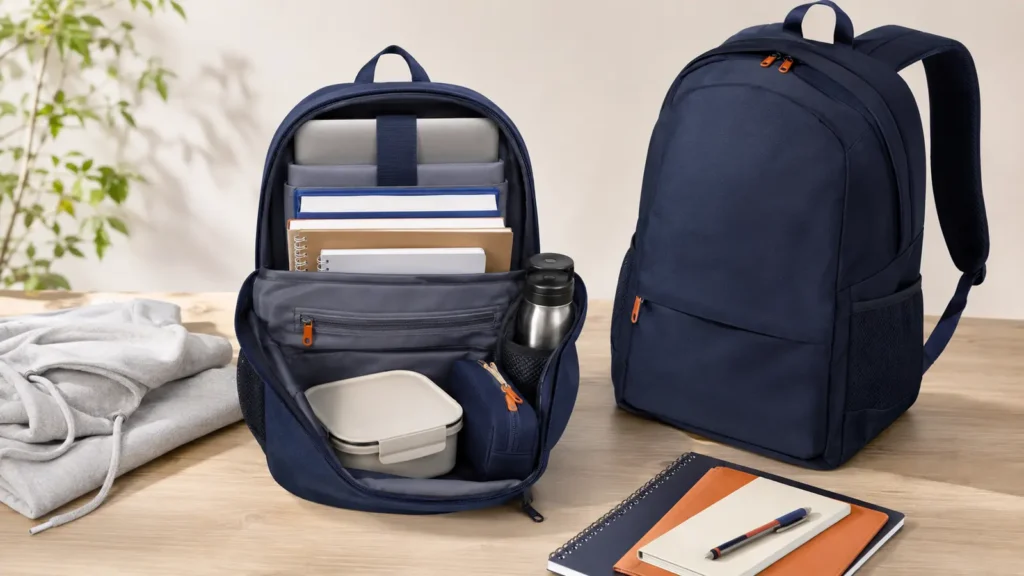
The everyday campus backpack is the strongest default for a broad student population. A 24–28 liter body can balance books, a device, lunch, water, and personal items without the bulk of an expedition-style pack. Use a rear device-and-document zone, a main book-and-lunch zone, a front organizer, and secure bottle storage. This format also gives school and private-label programs a clean area for restrained branding.
Best for device-heavy schedules: the compact laptop backpack
Students who use a school-issued device in most classes may prefer a 20–24 liter laptop-focused backpack. Confirm the device dimensions, sleeve opening, padding, closure, and whether the sleeve is suspended above the base. A separate charger pocket should prevent a hard plug from pressing against the laptop.
Best for school and sports: the high-capacity activity backpack
A student moving directly from class to training may need 28–32 liters with a separate zone for light clothing. Heavy or rigid sports equipment usually belongs in a dedicated custom team bag rather than an oversized academic backpack. Because a large bag invites extra contents, control both empty weight and the intended packing list.
Best for commuters: the weather-ready school backpack
Students walking, cycling, or using public transit benefit from a stable profile, secure closures, a durable base, and material selected for light rain and dirty surfaces. Useful options include a coated or tightly woven outer fabric, covered zippers, a removable rain cover, and reflective details. Water-resistant fabric alone does not make every seam and opening waterproof.
Best for clubs and teams: the custom school team backpack
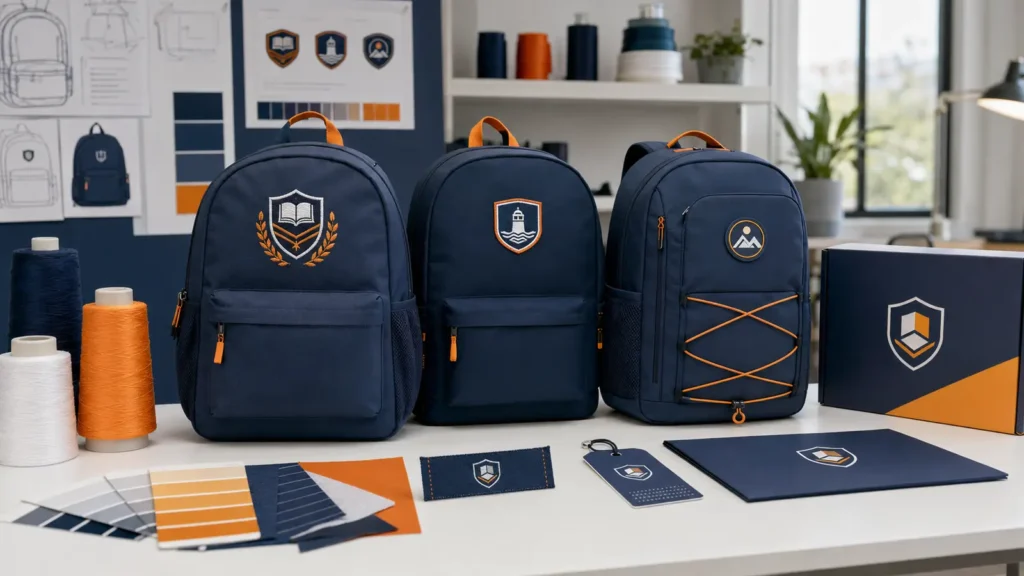
A custom team backpack creates a coordinated appearance for athletes, clubs, student leaders, and travel groups. Keep the identity clear without covering every surface.
Common customization choices include:
- embroidered school or club crests;
- woven, rubber/PVC, or leather-style patches;
- printed or heat-transferred graphics;
- player name, number, initials, or role;
- custom zipper pulls, webbing, lining, or color panels;
- woven labels, hangtags, and branded packaging.
Personalization requires a verified name list, consistent character format, approval method, and policy for late additions. A master logo plus a smaller identification field is often easier to manage than many fully unique graphics.
Best for lighter loads: the compact ergonomic backpack
Smaller students and those with light schedules may be better served by a 20–24 liter bag with a shorter back length. Do not simply scale every component down: review shoulder-strap spacing, bottle access, laptop fit, and zipper opening.
Best for B2B programs: the modular private-label backpack
Distributors, retailers, and school suppliers often benefit from one core construction with controlled variations. Keep the body pattern, lining, straps, and packaging constant while changing color panels, patches, or labels. This simplifies sampling and repeat-order control.
What Size Backpack Is Right for High School?
Backpack volume is useful, but it is not sufficient. Buyers should review liters, finished dimensions, internal dimensions, back length, empty weight, and the size of the largest protected item.
A practical 2026 capacity guide
| Nominal capacity | Best suited to | Typical contents | Buyer notes |
|---|---|---|---|
| 18–22 L | Very light or short school days | Small device, notebook, bottle, essentials | Check that the device sleeve still fits |
| 22–24 L | Digital-first schedule | Laptop or Chromebook, light books, charger, bottle | Strong compact option |
| 24–28 L | Most mixed academic schedules | Device, books, lunch, bottle, small clothing item | Best general starting range |
| 28–32 L | Classes plus activity gear | Academic load and light sports clothing | Control empty weight and depth |
| Above 32 L | Specialized use | Bulky clothing or equipment | Often better as a separate equipment bag |
These ranges are product-planning guidance, not a medical standard. Capacity should never be used as a recommended packed weight.
Measure the device before approving the sleeve
Screen size alone does not provide exact laptop dimensions. Ask for the length, width, and thickness of the largest approved device, including any protective case. Then confirm:
- finished sleeve dimensions;
- opening width and closure;
- padding on the front, back, and base;
- distance between sleeve bottom and bag base;
- whether the charger has a separate location;
- whether the device can be removed without emptying the bag.
Build a realistic loading sample
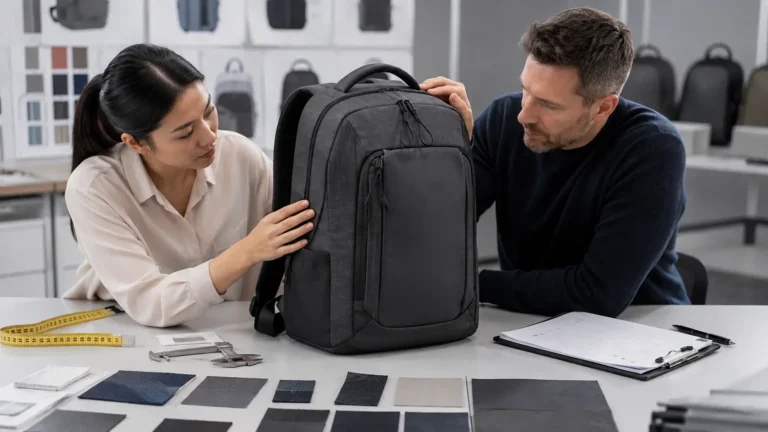
For a school or retail program, prepare a representative load kit before sample approval. Use actual books, binders, device, bottle, lunch box, and clothing. Load the physical sample, close every zipper, wear it, place it under a desk or in a locker, and repeat normal access actions. This reveals layout problems that a technical drawing may not show.
Best Backpack Materials: Polyester, Nylon, Coated Fabrics, and Linings
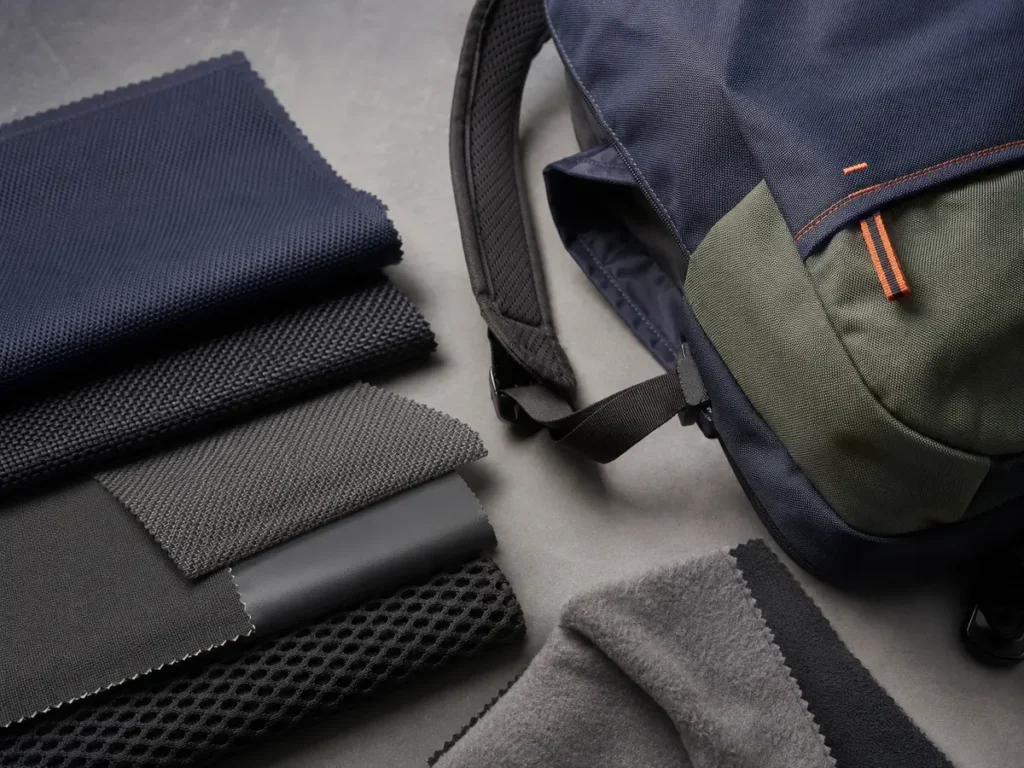
Material names need supporting specifications. “Polyester” alone does not tell a buyer the fabric weight, weave, coating, hand feel, colorfastness, or abrasion performance.
Polyester
Polyester supports many colors, prints, and cost targets. Options such as 600D polyester are common starting points, but “600D” is not a complete quality definition. Confirm backing or coating, finished weight, weave, and the intended test plan.
Nylon
Nylon can provide a smooth hand feel and strong performance at relatively low weight, depending on construction. Cost, finish, and color behavior vary, so approve a named fabric sample rather than fiber type alone.
Coated and laminated fabrics
Coatings or laminated surfaces can improve resistance to light moisture and cleaning, but they also change stiffness and seam behavior. The finished bag—not only the face fabric—must support any performance claim.
Spacer mesh and padding
Spacer mesh is common on back panels and shoulder straps. Review compression recovery, edge binding, skin-contact feel, and whether it catches on clothing.
Linings
A light lining improves visibility. Check strength around pockets and zippers and assess color transfer under expected conditions.
Recycled-content materials
Recycled-content options may support a buyer’s program, but claims must be precise and documented. The U.S. Federal Trade Commission’s Green Guides advise qualifying partial recycled-content claims. Confirm the percentage, calculation basis, scope, and supporting documentation; do not substitute an environmental claim for durability.
Construction Details That Determine Backpack Durability
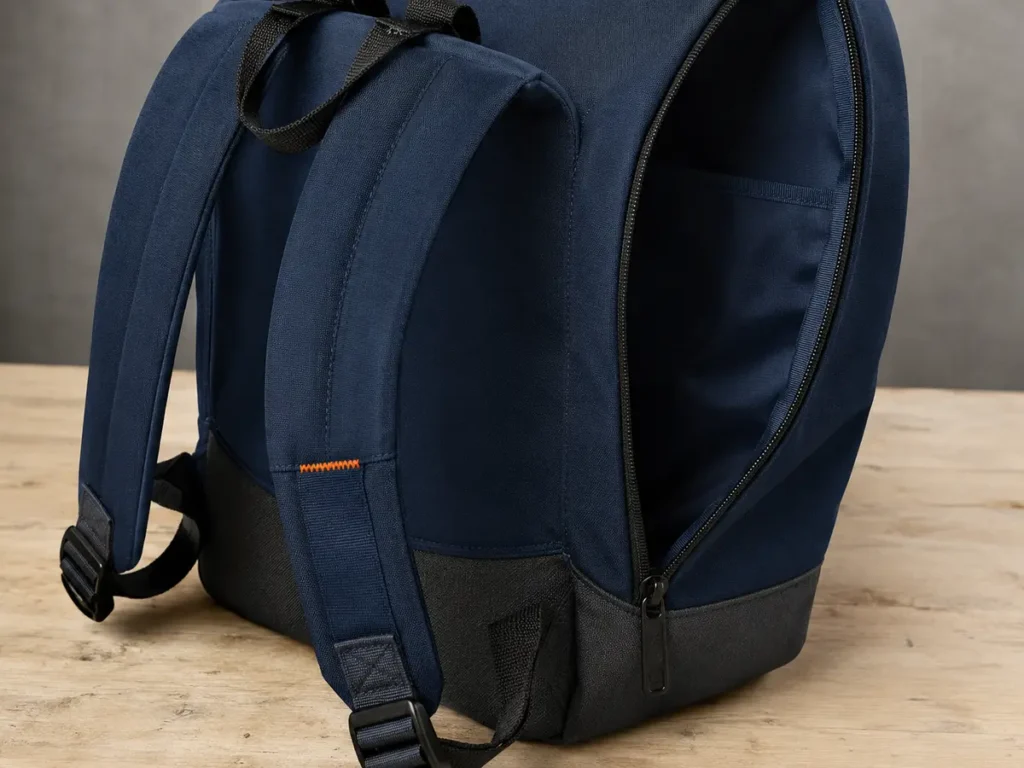
A high school backpack experiences repeated opening, floor contact, overloaded handles, strap pulling, and abrasion against desks and lockers. Focus inspection on failure points.
Shoulder-strap anchors
The shoulder straps carry the primary load. Review the attachment area, seam allowance, reinforcement material, stitch pattern, and symmetry. Bar tacks or box-and-cross reinforcement may be appropriate depending on the design, but they must be positioned consistently and tested on the finished construction.
Zippers and zipper paths
Check zipper size, slider movement, puller security, end stops, curves, and fabric clearance. A good zipper can still perform poorly if the sewing line creates waves or if the lining catches in the teeth.
Base construction
The base meets floors, pavement, and locker surfaces. A reinforced panel, coated material, extra layer, or protective structure may extend service life. Confirm that base seams do not create water-collecting shapes or weak corners.
Internal seam finishing
Bound seams and clean lining construction improve appearance and reduce loose threads. Inspect pocket corners and the top of the laptop sleeve, where repeated pulling can expose weak stitch lines.
Top handle
Students often lift a loaded bag by one handle. The handle attachment should be treated as a load point, not a decorative add-on.
Comfort and Backpack Safety
Product design can support better use, but it cannot control what a student packs. The American Academy of Pediatrics recommends two broad, padded shoulder straps; using both straps; placing heavier items close to the center of the back; and keeping the loaded bag to a manageable share of body weight. Its back-to-school guidance gives a range of 10%–20% of the child’s body weight.
For product selection, translate that advice into observable features:
- two adjustable shoulder straps with comfortable edge finishing;
- a padded back panel that prevents hard objects pressing through;
- organization that keeps heavier books and devices near the back;
- a body size appropriate to the student;
- low empty weight consistent with the required durability;
- stable bottle pockets that do not pull the load far to one side.
If a student must lean forward, experiences persistent pain, or has numbness or tingling, the response should be to reduce the load and seek appropriate guidance—not to assume that extra padding will solve the problem.
Device Protection and Everyday Organization
Device protection should be specified in measurable terms. Request sleeve dimensions, padding, suspension distance, and closure. Test the sleeve with the device and case, then check whether a full bottle presses against it or whether the laptop corner meets the ground.
For organization, prioritize frequency:
- Immediate access: keys, transit pass, phone, or student ID.
- Class access: device, notebook, binder, and pens.
- Meal and hydration: separated lunch and bottle storage.
- Occasional items: charger, headphones, umbrella, or light jacket.
- Activity items: clothing or team accessories in a separated zone.
A key leash, small zip pocket, and simple pen organizer may add more value than numerous narrow pockets.
2026 School Backpack Trends Buyers Should Watch
Cleaner silhouettes with hidden organization
A clean front panel can carry school identity while internal pockets handle devices and accessories.
Gender-neutral color programs
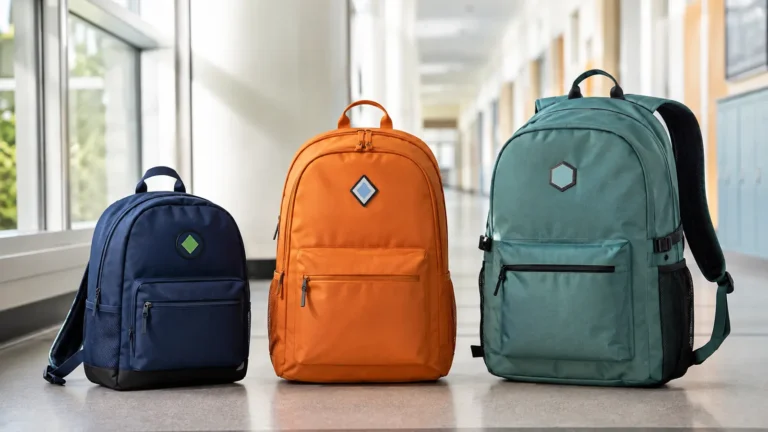
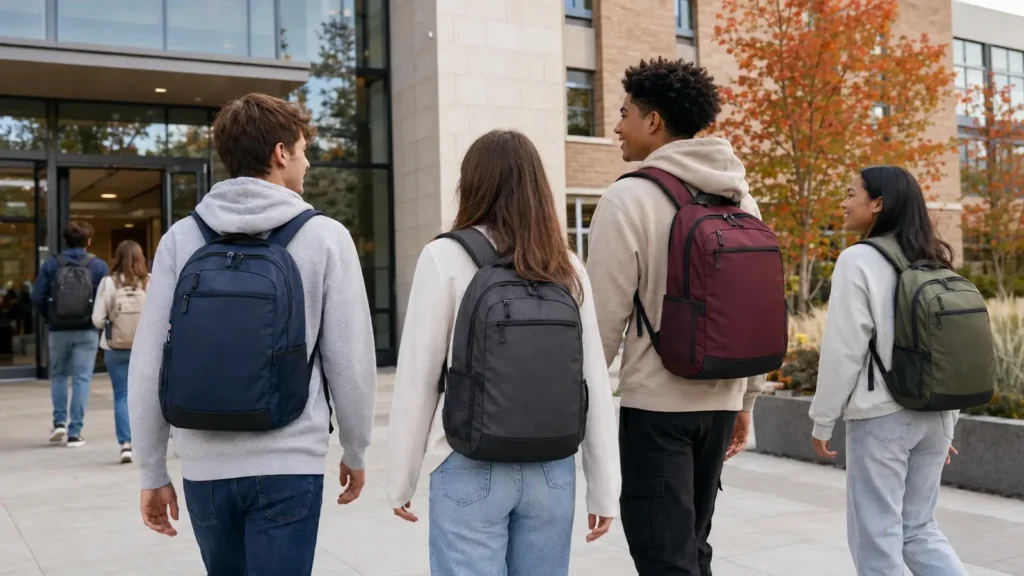
Navy, charcoal, black, muted green, burgundy, and stone support inclusive ranges. Use one base color with grade, team, or club accents.
Modular personalization
Name fields, removable patches, replaceable zipper pulls, and controlled embroidery positions allow one core bag to serve multiple groups. Consider part management and the risk of loss.
Precise environmental claims
Environmental claims should be documented and specific: material composition, claimed percentage, packaging, durability requirements, and approved wording. Broad terms should not replace evidence.
School-to-activity crossover
Create a coordinated academic backpack and matching team bag instead of forcing heavy equipment into one oversized product.
Custom School Backpacks and Private-Label Options
Customization begins with the business objective. A school welcome bag, team backpack, retail collection, and promotional product require different specifications.
Logo methods
Embroidery provides texture and a classic school look. Simplify artwork for thread and stabilize the fabric.
Woven patches support fine detail. Approve the edge, backing, size, and attachment.
Rubber or PVC-style patches create a dimensional mark. Review thickness, edges, color, and attachment.
Screen print or heat transfer can suit larger graphics. Match the method to the fabric and expected flexing.
Leather-style patches support a lifestyle direction. Identify the actual material before marketing it.
Color and trim customization
Buyers can coordinate body color, panels, zippers, webbing, lining, thread, and labels. Every custom trim adds a sourcing decision.
Labels and packaging
Private-label programs may require labels, hangtags, barcodes, individual bags, cartons, or player-by-player packing. Confirm market requirements before artwork approval.
Planning a custom school, club, or private-label backpack? Send JIUMU your target quantity, backpack dimensions or capacity, device size, colors, logo files, decoration method, packaging needs, destination, and target delivery date. Request a custom quotation.
What Drives the Cost of a Custom High School Backpack?
Unit price depends on the complete specification and order structure. Cost drivers include:
- outer fabric, coating, lining, mesh, and padding;
- number and shape of compartments;
- zipper, buckle, puller, and webbing specifications;
- reinforced panels and sewing complexity;
- embroidery stitch count or patch construction;
- custom-dyed materials and color-matching requirements;
- unique names or player numbers;
- labels, hangtags, barcode work, and packaging;
- sample rounds and testing requirements;
- order quantity and color split;
- carton specification, destination, and shipping method.
Give every supplier the same specification and require substitutions to be identified. A lower quotation may reflect different zippers, backing, lining, decoration, or packaging.
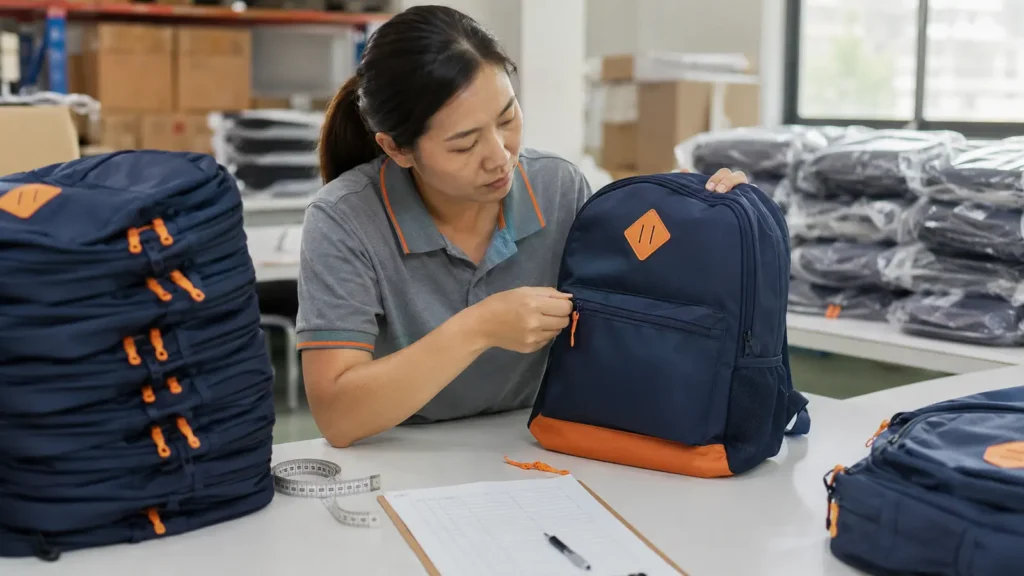
Quality-Control Checklist for Bulk Backpack Orders
Define quality control before production.
Confirm the approved sample
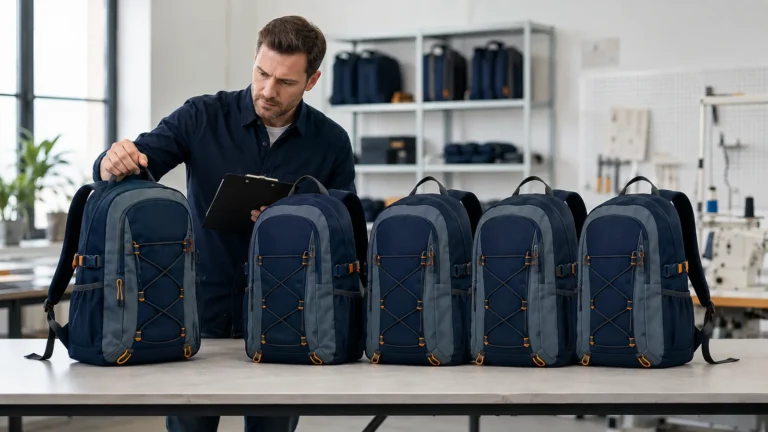
Keep one approved reference sample with artwork, colors, measurements, materials, trims, packaging, and written tolerances.
Inspect incoming materials and first production
Verify fabrics, lining, mesh, webbing, zippers, hardware, patches, labels, and packaging. Review first production before the full order is completed.
Check finished dimensions and appearance
Measure the bag consistently. Review symmetry, pocket alignment, logo placement, stitching, cleanliness, odor, and color under consistent lighting.
Perform functional checks
Operate sampled zippers repeatedly and load the bag with representative contents. Check straps, handle, bottle pockets, buckles, closures, and device access. Agree on test methods and sample sizes for the buyer’s market and risk.
Verify personalization data
Compare names or numbers with a controlled master list and define how late changes and corrections are handled.
Confirm packing and carton marks
Check carton quantity, assortment, packaging, labels, barcodes where applicable, sorting, dimensions, and shipping marks.
A Practical Bulk-Order Planning Process
- Define the use case and load. Identify academic, device, sports, club, or retail needs and provide the largest device plus typical contents.
- Set the specification. Confirm capacity, dimensions, fabrics, pockets, straps, colors, decoration, labels, and packaging.
- Share artwork and review a mockup. Provide vector logos and color references; approve placement before sampling.
- Approve materials and a physical sample. Load and use the sample in a realistic school-day test.
- Lock order data and controls. Confirm quantities, personalization, packing, destination, critical measurements, and checks.
- Inspect, ship, and archive. Review finished goods, then preserve material codes, artwork, colors, dimensions, and corrections.
What to Send a Backpack Supplier for an Accurate Quotation
An effective request for quotation should include:
- intended user and use case;
- target order quantity and color split;
- desired capacity or finished dimensions;
- largest laptop or Chromebook dimensions;
- reference images or technical drawing;
- outer fabric, lining, padding, and finish preferences;
- compartment and pocket requirements;
- logo file, size, position, and decoration method;
- personalization list if required;
- label, hangtag, barcode, and packaging requirements;
- destination country and delivery address or port;
- target delivery date;
- required tests, documentation, or market-specific conditions.
If some details are open, identify them as options rather than asking suppliers to guess. For example: “Quote both 600D polyester and a lighter nylon option,” or “Provide embroidery and woven-patch alternatives.”
Questions to Ask Before Choosing a Backpack Supplier
- Can you develop from a reference image, technical drawing, or existing sample?
- Which dimensions and materials will be recorded for repeat orders?
- How will the laptop sleeve be sized and protected?
- Which areas of the proposed construction are reinforced?
- What logo method best matches the artwork and fabric?
- Can you provide physical material swatches or a preproduction sample?
- How will custom colors be approved?
- How are names, numbers, and individual packing data controlled?
- What quality checks and supporting documents apply to the exact order?
- How will replacements and repeat orders match the approved specification?
Common Backpack Buying Mistakes
- Choosing the largest capacity: oversized bags add material and invite unnecessary loading; build around a representative school-day kit.
- Approving only a rendering: a mockup shows appearance, not fit, access, fabric hand feel, capacity, or loaded balance; approve a physical sample.
- Specifying only “waterproof”: define whether the requirement applies to fabric, zippers, seams, or the complete product and identify the test.
- Treating denier as a quality grade: compare weave, finished weight, backing, coating, and relevant performance, not denier alone.
- Adding too many custom parts: each custom buckle, zipper, label, and panel adds coordination; customize where users see or benefit from it.
- Ignoring empty weight: evaluate the physical sample with the real load.
- Using unsupported environmental language: state documented materials and percentages precisely.
- Losing the approved specification: archive materials, colors, artwork, dimensions, packaging, and production corrections for repeat orders.
Why Work with JIUMU on Custom School and Team Backpacks?
Established in 2010 and based in Guangdong, China, JIUMU supplies custom teamwear, logo apparel, bags, and branded merchandise for professional buyers in North America and Europe.
JIUMU supports OEM and ODM development, fabric sourcing, Pantone color matching, embroidery, screen printing, heat transfer, woven and rubber/PVC-style patches, private labels, hangtags, packaging customization, digital mockups, physical samples, quality control, and export support. A typical MOQ is 50 pieces, subject to the backpack structure and customization.
This makes JIUMU relevant for schools, sports clubs, distributors, uniform dealers, promotional product companies, retailers, and private-label merchandise brands that need more than a stock bag with a single logo.
Explore custom team bags, coordinate backpacks with custom team uniforms, or learn more about JIUMU.
Frequently Asked Questions
Final Recommendation
The best backpacks for high school students in 2026 are not defined by the highest pocket count or the largest capacity. For most students, start with a lightweight 24–28 liter everyday backpack, wide adjustable straps, a padded back, a correctly sized suspended device sleeve, understandable organization, dependable zippers, and reinforcement at the base, handle, and strap anchors.
Then adapt the construction to the real use case. Reduce the size for a light digital schedule, add controlled storage for sports clothing, improve weather resistance for commuters, or create a modular custom program for schools, teams, distributors, and private-label brands.
Develop a custom backpack program with JIUMU. Share your quantity, target dimensions or capacity, device size, colors, logo artwork, pocket layout, personalization, packaging, destination, and required date. Email zhengdong@jiumugear.com, contact WhatsApp/Phone +86 18507502899, or send an inquiry online.
Sources and Editorial Notes
- American Academy of Pediatrics: Backpack Safety
- American Academy of Pediatrics: Back-to-School Tips for Families
- Federal Trade Commission: Environmental Claims—Summary of the Green Guides
- European Commission: FAQ on EU Textile Fibre Names and Labelling Regulation
- Google Search Central: Creating Helpful, Reliable, People-First Content
This article uses a specification-based methodology and does not rank named retail products, report hands-on laboratory results, or provide medical or legal advice. Product requirements and destination-market obligations should be confirmed for the exact item and market before sale.
About the Author
JIUMU Editorial Team prepares specification-based sourcing content for schools, teams, distributors, retailers, and private-label merchandise buyers. This guide does not report hands-on laboratory rankings.