Best School Backpacks for Teens: Style, Comfort and Capacity
Choosing the best school backpacks for teens is not a matter of selecting the biggest bag or the most fashionable color. A successful backpack must fit the student’s body, carry the actual school-day load, organize devices and supplies, and still look appropriate across classes, clubs, sports, and commuting. For schools, distributors, uniform dealers, promotional buyers, and private-label brands, the purchasing decision also involves repeatable specifications, customization, quality control, and delivery planning.
This guide translates style, comfort, capacity, materials, and construction into practical buying criteria. It is designed for professional buyers planning a teen backpack program for North American or European markets, but the fit and packing principles are equally useful when evaluating a sample.
Quick Answer: The best school backpack for a teen normally combines a body-proportional silhouette, two wide adjustable shoulder straps, a padded back panel, a protected laptop or tablet sleeve, a structured main compartment, accessible small-item storage, and a capacity matched to the real timetable. Begin with what students carry, then approve fit, pocket layout, materials, stress-point construction, branding, and packed-load performance on a physical sample. “More liters” is not automatically better: excess volume encourages overpacking and may create an unstable load.
Why Teen Backpack Selection Requires a Separate Buying Strategy
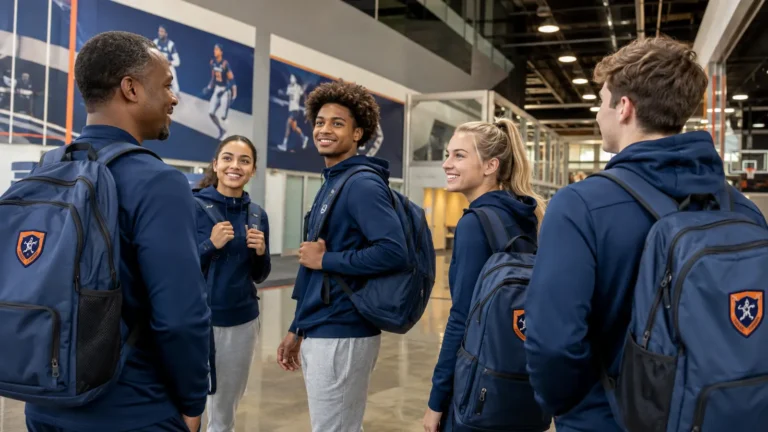
Teenagers are not simply larger elementary-school pupils. Their school day may include a laptop, chargers, multiple notebooks, textbooks, lunch, a water bottle, sports clothing, and personal items. Their expectations are also different. They want a backpack that feels socially appropriate and personal, while a school or buyer needs a design that is durable, inclusive, safe to specify, and manageable at scale.
The purchasing challenge is therefore a four-way balance:
- Style: a clean silhouette, current colors, and discreet customization that teenagers will willingly carry.
- Comfort: an appropriate back length, adjustable straps, padding, stable load placement, and a reasonable packed weight.
- Capacity: enough organized room for the actual school day without unnecessary bulk.
- Procurement performance: clear specifications, reproducible colors, dependable components, sample approval, packaging, and consistent bulk inspection.
The American Academy of Pediatrics advises choosing two broad, padded shoulder straps and using both straps evenly. Its family guidance also recommends using all compartments, placing heavier items close to the center of the back, and keeping the loaded backpack within 10%–20% of the child’s body weight. That range is general health guidance, not a product capacity claim; schools and families should apply local medical advice and the needs of each student.
Teen School Backpack Decision Overview
The following table provides a practical starting point. Capacity ranges are planning estimates rather than universal standards because usable volume changes with shape, padding, pocket structure, and measurement method.
| Backpack direction | Best suited to | Typical planning capacity | Priority features | Main procurement risk |
|---|---|---|---|---|
| Minimal everyday backpack | Light schedules, lockers, digital coursework | 18–22 L | Slim profile, padded device sleeve, quick-access pocket | Too little depth for lunch or extra clothing |
| Organized academic backpack | Mixed books, laptop, stationery, daily commute | 22–28 L | Two main zones, suspended laptop sleeve, bottle pockets | Excess pockets add weight and cost without improving use |
| High-capacity school backpack | Long days, limited locker access, clubs | 28–32 L | Stable base, compression, reinforced straps, balanced compartments | Oversizing can encourage heavy loads |
| School-and-sports hybrid | Classes plus practice or gym | 26–34 L | Separate clothing zone, ventilated or wipe-clean area, bottle storage | Wet gear can contaminate books if separation is weak |
| Roll-top or fashion-led pack | Style-focused programs, flexible soft loads | 20–28 L | Secure closure, internal device protection, simple branding | Opening may be slower and usable space harder to judge |
The table should not replace a load test. Pack the sample with the buyer’s actual reference load and ask students representing the intended size range to assess access, stability, strap adjustment, and appearance.
Which Backpack Styles Work Best for Teens?
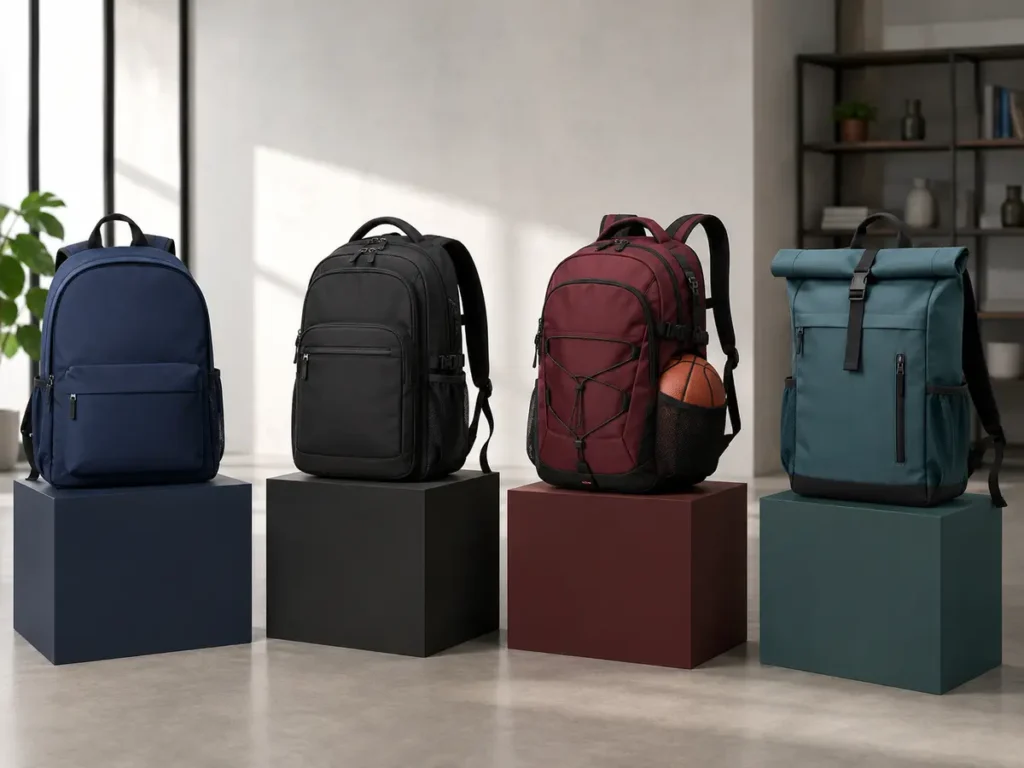
Minimal Everyday Backpacks
A minimal backpack uses a simple front panel, one main compartment, and limited exterior storage. It works well for digitally oriented schools or students who have reliable locker access. The clean surface also provides a controlled area for a small embroidered crest, woven patch, or private-label detail.
The design should not become so minimal that it loses function. A protected device sleeve, one small-item pocket, a practical bottle pocket, and a comfortable harness remain valuable. Buyers should confirm whether a seemingly slim bag can accept the intended laptop without forcing the zipper or distorting the back panel.
Organized Laptop School Backpacks
This is the strongest all-around direction for many secondary-school programs. It separates a device from books and keeps chargers, pens, keys, and identification items from falling to the bottom. A suspended sleeve can help keep the device away from the base, although buyers must confirm the sleeve’s actual internal dimensions and padding rather than relying on a nominal laptop size.
Organization should follow frequency of use. Daily items belong in accessible zones. Rarely used storage should not consume prime space. Too many small pockets increase sewing operations, trim count, failure points, weight, and price, so every pocket should have a defined purpose.
High-Capacity Academic Packs
Some programs genuinely need additional volume because lockers are unavailable or students carry materials for an extended day. In that case, capacity must be paired with load control: a stable base, wider straps, sensible compartment division, and compression straps where appropriate.
High capacity does not authorize high packed weight. The bag’s physical volume and the student’s safe carrying load are separate questions. A deep bag filled with dense books can become uncomfortable even if the zippers close easily.
School-and-Sports Hybrids
Hybrid bags support students moving from class to practice. Useful features include a separate shoe or clothing zone, a large bottle pocket, wipe-clean lining, and a way to prevent damp apparel from touching notebooks or electronics. Ventilation panels may help air movement but should not be described as eliminating odor or moisture unless tested.
The procurement tradeoff is bulk. A large lower compartment can make the bag deep and unstable. Buyers should load both zones simultaneously during sample evaluation and check whether the bag remains upright and close to the body.
Roll-Top and Fashion-Led Designs
Roll-top silhouettes and simplified urban packs can differentiate a retail or senior-class program. They offer a large branding surface and flexible height, but buyers should examine closure speed, rain entry paths, internal access, and device protection. A style-led design succeeds only when the school-day workflow still makes sense.
How Much Capacity Does a Teen School Backpack Need?
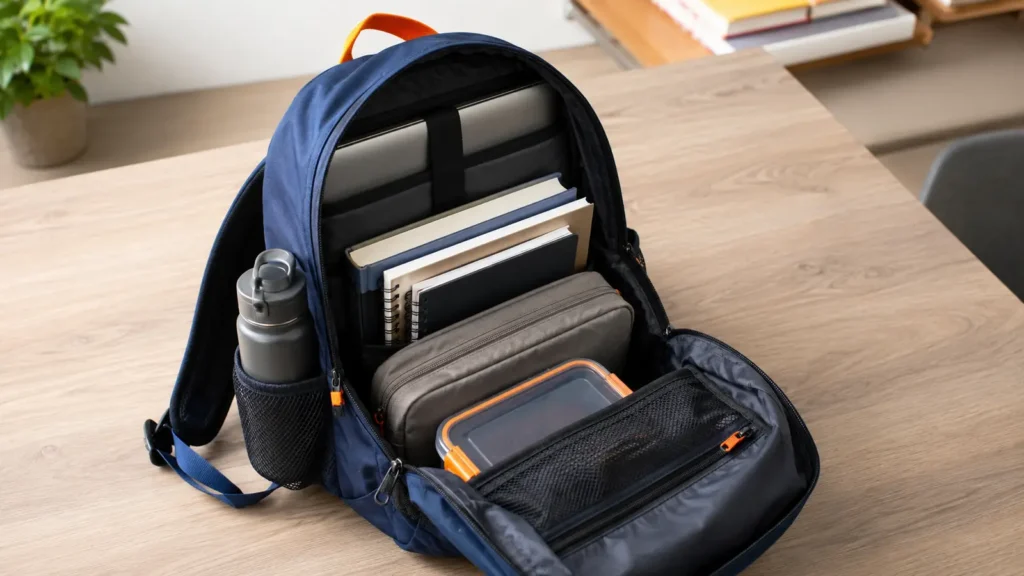
Capacity should be calculated from the load, not selected from a generic age label. Begin with a physical packing list. Include the largest device and textbook, typical notebooks, lunch format, bottle diameter, chargers, personal items, and any clothing carried on the same day.
A Practical Capacity Planning Method
- List the maximum normal school-day load. Avoid designing around an exceptional trip unless the same bag must serve that purpose.
- Measure the largest rigid items. Laptop and binder dimensions often determine the back panel, zipper opening, and sleeve size.
- Group items by access frequency. Devices and books need protected main storage; transit cards, keys, and earbuds need smaller secure pockets.
- Create a physical reference load. Send dimensions, photos, or actual representative objects to the supplier when possible.
- Pack the sample completely. Check zipper strain, balance, back-panel shape, bottle retention, and whether the bag still fits the wearer.
- Leave controlled flexibility. A small reserve helps with daily variation; a large unused cavity can encourage overpacking.
Capacity Is Not the Same as Usable Space
Two backpacks advertised with the same liter figure may carry different school loads. Curved panels, thick padding, dividers, front pockets, and tapered bases reduce or redistribute usable interior space. Some suppliers calculate volume from external dimensions, while others use a filling method. For apples-to-apples quotations, specify both the target external dimensions and the reference load.
| Load item | Specification to confirm | Why it matters |
|---|---|---|
| Laptop or tablet | Device dimensions, sleeve internal dimensions, padding, base clearance | Nominal screen size does not guarantee fit |
| Binders and textbooks | Largest height, width, depth, and combined stack | Determines opening size and main-compartment depth |
| Water bottle | Bottle diameter, height, pocket elastic and retention | Prevents an undersized or loose side pocket |
| Lunch container | Rigid dimensions and preferred orientation | Avoids crushing food or distorting the bag |
| Sports clothing | Folded volume, wet/dry separation requirement | Drives compartment design and lining choice |
| Small electronics | Cable, charger and earbud arrangement | Prevents clutter and impact against devices |
Comfort and Fit: What Should Buyers Evaluate?
Comfort is a system, not a single foam thickness. It depends on the wearer’s size, packed weight, strap geometry, back-panel structure, bag depth, and how the contents are positioned.
Back Length and Overall Proportion
A teen product range may need more than one body size if the target population spans younger secondary students to older teens. A backpack that is too long can sit low; one that is too short may concentrate weight and lack capacity. Request finished measurements and define measurement points in the specification sheet so suppliers quote the same geometry.
For a school-wide program, test the proposed size across a representative wearer group. Do not infer fit only from age or grade. Record strap adjustment position, where the base sits, whether the top interferes with the neck, and whether students can put the bag on without help.
Shoulder Straps
Two broad, adjustable straps help distribute load. Evaluate strap width, curve, edge binding, foam resilience, webbing length, adjuster grip, and how the strap joins the body. A thick strap is not automatically better; poorly shaped or stiff padding can still create pressure.
The adjustment range must work over light shirts and seasonal outerwear. Test whether the hardware holds its position under a realistic packed load. Loose webbing ends may be managed with elastic keepers if appropriate to the design.
Back Panel and Load Position
A padded back panel can improve contact comfort and protect the wearer from hard book edges. Channel or mesh structures may improve perceived airflow, but marketing language should remain measured unless airflow or thermal performance has been tested.
The internal layout should hold dense items near the back. A laptop sleeve, document divider, or book panel can help. Heavy objects placed in a far-forward pocket increase leverage and can pull the bag away from the body.
Sternum and Waist Straps
A sternum strap can help stabilize a bag during walking or cycling, particularly on taller or sport-oriented designs. It must adjust to the intended wearer range and should be assessed for component security. A waist strap may be useful for heavier or outdoor-led bags but adds cost and can feel unnecessary on a compact school pack.
These components should be selected from the real use case rather than added as a visual signal of “ergonomics.” Buyers should also review applicable product-safety requirements for the target age group and market.
Materials That Balance Appearance, Weight and Daily Use
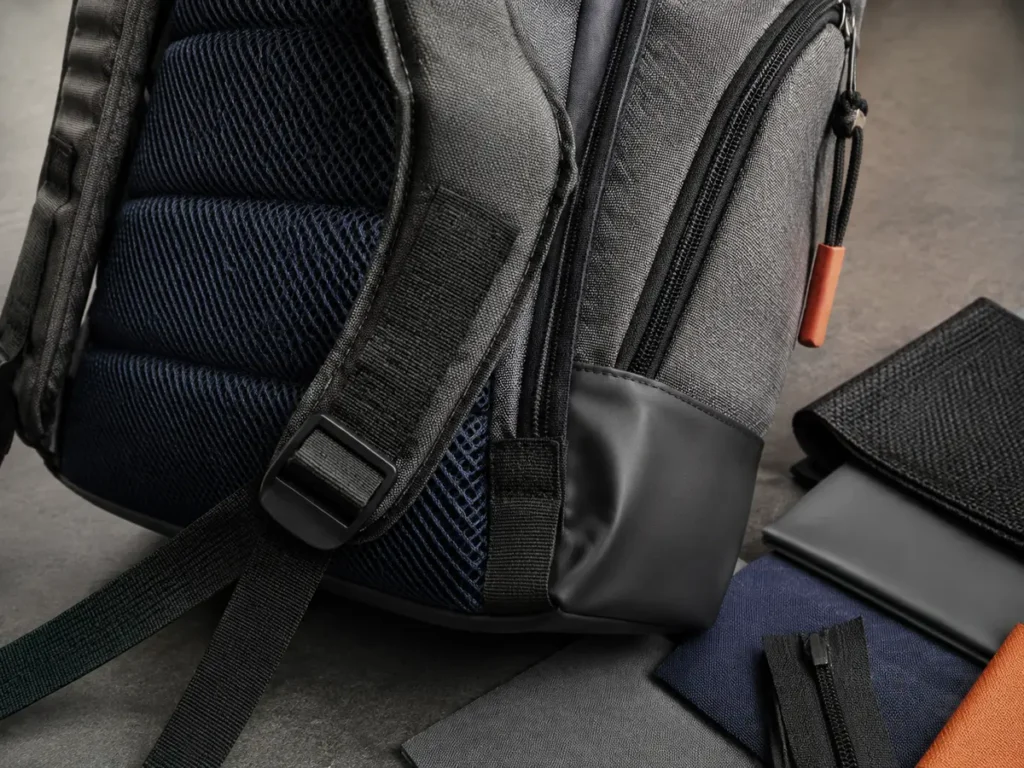
The outer fabric influences the first impression, but durability depends on the complete construction: fabric, coating, lining, thread, seams, reinforcement, zippers, webbing, buckles, and usage.
Polyester
Polyester fabrics are widely used because they offer a broad range of weights, textures, colors, coatings, and price points. A fine weave can look clean and urban; a heavier weave can create a more rugged impression. Buyers should state the desired fabric specification and finish rather than requesting “polyester” alone.
Nylon
Nylon can provide strong performance at a relatively low fabric weight, depending on yarn, construction, and finish. It may suit premium lightweight programs, but material naming alone does not prove abrasion resistance or water resistance. Request the exact material specification and agreed test method when performance claims matter.
Canvas and Cotton-Look Fabrics
Canvas or cotton-rich surfaces offer a casual fashion aesthetic and take embroidery well. They may absorb more moisture, show dirt differently, or feel heavier than synthetic options. A polyester fabric engineered to resemble cotton can provide a similar visual direction with different care and cost characteristics.
Coatings, Laminations and Water-Resistance Language
Coatings can reduce water penetration through the fabric surface, but a backpack is a sewn product with seams, zipper openings, and construction details. “Water-resistant” must be tied to a defined material or finished-product test and conditions. Avoid calling a bag waterproof unless the complete product has been designed and verified for that claim.
Lining, Foam and Mesh
A light-colored lining can make contents easier to find; a darker lining hides marks. The lining must be compatible with the outer structure and should not pull into zipper paths. Foam density and recovery matter at straps, back panels, and device sleeves. Spacer mesh can provide a comfortable surface but should be checked for snagging, abrasion, and colorfastness as required by the buyer’s quality plan.
Construction Details That Influence Service Life
A buyer cannot determine construction quality from fabric weight alone. Many failures begin at load-bearing joins, zipper ends, pocket corners, handle attachments, or poorly controlled seam allowances.
Stress-Point Reinforcement
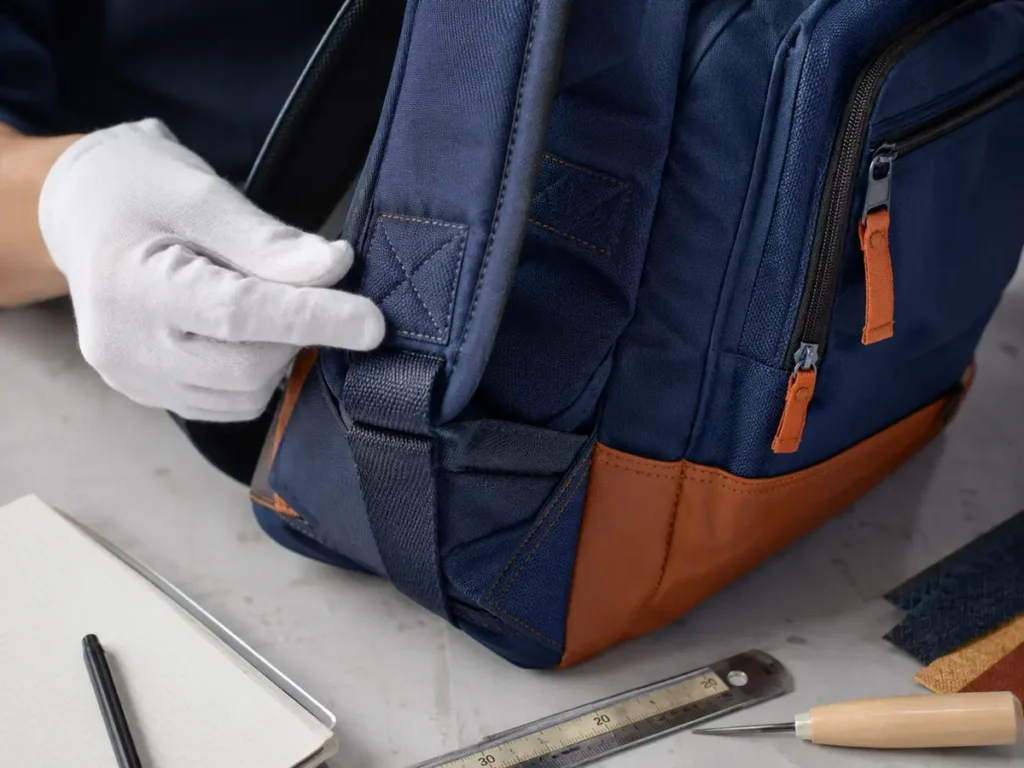
Ask the supplier to identify the load path from the shoulder straps into the back panel and main body. Reinforcement may use box stitching, cross stitching, bartacks, backing material, or layered webbing, depending on design and machinery. The method should be visible in the approved sample and repeated in bulk.
Zippers and Openings
Zipper performance depends on chain, slider, puller, stitching, curves, seam control, and how the packed bag loads the opening. A large opening improves access but may need structure to avoid distortion. During sample review, operate each zipper repeatedly with the bag empty and packed; watch for lining catches, excessive resistance, and slider separation.
Base and Corners
The base receives abrasion and impact when students place the bag on floors. A reinforced or coated base can be useful, but it adds material and seams. Check whether the bag stands as intended, whether the laptop sleeve clears the bottom, and how piping or corner seams behave under load.
Handles and Side Pockets
The top handle is often used to lift a fully packed bag. Its anchoring deserves the same attention as shoulder straps. Bottle pockets should match the reference bottle, retain it during movement, and avoid interfering with zippers. Elastic-only retention may relax over time; a shaped pocket or adjustable cord can change performance and safety considerations.
Translating Teen Style into a Purchasable Specification
“Make it stylish” is not a specification. Buyers should convert the desired look into controlled decisions that a supplier can sample and reproduce.
Silhouette and Surface
Define whether the direction is minimal, technical, vintage, sport-inspired, or fashion-led. Establish panel shapes, visible seams, pocket count, zipper exposure, base shape, and the proportion of the front branding area. A mood board is useful, but it should be accompanied by original sketches or a tech pack that avoids copying protected designs.
Color Strategy
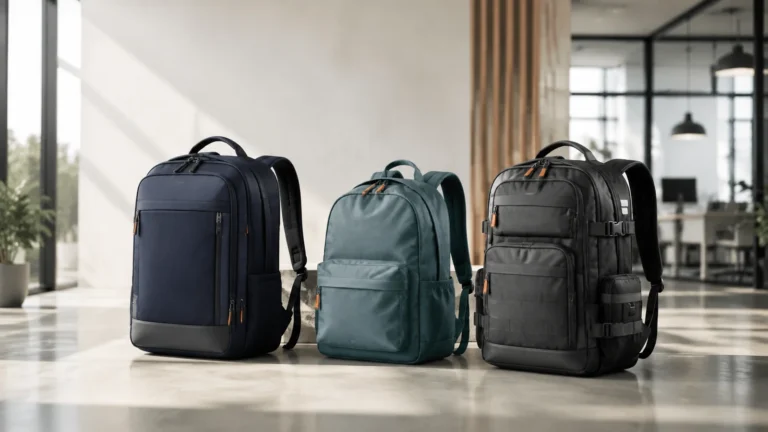
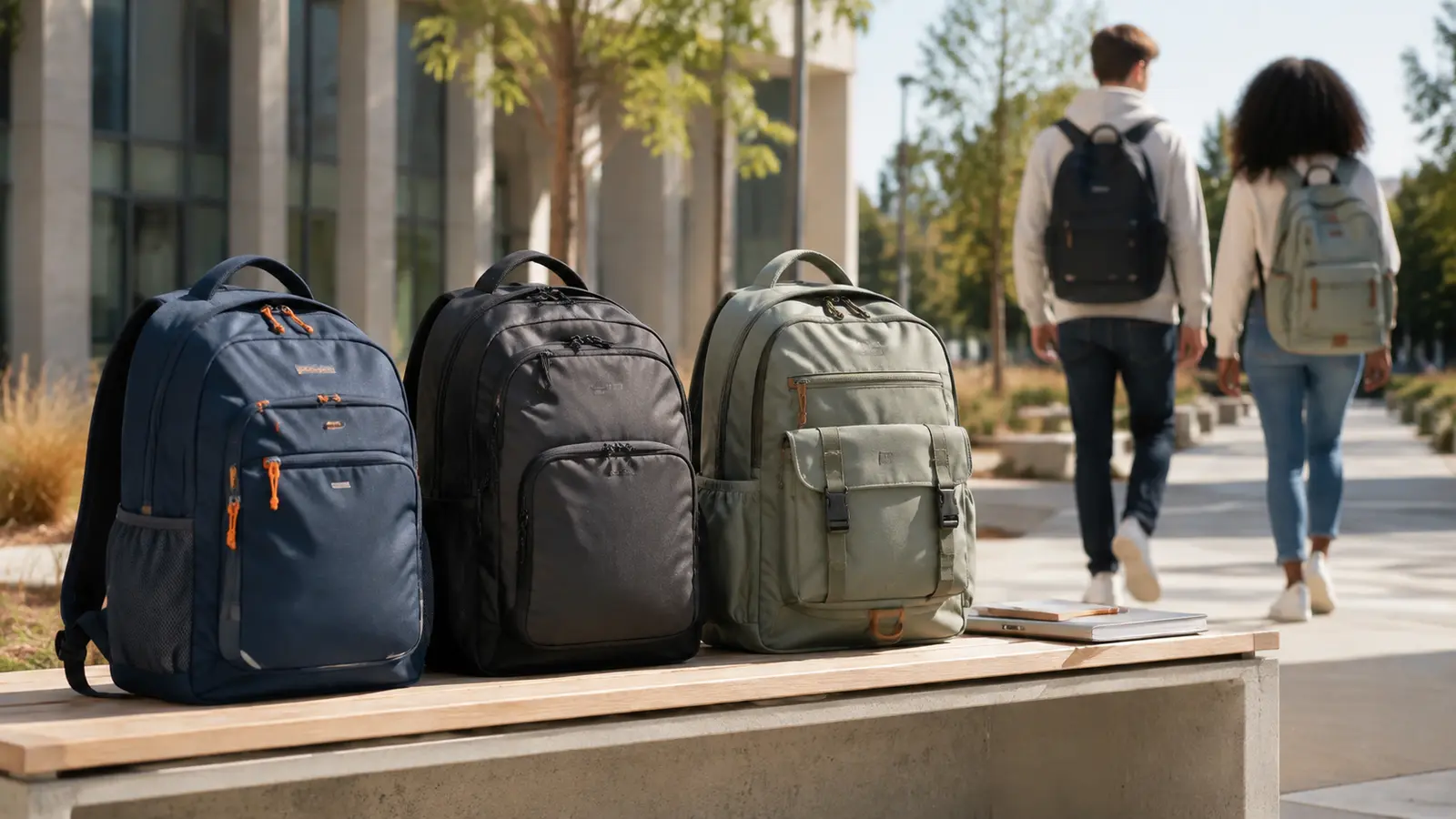
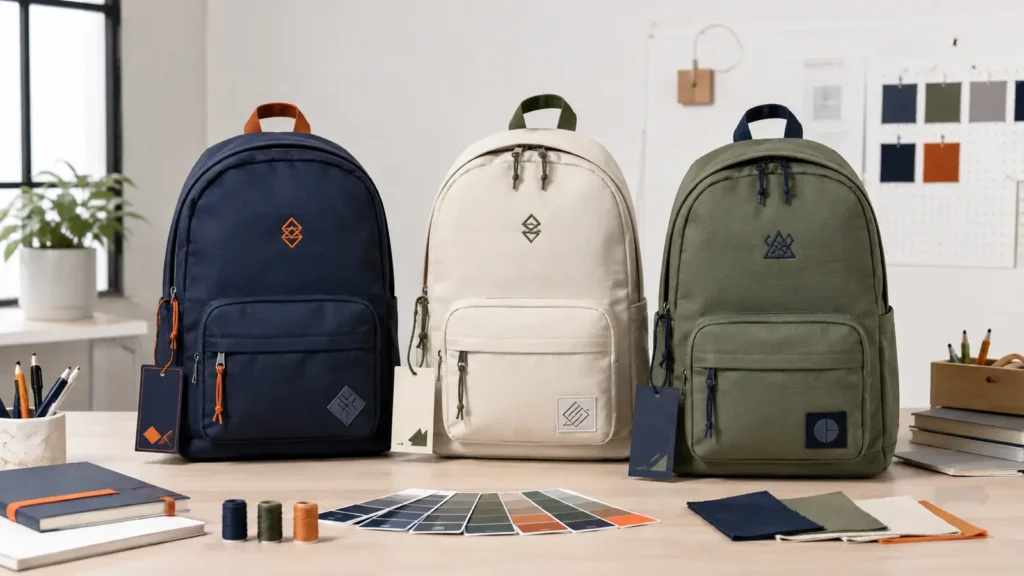
Core neutral colors such as navy, charcoal, black, stone, and muted green can support broad adoption. Accent color can appear on zipper pulls, lining, webbing keepers, embroidery, or bartacks. For a multi-school or private-label program, specify Pantone references, material-dependent tolerances, and the approval method under controlled lighting.
Branding Scale
Teen buyers often prefer branding that feels intentional rather than oversized. Options include a small front embroidery, woven patch, rubber/PVC patch, printed panel, zipper-pull color, internal label, or hangtag. The method must suit the surface and artwork complexity.
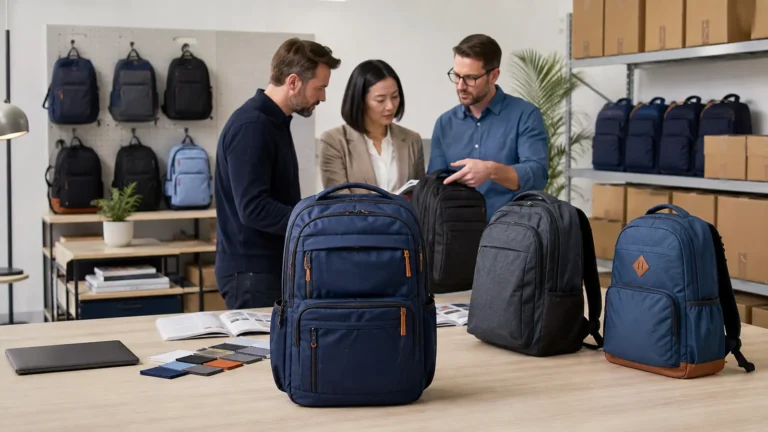
Planning a custom teen backpack program? Send JIUMU your target quantity, reference images or tech pack, finished dimensions, device size, capacity or packing list, fabric direction, colors, logo files, packaging, destination market, and required delivery date. A digital mockup and physical sample can then be used to align the product before bulk production. Request a custom quotation.
Customization and Private-Label Options
JIUMU supports OEM and ODM development, embroidery, printing, woven and rubber/PVC-style patches, fabric sourcing, Pantone color matching, private labels, hangtags, and custom packaging. Each technique affects artwork rules, minimum practical detail, placement, cost, and sampling.
| Customization method | Strong use case | Buyer should approve |
|---|---|---|
| Flat embroidery | School crest, initials, simple marks | Thread color, stitch density, backing, placement, puckering |
| Woven patch | Fine-detail badge artwork | Border, weave clarity, backing and attachment method |
| Rubber/PVC-style patch | Sport or technical aesthetic | Molded detail, color match, thickness, sewing channel |
| Screen or transfer print | Larger graphic or event program | Artwork size, color, hand feel, adhesion and care limits |
| Custom zipper pulls | Small coordinated accent | Shape, material, color, pull strength and edge finish |
| Woven/private label | Retail or school-program identification | Legal copy, country-of-origin plan, placement and durability |
| Custom packaging | Retail, distribution or student issue | Bag type, warning/label needs, carton count and barcode plan |
For imported products, labeling and traceability requirements depend on the product, claims, destination, and sales channel. In the United States, CPSC classification matters because products designed or intended primarily for children aged 12 or younger are treated as children’s products and can trigger specific testing and certification obligations. Teen-only positioning does not by itself settle classification; design, marketing, and foreseeable use can matter. In the EU, the General Product Safety Regulation applies from 13 December 2024 and includes product safety and traceability obligations. Buyers should obtain qualified compliance advice for their exact product and market.
Cost Drivers in a Bulk Teen Backpack Order
Unit cost is shaped by more than fabric. Comparing quotations requires a common specification and a clear Incoterm or delivery basis.
Major drivers include:
- Exterior and lining material specifications, coatings, and color minimums
- Overall dimensions and number of panels
- Pocket count, internal organizers, and device protection
- Foam, mesh, reinforcement, webbing, zippers, buckles, and pullers
- Embroidery stitch count, patch molds, screens, print colors, and placements
- Sample rounds and testing requested by the buyer
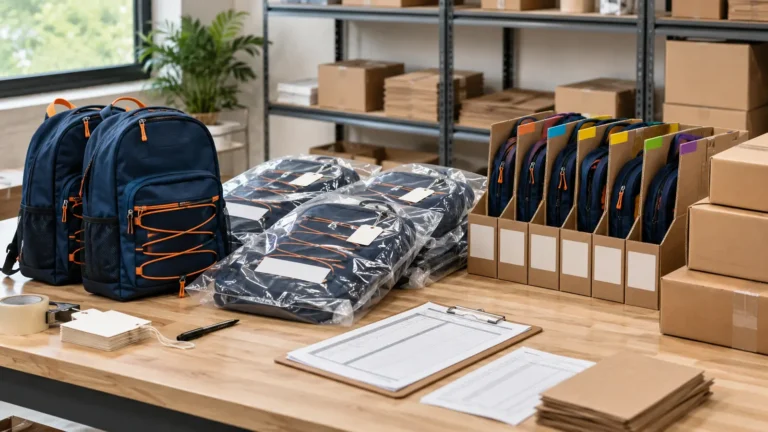
- Labels, hangtags, individual packaging, barcode application, and carton requirements
- Quantity by color or design, not only total order quantity
- Inspection standard, shipping mode, destination, duty, and delivery window
JIUMU’s typical MOQ is 50 pieces, subject to product structure and customization. A simple existing structure with one logo may be practical at a different cost than a fully custom backpack requiring new patterns, several materials, custom hardware, and multiple colorways. Buyers should ask which elements can use existing components and which require development minimums.
Sample Approval and Quality-Control Checklist
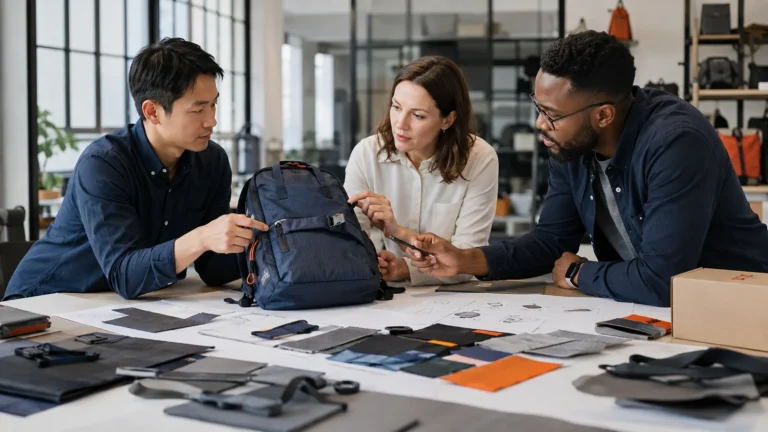
A digital mockup confirms visual direction; it does not validate capacity, fit, sewing, color on material, or packed performance. Use a physical pre-production sample for important programs and create an approval record.
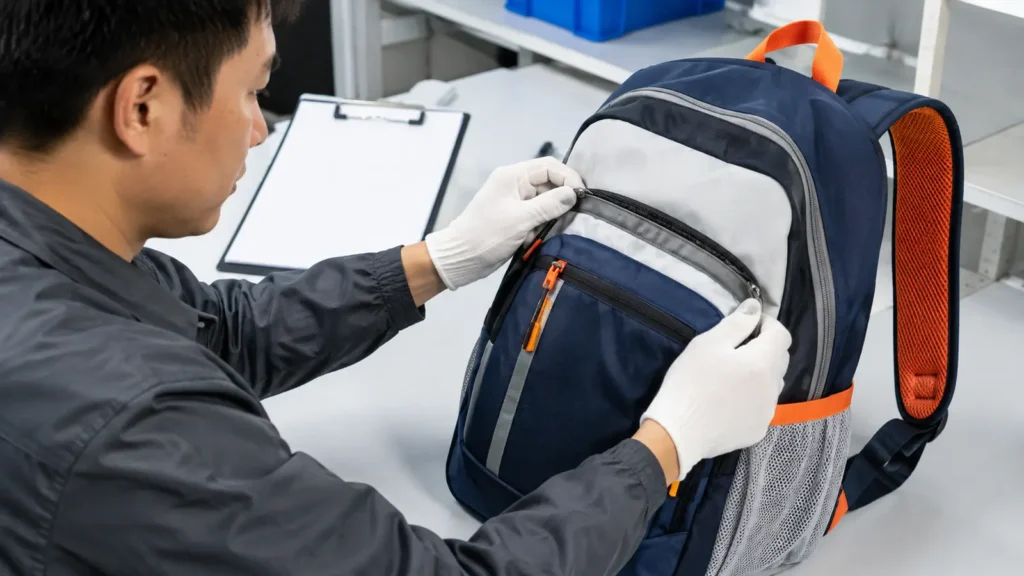
Sample Review Checklist
- Confirm finished height, width, depth, weight, and measurement method.
- Pack the approved reference load, including the actual device and bottle size.
- Check the sleeve’s internal dimensions, padding, closure, and base clearance.
- Inspect fabric face, coating appearance, lining, foam, mesh, webbing, and hardware.
- Compare material colors and logo colors with approved standards under consistent light.
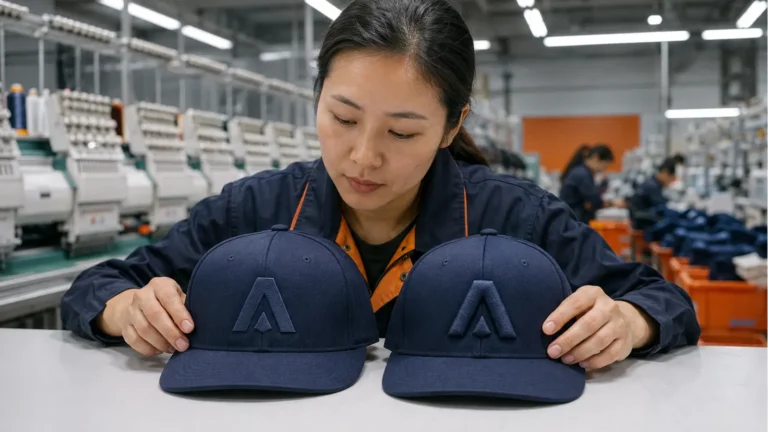
- Check embroidery or patch size, orientation, edge quality, backing, and position.
- Operate every zipper and buckle; look for lining catches and sharp edges.
- Inspect seam allowance, loose threads, skipped stitches, puckering, and reinforcement.
- Adjust the harness across intended wearer sizes and outerwear conditions.
- Lift the packed bag by its top handle and straps; observe distortion at attachment points.
- Confirm label copy, placement, packaging, carton marks, and destination-market information.
- Record approved sample photos and signed or dated specifications for bulk comparison.
Bulk Inspection Priorities
Bulk quality control should verify both workmanship and specification conformity. The inspection plan may include random sampling, defined defect categories, packed-load checks, component verification, measurement tolerances, logo placement, color comparison, packaging count, and carton condition. The buyer and supplier should agree on the inspection method before production, not after goods are finished.
Testing requirements must also be defined. Possible tests could concern colorfastness, seam strength, attachment strength, zipper performance, abrasion, coating performance, or restricted substances, depending on claims and market. Do not assume that a material certificate automatically covers the finished bag or the buyer’s legal obligations.
Bulk-Order Planning Process
1. Define the Program
State who will use the backpack, where it will be sold or issued, the target quantity, color breakdown, price position, delivery location, and launch date. Identify whether the product is intended for students 13 and older only or may be used by younger children.
2. Build the Specification
Provide dimensions, capacity target, packing list, materials, pocket map, device sleeve, straps, back panel, components, colors, branding, labels, packaging, and performance or compliance requirements. Use drawings with measurement points.
3. Review Feasibility and Quotation
The supplier should clarify material availability, customization methods, development costs, MOQ by color, sample timing, estimated production window, packaging, and shipping basis. Resolve ambiguous terms before comparing prices.
4. Approve Digital Artwork and Materials
Confirm logo vector files, placement dimensions, thread or print colors, patch construction, material swatches, and Pantone direction. Screen color is not sufficient for final material approval.
5. Approve the Physical Sample
Evaluate the sample using the reference load and wearer group. Record changes in a revision list. When possible, retain a sealed or clearly identified approved sample for bulk comparison.
6. Confirm Production and Inspection
Freeze the specification, quantities, assortment, labels, packaging, inspection criteria, and shipping marks. Late changes can affect materials, production efficiency, cost, and delivery.
7. Plan Freight and Delivery Backward
Build the calendar from the required in-hand date, allowing time for sampling, revision, material preparation, production, inspection, export, transportation, customs, local delivery, and contingency. Exact lead time must be confirmed for each order.
What Information Should You Send for an Accurate Quote?
Send a concise request-for-quotation pack containing:
- Buyer/company name and destination country
- Intended users and sales or issue channel
- Total quantity and quantity per color/design
- Target dimensions or reference product measurements
- Required capacity or a photographed packing list
- Laptop/tablet dimensions and bottle size
- Outer fabric, lining, foam, mesh, coating, and hardware preferences
- Pocket and compartment map
- Logo vector artwork, size, location, and decoration method
- Pantone references or physical color standards
- Label, hangtag, barcode, individual packaging, and carton needs
- Required tests, compliance documents, and inspection protocol
- Target price basis and requested Incoterm
- Required delivery date and destination
The more complete this pack is, the more meaningful the quotation becomes. A low initial price based on undefined materials and construction cannot be compared reliably with a detailed specification.
Questions to Ask a School Backpack Supplier
- Which dimensions and material specifications are included in the quote?
- How is capacity estimated, and can the sample be checked with our reference load?
- What laptop sleeve dimensions and base clearance will be provided?
- Which components are standard, and which require custom development or minimums?
- How are shoulder-strap and handle attachment points reinforced?
- What logo methods suit our artwork and fabric?
- How will fabric, trim, and logo colors be approved and controlled?
- What is the MOQ per design and per color?
- What sample stages are available, and how are revisions documented?
- Which tests can be arranged to our specified method, and who pays for them?
- How is bulk inspection performed, and can third-party inspection be accommodated?
- What packaging, barcode, carton, and export-document options are available?
- What assumptions are included in the production and delivery estimate?
- How will repeat-order consistency be managed if materials or dye lots change?
Common Buying Mistakes
Choosing Volume Before Defining the Load
This creates either a bag that cannot fit a binder or one that is unnecessarily large. Use a physical reference load and confirm the opening as well as internal dimensions.
Treating Padding as the Whole Comfort Story
Padding cannot correct poor strap geometry, excessive bag depth, unsuitable back length, or an overloaded pack. Evaluate the complete harness and packed fit.
Adding Every Possible Pocket
Feature lists can look impressive while making the bag heavier, costlier, and confusing. Map each pocket to a real item or workflow.
Approving Color Only on a Screen
The same color reference appears different on woven polyester, rubber, embroidery thread, printed ink, and coated fabric. Approve material-specific samples and tolerances.
Using “Waterproof” Without a Defined Test
A coated fabric does not make a sewn backpack waterproof. Define the claim, test method, duration, and acceptable result—or use qualified water-resistance language.
Skipping a Packed Sample Review
An empty sample can hide zipper strain, poor balance, bottle-pocket interference, and strap discomfort. Always test the intended load.
Ignoring Market Classification and Traceability
Age positioning, labels, warnings, traceability, chemical restrictions, and testing can vary by destination and product classification. Address compliance before production and use qualified advice where required.
Why JIUMU for Custom Teen School Backpacks?
JIUMU is a Guangdong-based B2B supplier established in 2010, serving buyers in the United States, Canada, the United Kingdom, and Europe. Its approved capabilities include OEM and ODM product development, fabric sourcing, Pantone color matching, embroidery, printing, woven and rubber/PVC-style patches, private labels, hangtags, custom packaging, digital mockups, physical samples, bulk quality control, and export support.
For a teen backpack project, that capability set is relevant because style, construction, branding, packaging, and repeat-order consistency must be coordinated in one specification. JIUMU’s typical MOQ is 50 pieces, subject to product structure and customization. Buyers should request a project-specific assessment and quote.
You can also explore JIUMU’s custom team bags and coordinate backpacks with custom hoodies, custom team jackets, or broader custom team uniforms.
Frequently Asked Questions
Final Recommendation
The best school backpacks for teens combine a style students accept with a specification buyers can control. Start with the real timetable and load. Select a body-proportional capacity, organize dense items near the back, use two broad adjustable straps, protect devices, reinforce load-bearing joins, and approve all critical details on a packed physical sample.
For bulk procurement, the most important document is not a trend board or a headline capacity—it is a clear product specification connecting user needs to dimensions, materials, construction, customization, inspection, compliance, packaging, and delivery.
Request a JIUMU backpack quotation: Share your quantity, colors, backpack dimensions, reference load, laptop size, materials, logo artwork, label and packaging needs, destination, and delivery date. JIUMU can review the concept, prepare mockups and samples, and align the bulk production plan. Email zhengdong@jiumugear.com, WhatsApp +86 18507502899, or contact JIUMU.