Factory vs Trading Company: Which Is Better for Custom Apparel?
Choosing between a direct factory and a trading company is not a contest between “good” and “bad” suppliers. The better partner is the one whose production control, category coverage, communication, quality system and commercial responsibility fit the order. A specialist factory may give a buyer closer access to a core process. A capable trading or supply-chain company may coordinate several factories more effectively for a multi-category program. An integrated supplier may combine owned production with disclosed, approved specialist partners.
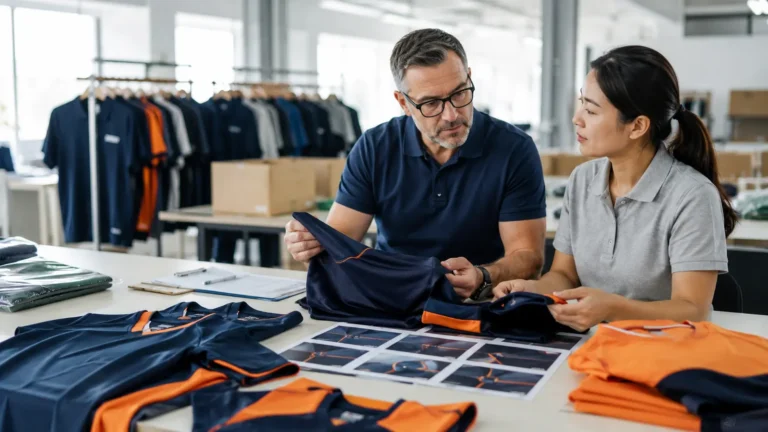
The label on a business card does not prove any of those capabilities. Custom apparel buyers should map who sells the order, who engineers the product, who physically makes each component, who inspects it and who resolves a failure. This guide provides a practical framework for schools, sports clubs, brands, promotional buyers and uniform dealers comparing suppliers for custom jerseys, teamwear, hats, bags and complete uniform packages.
Quick Answer
A direct factory is often the stronger choice when one product category dominates the order, the buyer needs detailed process access, and the factory genuinely controls the critical operations. A trading company can be the stronger choice when several product categories, materials or specialist factories must be coordinated under one schedule. An integrated supplier can work well when it owns the core production relevant to the order and transparently manages approved external processes.
Direct factory does not automatically mean lowest total cost. Trading company does not automatically mean weak quality control. Compare the complete landed and management cost, sample accuracy, capacity, process ownership, subcontracting controls, inspection evidence and written after-sales responsibility.
What Is a Direct Apparel Factory?
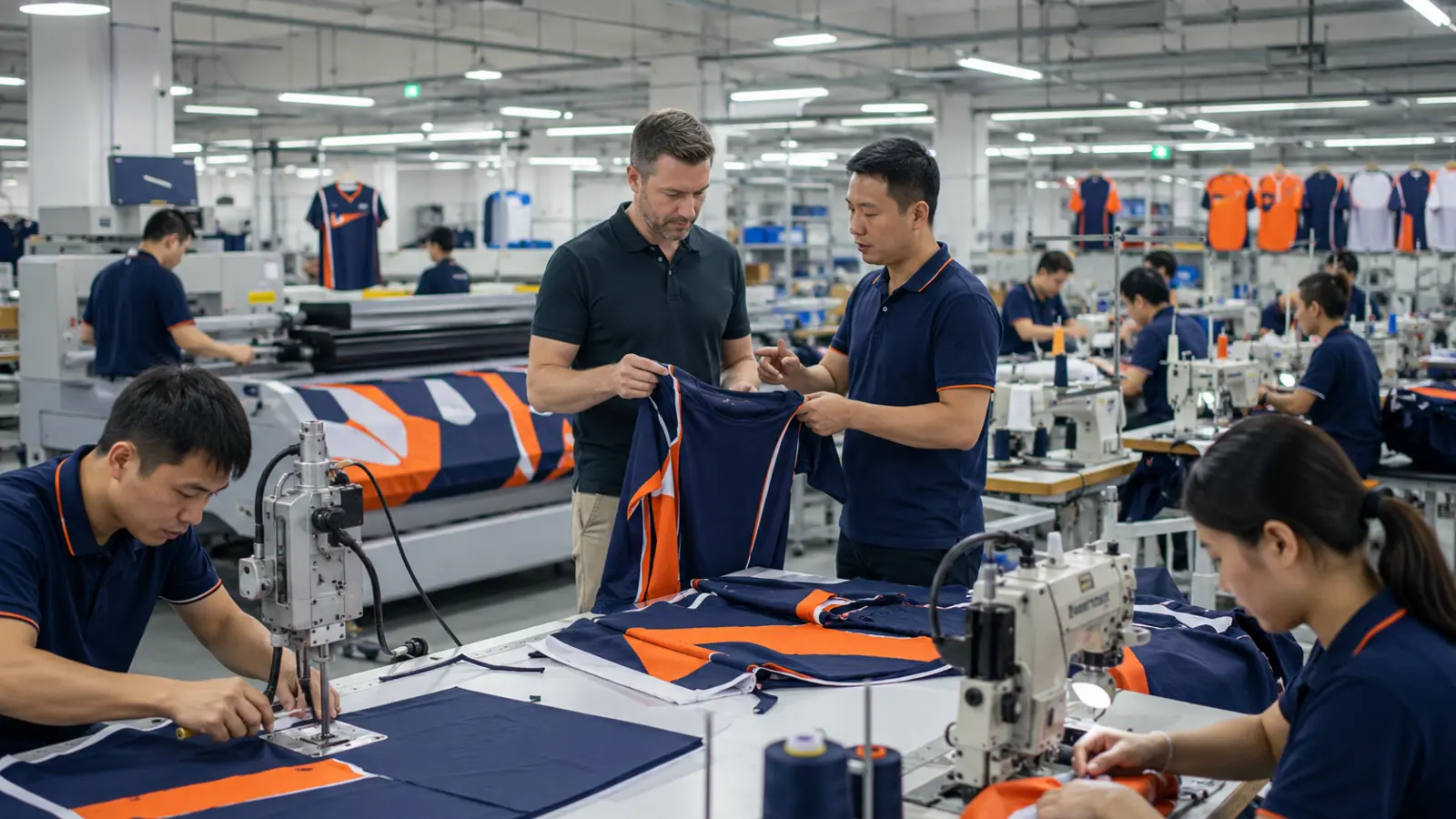
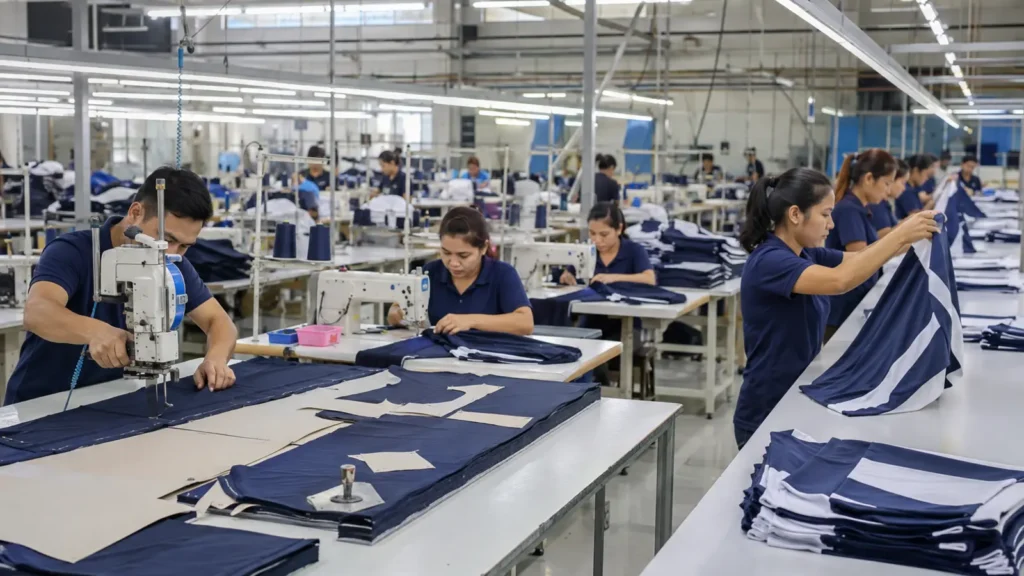
A direct factory is a manufacturing business that physically performs important production processes for the products it sells. For a custom jersey supplier, those processes might include pattern development, sublimation printing, cutting, sewing, finishing, inspection and packing. A knitwear factory, cap factory or bag factory will have a different equipment base and workforce.
“Factory” should not be interpreted as “every process happens inside one building.” Apparel supply chains are specialized. Fabric knitting, dyeing, printing, embroidery, washing, heat transfer, labels, zippers, packaging or laboratory testing may be handled by external specialists even when the finished garment is cut and sewn in the supplier’s own facility. The relevant question is which critical processes are owned, which are external, and how every external process is approved and controlled.
Potential Advantages of a Direct Factory
- Direct access to technicians responsible for patterns, printing, sewing and production engineering
- Faster feedback when artwork or construction must be adjusted
- Better visibility of machines, operators, work-in-progress and production capacity
- Strong specialization when the factory repeats a narrow product category
- Easier comparison between a Golden Sample and the active production line
- Fewer commercial handoffs for decisions about tolerances and corrective action
Potential Limitations of a Direct Factory
- A specialized jersey factory may not make caps, socks, belts, jackets and bags
- Sales and project-management support may be narrower than its technical capability
- Small buyers may compete with large production runs for attention and capacity
- The factory may still outsource processes without explaining them clearly
- A low ex-factory price can be offset by buyer time spent coordinating several suppliers
- Export documentation, consolidation, packaging or multi-destination delivery may require additional support
The strongest direct factory is not the one that claims to own everything. It is the one that accurately states its production boundary and demonstrates control of the processes affecting the buyer’s specification.
What Is a Trading Company or Sourcing Company?
A trading company normally contracts with the buyer and sources products from one or more manufacturing partners. It may provide sales communication, product development, factory selection, order consolidation, inspection, export documentation and after-sales coordination. Some trading companies are primarily sales intermediaries; others employ experienced merchandisers, technicians and QC inspectors.
A sourcing company or supply-chain integrator may use a similar legal model but deliver deeper product engineering and vendor management. Buyers should therefore evaluate actual functions rather than relying on the supplier’s chosen label.
Potential Advantages of a Trading or Sourcing Company
- Access to different factories for different product categories
- One commercial contact for jerseys, hats, socks, jackets, bags and packaging
- Consolidated order schedules and potentially consolidated shipments
- Alternative capacity when one factory is full or unsuitable
- Broader material and decoration sourcing network
- Dedicated English-language merchandising, documentation and after-sales support
Potential Limitations
- The buyer may have less direct access to the production technician
- A quotation may not reveal the manufacturer or every commercial layer
- Factory changes can create sample-to-bulk or reorder inconsistency
- Technical information may be delayed or simplified as it passes through contacts
- QC quality depends on the trading company’s staff, procedures and authority
- Undisclosed subcontracting can make responsibility difficult to trace

What Is an Integrated Supplier?
An integrated supplier combines internal manufacturing with supply-chain coordination. It may own the core jersey or apparel factory while working with approved specialist facilities for caps, socks, molded components, unusual printing, bags or packaging. This structure can give a buyer direct access to the main product process and one accountable manager for a wider package.
The term is useful only when the supplier discloses what is internal and external. An integrated supplier should provide a process map, identify approved external steps, define incoming and outgoing inspections, and accept contractual responsibility for the complete delivered order.
The OECD notes that garment and footwear supply chains are commonly multi-tiered and decentralized. Businesses may work through sourcing agents, commercial product suppliers and vertically integrated suppliers that manage production while outsourcing specialist processes. Subcontracting itself is therefore not proof of poor quality. Hidden, uncontrolled or unauthorized subcontracting is the risk.
Factory vs Trading Company vs Integrated Supplier
| Decision factor | Direct factory | Trading/sourcing company | Integrated supplier |
|---|---|---|---|
| Core product expertise | Often deep in a narrower category | Depends on vendor and internal technical team | Deepest in owned categories; coordinated elsewhere |
| Production visibility | Potentially high for owned processes | Must be arranged through manufacturing partners | High for core processes; disclosed partner evidence needed |
| Multi-category range | Often limited by equipment and skills | Usually broad | Broad when partner network is controlled |
| Price structure | May have fewer commercial layers | Includes sourcing and management service | Mixed: owned production plus coordinated items |
| Communication | Direct but varies by export team | Often strong project-management focus | One team can connect production and sourcing |
| Capacity alternatives | Limited to own line and approved overflow | Can move among qualified vendors | Own base plus controlled partner capacity |
| Quality responsibility | Factory should own its output | Contract seller must own delivered quality | Lead supplier should own the complete program |
| Best-fit order | Repeatable core product | Diverse product package | Core apparel plus related team products |
Do not score a supplier from this table without evidence. A sophisticated trading company can outperform a disorganized factory. A transparent integrated supplier can be safer than a factory that secretly sends orders elsewhere.
Is Buying Direct From a Factory Always Cheaper?
Not necessarily. “Cheaper” can refer to quoted unit price, total landed cost or total cost of managing the project. These are different calculations.
A direct factory may quote a lower price for a product that fits its line, quantity and materials. However, the buyer may need separate suppliers for caps, socks, bags and packaging; pay several sample and freight charges; manage multiple artwork approvals; consolidate shipments; and resolve color differences across factories.
A trading or integrated supplier may add a service margin but reduce coordination costs, shipment fragmentation and project risk. It may also negotiate volume across vendors or select a more suitable factory for each item. Conversely, a weak intermediary can add margin without adding technical control, transparency or service.
Compare Total Sourcing Cost
| Cost layer | Questions to ask |
|---|---|
| Product price | What specification, quantity and packaging does the unit price include? |
| Development | Are patterns, artwork, molds, samples and revisions included or separate? |
| Quality | Who pays for testing, inspection, rework and replacement? |
| Logistics | Are inland transport, consolidation, export charges and freight separated? |
| Management | How many suppliers, approvals, payments and shipment files must the buyer control? |
| Failure risk | What is the cost of missed season dates, inconsistent colors or unusable personalization? |
Ask for an itemized quotation and note all assumptions. Price transparency does not require a supplier to disclose every internal margin. It requires the buyer to understand what is included, excluded, provisional and subject to change.
Can One Factory Make Every Product Category?
Usually not with equal depth. Jerseys, fitted caps, molded socks, belts, backpacks and outerwear use different machinery, materials, patterns and skills. Even large manufacturing groups may operate separate plants or departments.
A supplier offering every category is not automatically misrepresenting itself. It may own several factories, coordinate affiliates, or use approved partners. Buyers should request a category-by-category capability map:
| Product or process | Owned facility | Approved partner | Evidence requested | Responsible manager |
|---|---|---|---|---|
| Sublimated jerseys | Yes/No | Name or approved code | Equipment and live-order view | Contact |
| Embroidery | Yes/No | Partner disclosed | Sample, capacity and QC record | Contact |
| Baseball caps | Yes/No | Partner disclosed | Cap line and product sample | Contact |
| Socks and belts | Yes/No | Partner disclosed | Construction and color sample | Contact |
| Team bags | Yes/No | Partner disclosed | Material, sewing and load checks | Contact |
| Retail packaging | Yes/No | Partner disclosed | Packaging sample and packing spec | Contact |
The buyer may accept coded partner identities when commercial confidentiality is reasonable, but the supplier should still disclose the process location, approval status, capability and control method.
Which Apparel Processes Are Commonly Outsourced?
External specialists can be used for fabric production, dyeing, digital or screen printing, embroidery, garment washing, bonding, laser cutting, labels, custom hardware, special packaging and laboratory testing. Overflow sewing may also be external during peak periods.
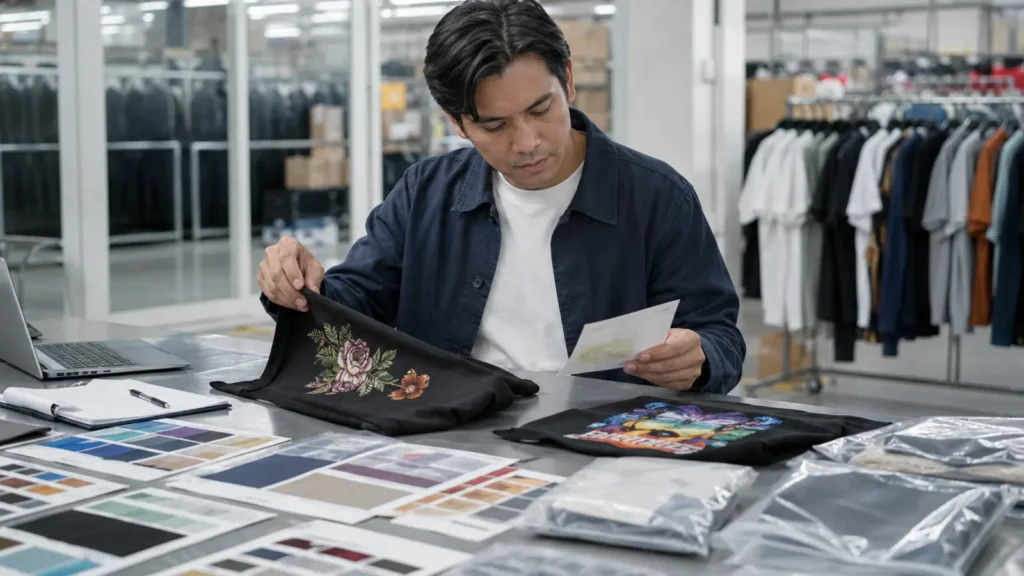
OECD guidance recommends clear policies for subcontracting. When subcontracting is permitted, subcontractors should undergo appropriate due diligence and ideally a prequalification process. Direct suppliers should be prepared to disclose the intent to subcontract, the approved subcontractor, current information about it and the allocation of work. This is a stronger control than a blanket promise that “nothing is outsourced.”
Subcontracting Disclosure Record
| Field | Required entry |
|---|---|
| Purchase order and product | Order reference and affected item |
| External process | Embroidery, dyeing, washing, sewing or other operation |
| Reason | Specialist capability, approved capacity or other documented reason |
| Facility status | Prequalified, audited, conditionally approved or pending |
| Materials supplied | Fabric, components, artwork and approved reference |
| Quality criteria | Measurement, color, workmanship and test requirements |
| Inspection points | Incoming, in-process, final and release authority |
| Traceability | Lot, work order, date and quantity |
| Corrective action | Owner, deadline, reinspection and disposition |
If the buyer prohibits subcontracting, the order plan must still be realistic. Sudden quantity increases, late design changes or impossible lead times can encourage unauthorized overflow. Confirm capacity and revise the schedule when the specification changes.
Who Is Responsible for Samples, QC and After-Sales?
The buyer should have one contractual counterparty responsible for the complete delivered specification, regardless of internal or external production. That party may recover costs from a subcontractor later, but it should not leave the buyer to negotiate with an unknown workshop.
ISO guidance on outsourced processes explains the principle clearly: an organization cannot simply ignore a process affecting product conformity because an external party performs it. The level of control should reflect the process importance, risk and supplier competence. Current ISO 9001 materials likewise emphasize planned and controlled operations, documented information, performance evaluation and improvement.
| Activity | Buyer | Contract supplier | Manufacturing site or specialist |
|---|---|---|---|
| Specification approval | Defines use and approves final requirements | Converts requirements into controlled files | Confirms manufacturability |
| Sample development | Reviews and records changes | Coordinates versions and costs | Produces and reports deviations |
| Material approval | Approves required standard | Controls approved sources and lots | Verifies incoming materials |
| In-process QC | May request evidence | Defines plan and monitors results | Performs checks and segregation |
| Final inspection | Approves method or third party | Arranges access and corrective action | Presents finished goods and records |
| Shipment release | Confirms commercial conditions | Authorizes release after passed checks | Packs only approved goods |
| Complaint handling | Supplies evidence promptly | Owns root-cause response and remedy proposal | Investigates process and implements action |
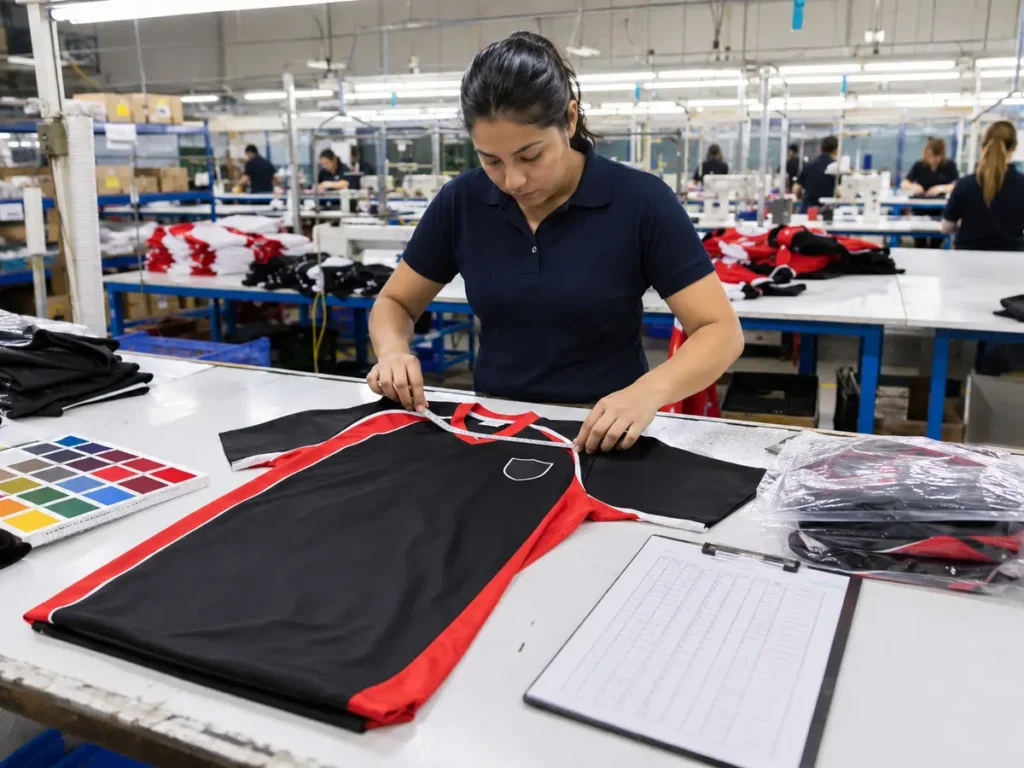
The written purchase order should define defect categories, tolerances, inspection timing, reporting format and possible dispositions. A factory visit is not a substitute for an order-specific quality plan. See JIUMU’s Quality Control overview for the stages buyers can discuss before ordering.
How Can Buyers Verify Real Production?
Verification should combine documents, live evidence, samples and transaction consistency. A website photo alone may be old, staged, licensed or unrelated to the quoted product.
1. Confirm the Legal and Commercial Entity
Compare the company name on the business registration, bank beneficiary, quotation, invoice, contract and export documents. Ask the supplier to explain differences. A factory may use an affiliated export company legitimately, but the relationship should be documented.
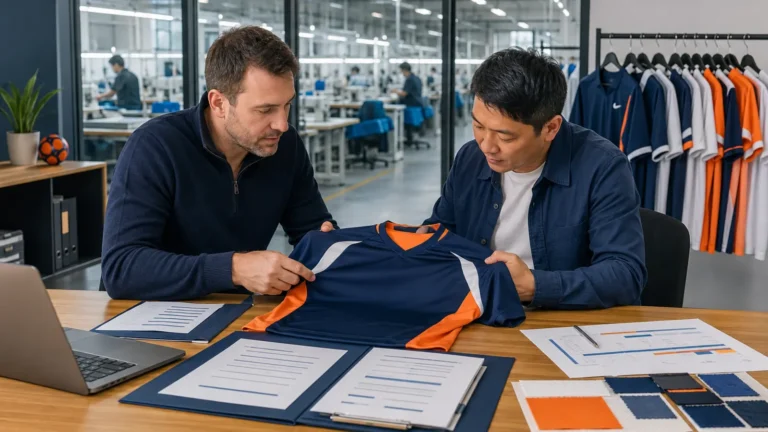
2. Request a Live, Product-Specific Factory Tour
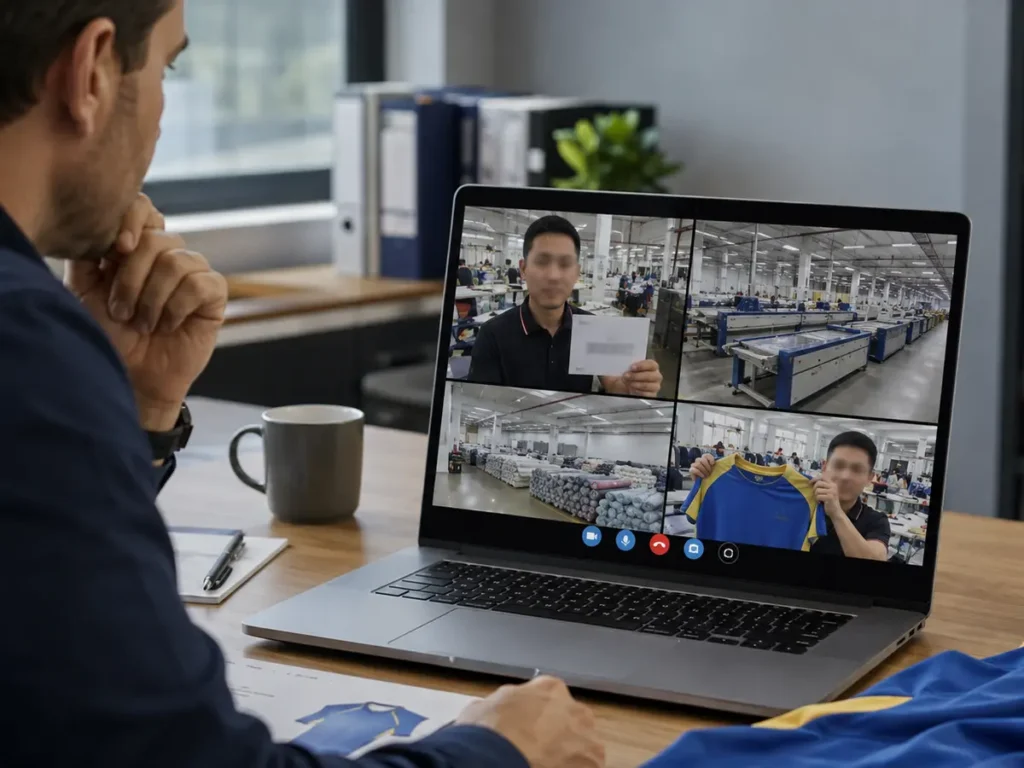
Ask to see the exterior or facility identifier where appropriate, material storage, sample room, relevant machines, active production, in-line QC, finishing and packing. Request a live route rather than only edited video. Use a current date or buyer-provided reference code, while respecting worker privacy and other customers’ confidentiality.
3. Match Equipment to the Quoted Product
Machines prove capability only when they match the operation. A sewing line does not prove sublimation capacity, embroidery capacity or cap construction. Ask who maintains equipment, how output is scheduled and which operations are performed elsewhere.
4. Trace One Sample Through the Process
Follow the sample from artwork and material selection through production and inspection. Compare sample sender details, factory records and the person responsible for changes. A Golden Sample should be linked to a versioned tech pack or order specification.
5. Use Independent Checks When Risk Justifies Them
For significant orders, buyers can commission a factory audit, social-compliance assessment, laboratory test or pre-shipment inspection. Define the scope rather than requesting a vague “factory certificate.” Verify certificate issuer, facility name, address, scope and validity directly with the issuing body when possible.
6. Review Capacity Without Treating It as a Single Number
Ask for normal and peak output for the relevant product, active line allocation, minimum efficient quantity and major bottlenecks. Capacity varies with style complexity, number of colors, personalization, inspection requirement and product mix.
Questions to Ask Every Supplier
- Which legal entity will sign the contract and receive payment?
- Which facility makes each quoted product?
- Which critical processes occur internally?
- Which processes or products may be subcontracted?
- Must subcontractors be approved before use?
- Who creates and controls the tech pack, artwork and roster versions?
- Who approves materials and production samples?
- Who performs in-line and final inspection?
- Can the buyer or an independent inspector access the production site?
- What happens if the sample passes but bulk production fails?
- Who pays for rework, replacements and additional freight?
- How are repeat orders linked to patterns, colors and Golden Samples?
The quality of the answers matters more than how quickly the supplier says “yes.” Strong answers identify roles, files, evidence and decision points.
Choosing for a Single Custom Apparel Product
For one repeatable product—such as sublimated team jerseys—a specialist factory is often efficient when it controls the key print, cutting, sewing and QC stages. The buyer can work directly with technicians, standardize materials and preserve order records.
Choose the direct factory when:
- The factory’s main product matches the order
- The quantity suits its production model
- Technical access and fast correction matter
- One set of materials, patterns and decoration processes dominates
- The buyer can manage logistics and related accessories separately
Choose a sourcing or integrated supplier instead when the nominally “single” product requires several unusual specialist processes, multiple factory options or extensive project management. Review Manufacturing Capabilities rather than assuming capabilities from a product catalog.
Choosing for a Complete Team Package
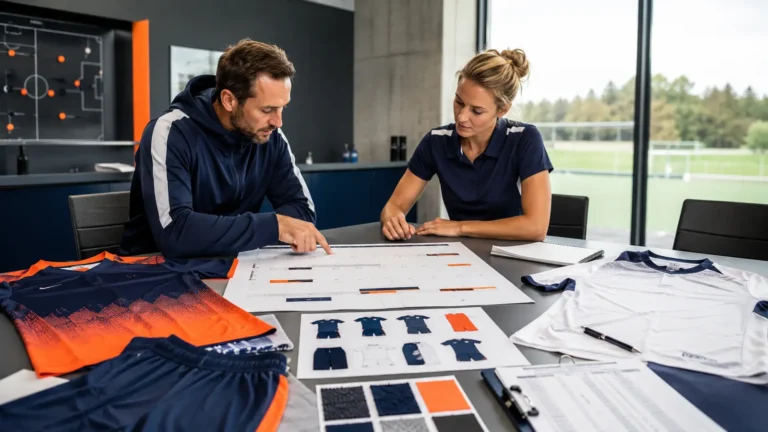
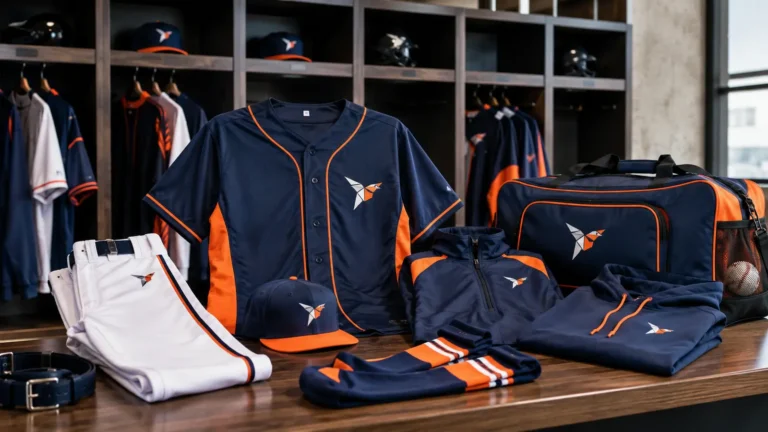
A complete baseball or club package may include jerseys, pants, caps, socks, belts, jackets, hoodies and team bags. Expecting one facility to manufacture every component can reduce supplier choice without improving quality. The more relevant goal is controlled consistency across specialized producers.
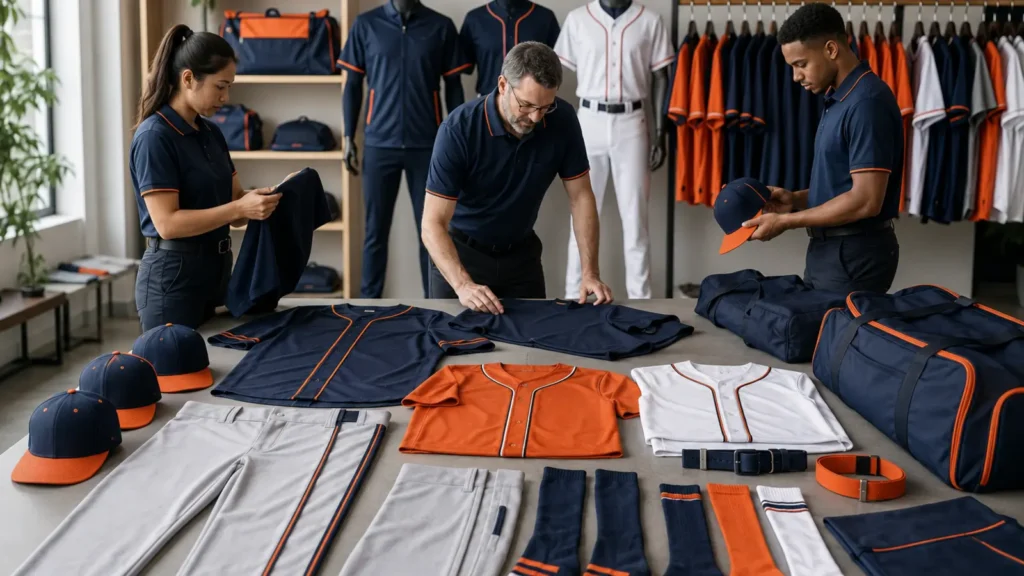
For a multi-category package, evaluate whether the lead supplier can:
- Maintain one approved Pantone and physical color-reference system
- Issue artwork and logo-location standards across every product
- Coordinate Youth and Adult sizes plus player-specific data
- Align sample, production and shipping calendars
- Inspect each category against its own specification
- Pack by team, player, location or delivery schedule
- Manage shortages, replacements and repeat orders
- Accept responsibility for the entire commercial delivery
A competent trading or integrated supplier can add substantial value here. A group of direct factories may still be better when the buyer has an experienced sourcing team, high category-specific volumes and the ability to manage cross-factory consistency.
Supplier Selection Scorecard
Weight the factors according to the project rather than giving every item equal importance.
| Criterion | Evidence | Suggested emphasis: single product | Suggested emphasis: team package |
|---|---|---|---|
| Relevant production control | Live process and traceable sample | High | Medium–High |
| Product engineering | Technical review and records | High | High |
| Multi-category management | Category map and schedule | Low–Medium | High |
| Subcontracting transparency | Approved partner controls | High | High |
| Quality system | QC plan, records and corrective action | High | High |
| Communication | Named owner and response workflow | Medium | High |
| Commercial clarity | Itemized quote and exclusions | Medium | High |
| Delivery resilience | Capacity evidence and contingency | Medium | High |
| Reorder control | Golden Sample and version archive | High | High |
| After-sales ownership | Written remedy process | High | High |
Score evidence from 1 to 5, multiply it by the chosen weighting and record concerns separately. Do not allow a very low price to compensate automatically for missing legal identity, unauthorized subcontracting or refusal of reasonable inspection.
How JIUMU Positions Its Supply Model
JIUMU was established in 2010 in Guangdong and supports OEM and ODM custom teamwear, hats, bags and related branded products. Its sourcing conversation should begin with a clear category and process map: which core production is performed in-house, which specialized or supporting products involve approved partners, how samples are controlled, and who owns QC and after-sales responsibility.
Buyers can review Company Facts, Manufacturing Capabilities, Quality Control and About Us before requesting project-specific evidence. Public pages provide context; the quotation, specification, sample approval and purchase agreement must define the actual order.
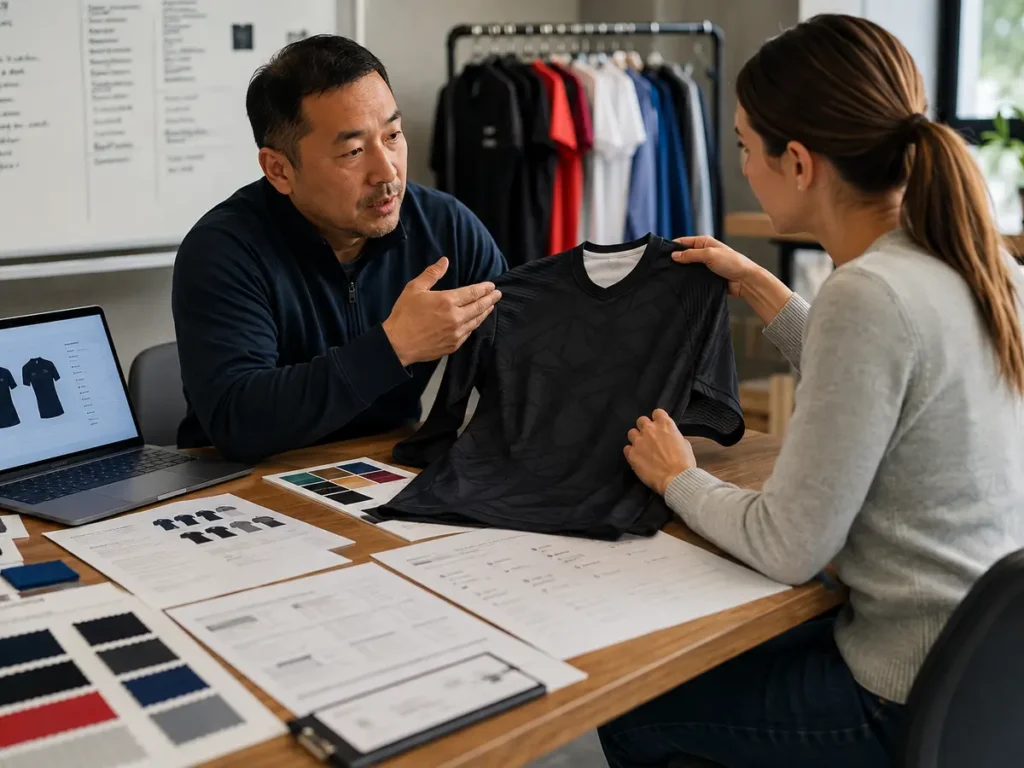
Compare the real supply chain, not only supplier labels. Send JIUMU your product list, quantities, artwork, target delivery date and inspection requirements to receive a project-specific capability and quotation review.
Common Purchasing Mistakes
- Selecting a supplier only because its name contains “factory”
- Assuming every catalog product is made in the same building
- Rejecting all subcontracting instead of controlling high-risk external processes
- Comparing unit prices with different materials, packaging or quality scopes
- Auditing a facility that will not make the actual order
- Approving a sample without linking it to the production factory and file revision
- Leaving final inspection and complaint responsibility undefined
- Using separate suppliers for a package without assigning cross-category color control
- Accepting certificates without checking facility, scope, issuer and validity
- Paying an unrelated beneficiary without documenting the relationship
Frequently Asked Questions
Final Recommendation
Choose a direct factory when it demonstrably controls the most important processes for a focused product and the buyer can manage the remaining supply chain. Choose a trading or sourcing company when multi-factory coordination is the main challenge and its technical, QC and after-sales systems are strong. Choose an integrated supplier when owned core production and transparent specialist partners create the best balance.
The safest decision is based on a verified process map, not a supplier category. Identify the contract seller, actual production site, external operations, approval files, inspection owner and remedy path before paying a deposit. Then retain the approved sample and version records for bulk production and reorders.
To evaluate a custom apparel or complete teamwear project, contact JIUMU through About Us and the site inquiry channels with your product list, specifications and required arrival date.
Technical References
- OECD, Due Diligence Essentials for Responsible Garment and Footwear (2026): https://www.oecd.org/en/publications/responsible-business-conduct-spotlights_03a75bf9-en/due-diligence-essentials-for-responsible-garment-and-footwear_c7ae4e4a-en.html
- OECD, Due Diligence Guidance for Responsible Supply Chains in the Garment and Footwear Sector: https://www.oecd.org/en/publications/oecd-due-diligence-guidance-for-responsible-supply-chains-in-the-garment-and-footwear-sector_9789264290587-en.html
- ISO, ISO 9001:2015—Quality Management Systems: https://www.iso.org/standard/62085.html
- ISO, Quality Assurance: A Critical Ingredient for Organizational Success: https://www.iso.org/quality-management/quality-assurance
- U.S. International Trade Administration, Evaluate Foreign Representatives: https://www.trade.gov/evaluate-foreign-representatives
About JIUMU
JIUMU supports OEM and ODM custom teamwear, hats, bags and branded merchandise for professional buyers. Established in 2010 in Guangdong, China.