Baseball Pants vs Softball Pants: Key Differences Explained
Baseball pants and softball pants may look interchangeable at first glance. Both are designed for running, sliding, fielding, repeated washing, and coordinated team uniforms. Yet buyers who compare them only by color often miss the differences that affect fit, comfort, appearance, inventory, and repeat orders.
For schools, clubs, leagues, distributors, and private-label brands, the useful question is: Which cut, length, waistband, fabric, and construction package matches the players and the intended uniform?
This guide compares baseball pants vs softball pants from a B2B sourcing perspective. It explains what is typically different, what can be shared, which assumptions cause ordering problems, and what specifications to send when requesting custom production.
Quick Answer: Baseball pants are commonly offered in relaxed or athletic men’s and boys’ blocks, with full-length, open-bottom, elastic-bottom, knicker, and jogger options. Fastpitch softball pants are commonly built on women’s and girls’ blocks with more shaping through the waist, hips, rise, and thighs, and often use a below-knee or mid-calf cuff. These are market conventions, not universal rules. Fabric, reinforcement, piping, belt loops, pockets, and colors can be similar in both sports. The correct choice should be based on the team’s approved uniform rules, player measurements, preferred silhouette, and sample fit—not the product name alone.
Need Pants for a Baseball or Softball Team?
Use the differences below to define the correct fit block and specification. Then review custom baseball pants or discuss coordinated team uniforms. Include player measurements, roster quantities, preferred length, piping, colors and delivery date in the quotation request.
Why the Difference Matters in a Team Order
A pant that is technically wearable can still be wrong for a program. If the rise is uncomfortable, the hip allowance is too small, the inseam is inconsistent, or the cuff sits at the wrong point, players will compensate by rolling waistbands, pulling hems, or changing sizes. That creates an uneven appearance and increases requests for exchanges.
Across a roster, one incorrect assumption can affect:
- size allocation across youth and adult players;
- the visual consistency of pants, socks, belts, and jerseys;
- comfort during running, crouching, pitching, and sliding;
- reorder accuracy;
- roster distribution; and
- the cost of corrections.
Rules should be checked before styling decisions are finalized. The current NCAA baseball rules state that participating players’ and coaches’ uniforms must be the same color and style. The current NCAA softball rules say eligible players’ jerseys, pants or shorts, and socks must be identical in style, color, and trim, subject to the rule’s stated exceptions. NCAA softball also permits either pants or shorts but requires players on the same team to be attired the same way. These provisions support a practical procurement principle: confirm the governing body and team standard first, then approve one controlled specification for production.
Baseball Pants vs Softball Pants Comparison
The following table summarizes common market patterns. It is a sourcing guide, not a universal rulebook.
| Comparison point | Baseball pants: common specification | Softball pants: common specification | Buyer implication |
|---|---|---|---|
| Primary fit block | Men’s, boys’, unisex, relaxed, or athletic | Women’s, girls’, contoured, or athletic | Do not convert sizes by label alone; compare finished garment measurements |
| Waist-to-hip shaping | Straighter through waist and hip in many traditional cuts | More difference between waist and hip in many fastpitch cuts | Review waist, high hip, full hip, rise, and thigh together |
| Rise | Often mid rise, with variations by brand and style | Often mid or lower-profile athletic rise, with more body shaping | Approve the rise on actual players; “women’s fit” is not a complete specification |
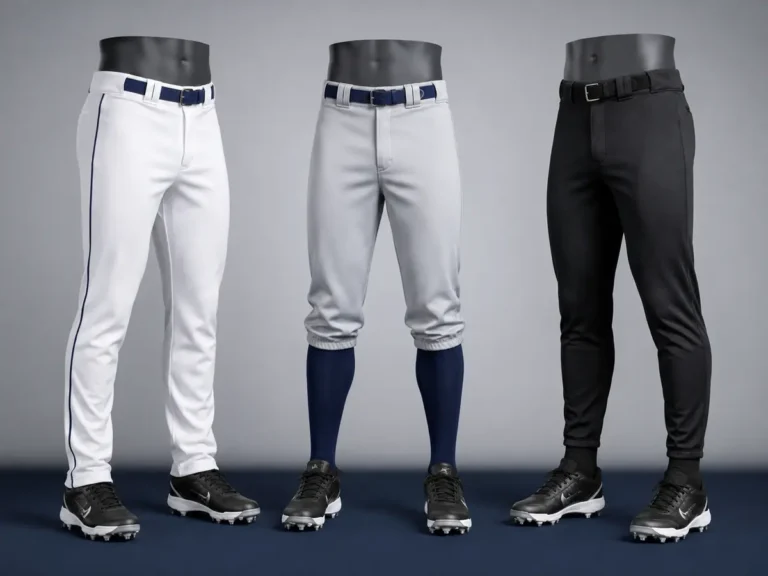
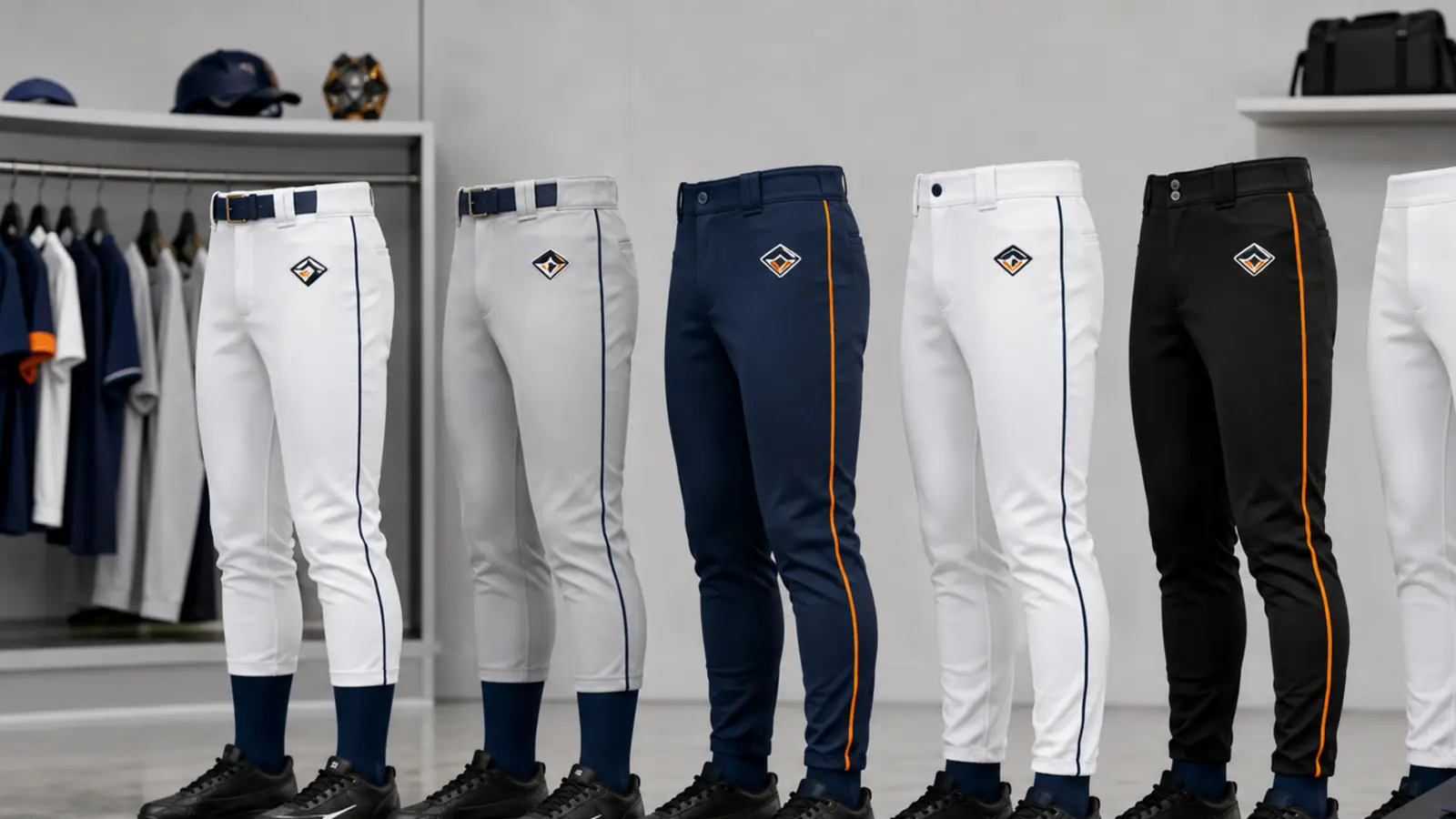
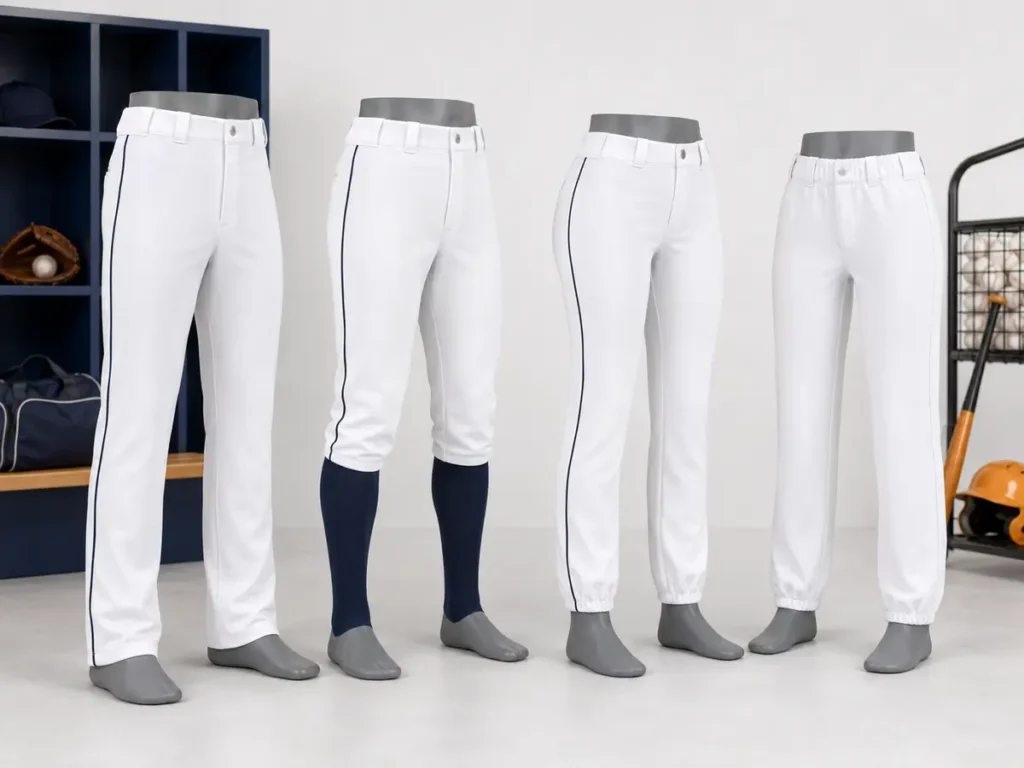
| Typical lengths | Full length, open bottom, elastic bottom, knicker, jogger | Below knee, mid-calf, elastic cuff, full length, or beltless styles | Match hem or cuff position to socks and player preference |
| Leg shape | Relaxed, straight, tapered, or knicker | Frequently closer through thigh and calf, although relaxed options exist | Confirm silhouette and ease at hip, thigh, knee, and calf |
| Waistband | Belt loops with snap/zip fly; pull-up youth options; elastic components | Belted or beltless; elasticized or gripper waistbands are common | Specify loop dimensions, belt width, closure, elastic, drawcord, and gripper |
| Pockets | One or two back pockets are common | Zero, one, or two pockets depending on program and style | Make pocket count and placement explicit |
| Fabric | Polyester double knit, stretch knit, or performance woven | Similar fabrics, sometimes with higher stretch for a closer fit | Select by weight, opacity, stretch, recovery, abrasion, and hand feel |
| Reinforcement | Double knees or reinforced knee zones are common | Knee reinforcement is also common; placement may shift with shorter inseams | Reinforcement must align with the approved size block and length |
| Decoration | Piping, contrast panels, embroidery or small patches, labels | Similar options | Check league logo restrictions before approving visible marks |
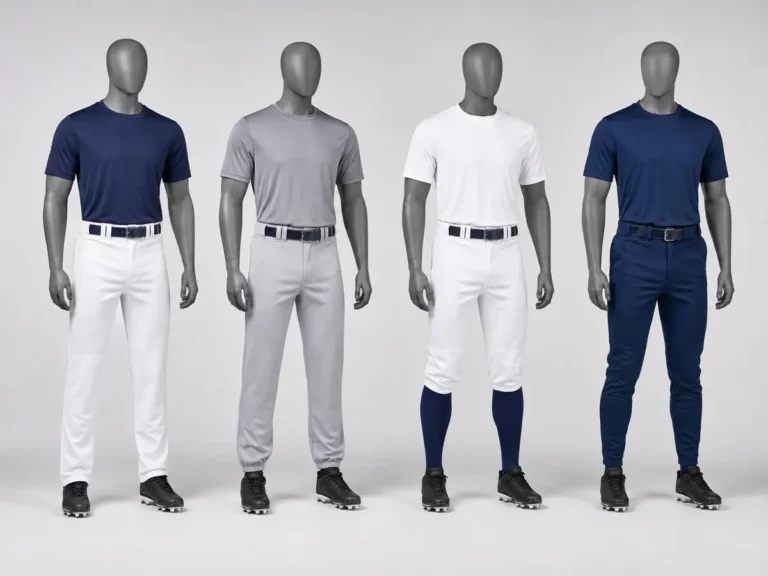
| Team identity | Traditionally coordinated with jersey, cap, belt, and socks | Traditionally coordinated with jersey, socks, belt, visor, or headwear | Approve the full uniform as one system |
Are Baseball and Softball Pants Interchangeable?
Sometimes—but interchangeability should be demonstrated, not assumed.
A player may prefer a baseball-labeled pant because its full-length cut, roomier leg, or specific waistband feels better. A softball player may wear that cut if it complies with the applicable program rules and the team maintains the required uniform consistency. Likewise, a baseball program may select a tapered or knicker silhouette that visually resembles styles commonly sold for softball.
The risk appears when a buyer treats the same nominal size as the same physical garment. A medium in one block may have a different waist, hip, rise, thigh, inseam, and hem opening than a medium in another.
Use interchangeability only when all four conditions are satisfied:
- The governing league, school, tournament, or association allows the style.
- The team approves one consistent appearance.
- The finished measurements fit the intended players.
- A physical sample confirms comfort and mobility in sport-specific movements.
For mixed programs or organizations ordering for both sports, a shared fabric and color standard can reduce complexity while separate fit blocks protect player comfort.
The Most Important Difference: Fit Block and Body Shaping
The words “baseball” and “softball” describe the intended market, but the pattern block creates the actual fit.
Baseball Pant Fit
Traditional baseball pants often use a straighter pattern from waist through hip, then a relaxed, straight, or tapered leg. Men’s and boys’ blocks are common. Full-length open-bottom styles may include extra inseam or a wider hem so the pant falls over the cleat. Knicker styles stop below the knee and expose the sock.
Modern baseball programs also use fitted and jogger silhouettes. Therefore, “baseball fit” should not be interpreted as automatically loose. A technical specification should identify the exact silhouette and provide measurement tolerances.
Softball Pant Fit
Women’s fastpitch softball pants are frequently patterned with more waist-to-hip shaping, a contoured rise, and a closer leg. Many end below the knee or at mid-calf with elastic cuffs, making sock color and cuff placement visible parts of the uniform.
However, softball ranges also include relaxed, full-length, high-rise, low-rise, and beltless options. There is no single softball body type and no one cut will fit an entire roster equally well. The size range and grading must reflect the actual player population.
What a Buyer Should Measure
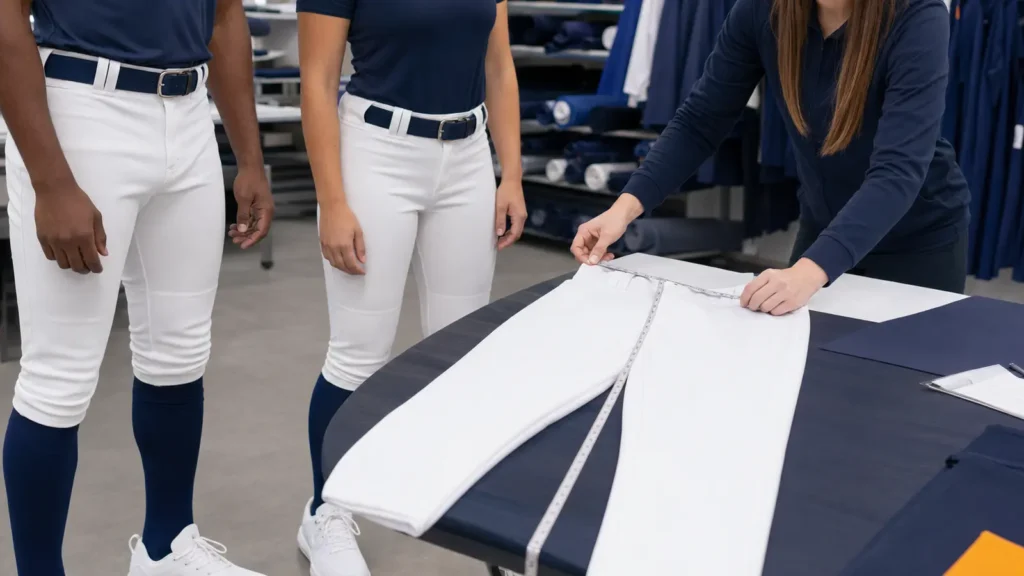
Collect body measurements for roster planning, then compare them with finished garment measurements. At minimum, review:
- natural waist and intended wearing waist;
- high hip and full hip;
- front rise and back rise;
- thigh circumference;
- knee circumference;
- calf circumference for close cuffs;
- inseam to the intended hem or cuff position;
- outseam;
- hem opening or cuff opening; and
- preferred ease through the seat and thigh.
Rawlings’ published sizing guidance instructs buyers to measure around the position where the player wears a belt and provides distinct women’s and girls’ waist and inseam ranges. Size names alone are not sufficient; the supplier’s approved measurement chart and tolerance sheet should control custom production.
Length and Hem Style Change the Entire Uniform
Pant length affects more than appearance. It changes sock exposure, knee-reinforcement position, calf comfort, mobility, and the way the garment interacts with cleats.
Full-Length and Open-Bottom Pants
Full-length baseball pants are a traditional choice for many school, collegiate, adult, and professional-inspired programs. Open-bottom models fall over the cleat and can create a long, clean line. Buyers must control inseam grading and hem opening; excess fabric can drag, while a narrow opening may catch above the shoe.
Full-length softball pants are also available for teams that prefer more coverage or less sock exposure. The style should still use the appropriate fit block.
Knicker and Below-Knee Pants
Knicker baseball pants and fastpitch softball pants commonly finish below the knee. This makes the sock and cuff part of the visual system. The cuff must be secure without restricting circulation, and the knee reinforcement must sit where sliding contact actually occurs.
Do not specify only “knee length.” Define the inseam by size and the finished cuff opening. A fixed inseam across all sizes can place the cuff too high on tall players and too low on shorter players.
Elastic-Bottom and Jogger Styles
Elastic-bottom and jogger-inspired pants create a controlled ankle finish. They require careful calf and ankle grading so the cuff passes over the foot and holds the intended shape.
Waistbands, Closures, Belts, and Pockets
The waistband is a high-stress area and a major comfort point. It also determines whether the jersey stays tucked and whether the team’s belt works correctly.
Belted Waistbands
A traditional game pant may combine:
- a structured waistband;
- belt loops;
- snap or button closure;
- zipper fly; and
- an internal shirt-gripper surface.
Confirm the belt width before setting loop length and clearance. One current Under Armour women’s softball pant specification, for example, publishes a 2 3/8-inch belt-loop length and notes compatibility with most baseball and softball belts. The lesson for custom sourcing is not to copy that measurement, but to specify the team’s actual belt and test it with the sample.
Beltless and Pull-Up Waistbands
Beltless and youth pull-up pants may use wide elastic, a drawcord, or a gripper. They simplify dressing but change how the jersey sits, so approve the full uniform together.
Pocket Configuration
Baseball pants frequently use one or two back welt pockets. Softball pants may use no pockets, one pocket, or two depending on the style and buyer. Pocket count should never be inferred from a reference image alone. Specify:
- number of pockets;
- pocket type;
- opening width and depth;
- left/right placement;
- bartacks at stress points; and
- whether pocketing must remain invisible through white fabric.
Fabric: Similar Materials, Different Performance Priorities
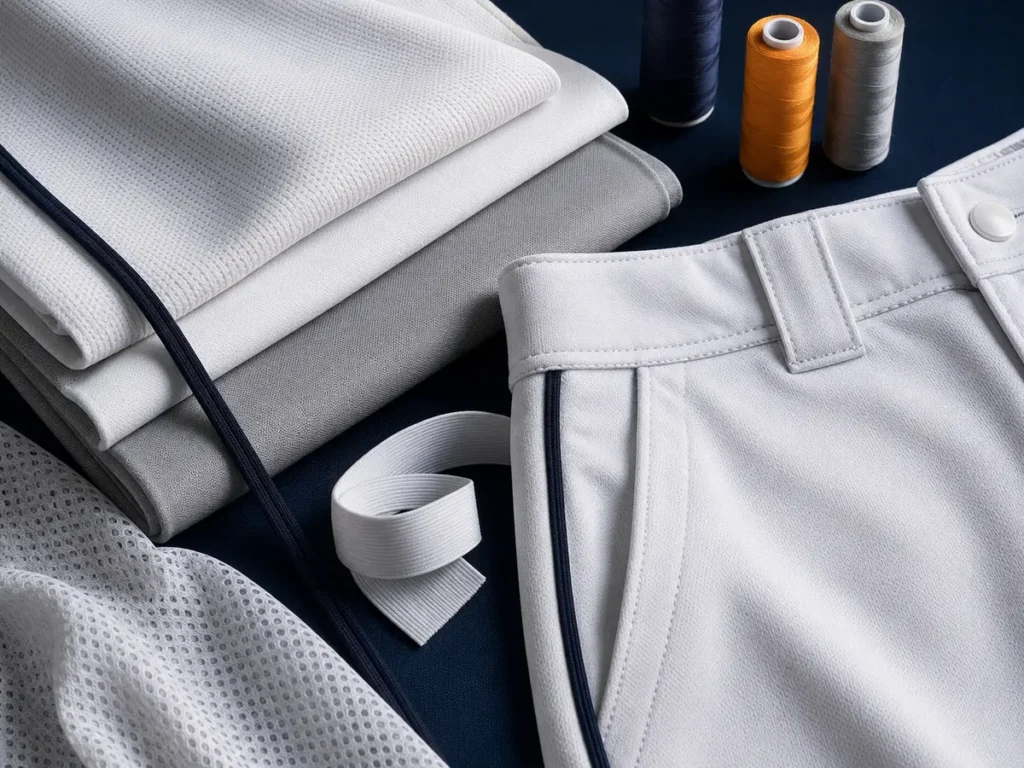
Both categories commonly use polyester-based fabrics because teams need shape retention, repeatable color, washability, and durability. The useful comparison is not “polyester vs polyester,” but the construction and performance of the exact fabric.
Common options include:
- Polyester double knit: structured, durable, and widely used for traditional game pants.
- Stretch double knit: adds elastane or mechanical stretch for closer athletic silhouettes.
- Performance woven: can reduce weight and improve stretch, but opacity and snag behavior must be tested.
- Brushed or peached performance fabric: softer hand feel, subject to abrasion and appearance requirements.
- Mesh or lightweight pocketing: reduces bulk but must not show through the shell.
Fabric Questions That Matter in Procurement
| Test or specification | Why it matters | Practical approval method |
|---|---|---|
| Fabric weight | Influences coverage, heat, hand feel, and cost | Compare labeled swatches and finished samples |
| Stretch and recovery | Affects mobility and whether knees or seat bag out | Perform repeated squat, lunge, and recovery checks |
| Opacity | Critical for white and light colors | Inspect under field-like daylight with intended base layers |
| Abrasion resistance | Sliding contacts knees, thighs, and seat | Use supplier test data when available and conduct wear trials |
| Pilling and snagging | Affects appearance over a season | Rub against representative bench and field surfaces |
| Moisture management | Influences comfort but does not replace ventilation | Request documented fabric information; avoid unsupported claims |
| Color consistency | Keeps pants aligned with jerseys, piping, socks, and repeat orders | Approve a physical color standard under controlled lighting |
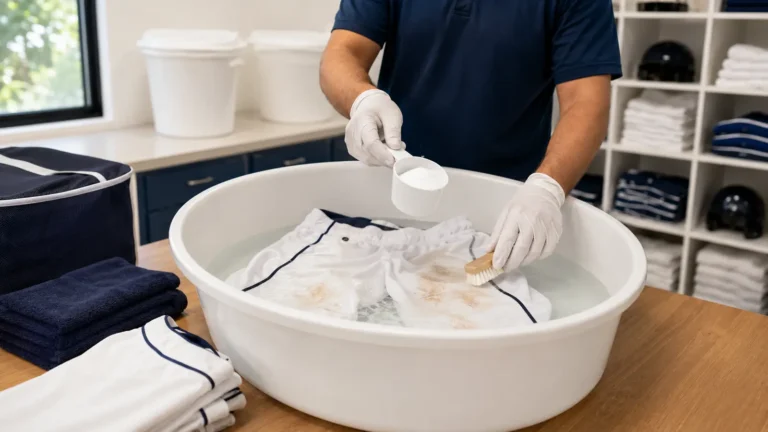
| Wash stability | Protects dimensions, shape, and trim alignment | Wash samples using the team’s realistic care process |
| Dye migration risk | Dark underlayers or trim can affect light fabrics and decorations | Test the full color and decoration combination |
Buyers should balance coverage, stretch, durability, climate, and price rather than assuming heavier or lighter is always better.
Construction and Reinforcement
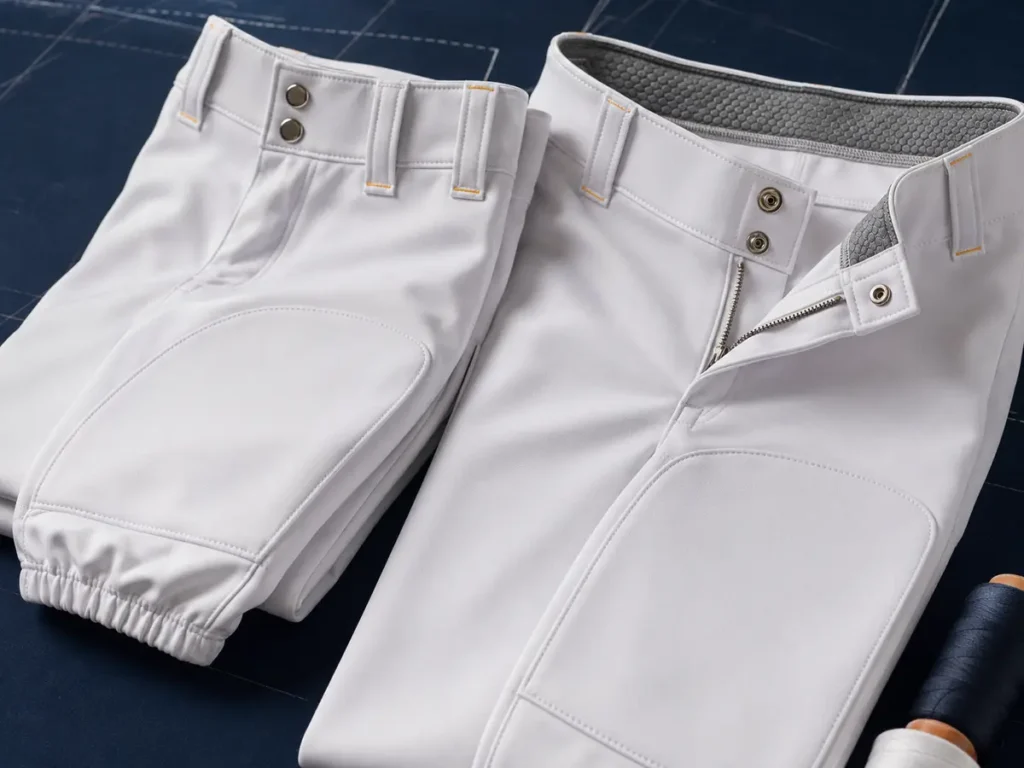
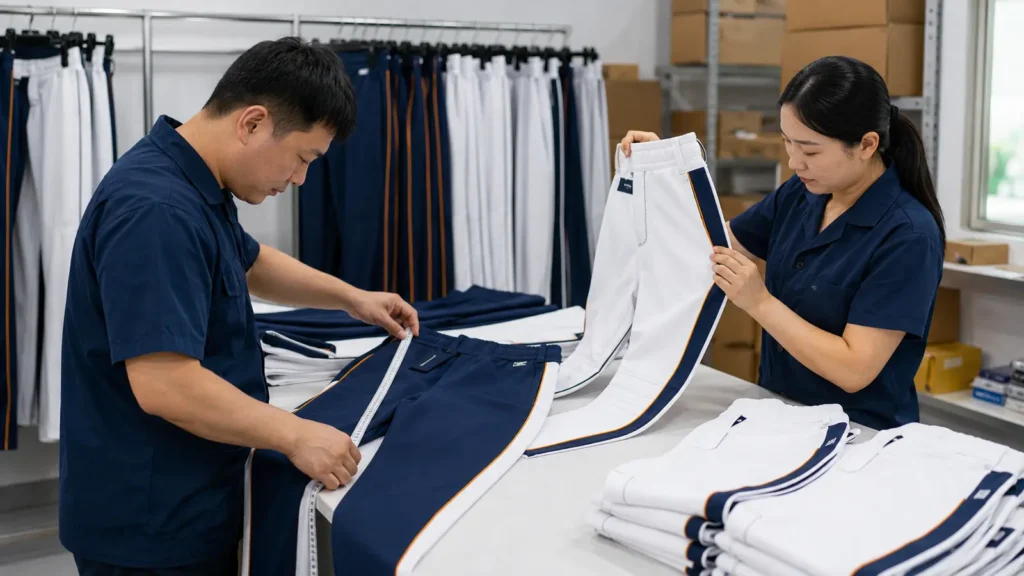
Pants used for diamond sports experience concentrated stress at the seat, crotch, knees, waistband, belt loops, pocket openings, and cuffs. A clean sample should be examined inside and outside.
Key construction points include:
- reinforced or double-layer knees;
- crotch seam shape and seam strength;
- consistent inseam and outseam stitching;
- bar-tacked belt loops and pocket ends;
- secure snap, button, zipper, or drawcord attachment;
- smooth elastic joins;
- even cuff tension;
- aligned piping and side seams;
- no sharp internal edges; and
- balanced front and back rises.
Reinforcement placement must follow the fit block. If a shorter softball inseam is created by trimming a longer pattern without repositioning the knee panel, the reinforcement may miss the impact zone. The same principle applies when converting adult styling to youth sizes.
Customization Options for Team Programs and Private Labels
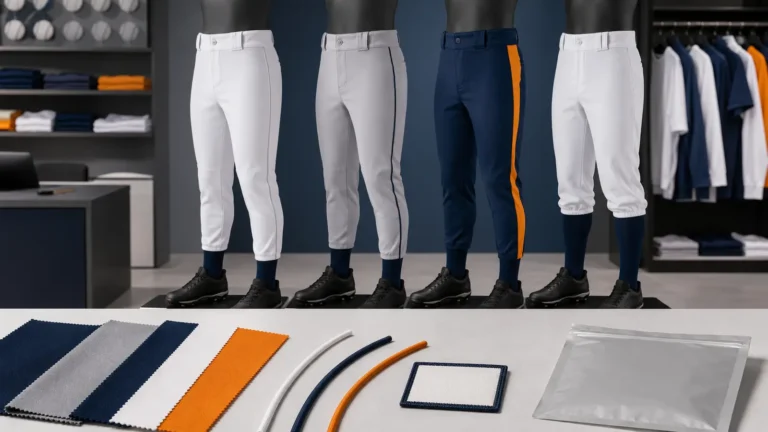
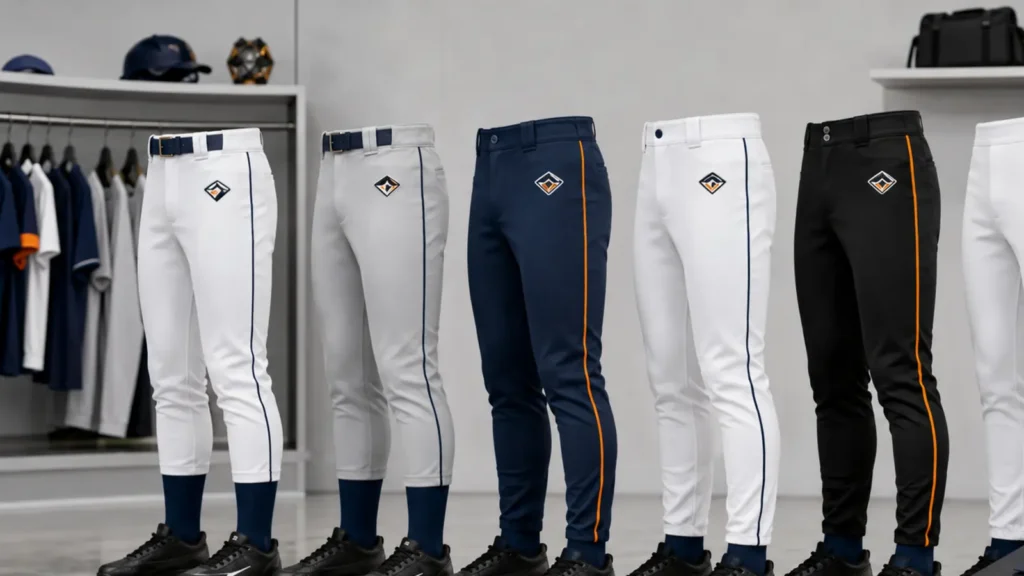
The pants can share a brand system even when baseball and softball teams use different cuts. A coordinated program may standardize:
- base color such as white, gray, black, navy, or cream;
- single, double, or contrast side piping;
- contrast side panels;
- belt and sock colors;
- small team marks where permitted;
- woven size and care labels;
- private neck or waistband labels;
- hangtags and retail packaging;
- player or roster identification for distribution; and
- carton markings for team, size, or delivery location.
Visible logos must comply with the governing organization. NCAA rules restrict certain manufacturer or distributor marks, and local policies may add requirements. Confirm placement and size before sample approval.
On white pants, review decoration for show-through, puckering, dye migration, and internal discomfort.
Planning a baseball and softball program together? Send JIUMU your target quantities, size split, preferred pant silhouettes, color references, piping layout, belt and sock colors, logo files, packaging needs, and required delivery date. JIUMU can help organize separate fit blocks within one coordinated OEM/ODM teamwear program. Request a custom quotation.
Cost Drivers in a Custom Pant Order
The product label—baseball or softball—is rarely the only cost driver. Pricing is more directly influenced by:
- fabric type, weight, stretch content, and color;
- number of pattern blocks and size range;
- full-length versus cuffed construction;
- reinforced knee layers;
- waistband complexity and shirt gripper;
- zipper, snap, button, elastic, and drawcord components;
- pocket count and construction;
- piping, panels, patches, labels, and decoration;
- sample rounds and size-set requirements;
- quantity per color and style;
- individual packaging and roster sorting;
- testing or documentation requirements; and
- shipping method and delivery schedule.
One fabric in two fit blocks may be efficient, while forcing every roster into one unisex pattern can create fit problems. Request an itemized quotation tied to an approved specification.
Quality-Control Checklist Before Bulk Approval
Quality control begins before production. The most important checkpoint is a signed or otherwise documented preproduction standard that everyone can identify.
Sample Approval
Use a physical sample in the correct fabric, color, and construction. Ask representative players to:
- stand, walk, sprint, and change direction;
- squat into fielding position;
- simulate a batting stance;
- tuck in the intended jersey;
- wear the approved belt, socks, and cleats; and
- repeat movement after a realistic wash cycle.
Record every change in one revision sheet. Avoid approving the silhouette from a digital mockup while leaving measurements unresolved.
Size Set and Grading
For a broad range, inspect the smallest, middle, and largest critical sizes. Confirm that cuffs, rise, knee position, pockets, and belt loops grade logically—not just waist and inseam.
Bulk Inspection Points
| Checkpoint | What to verify |
|---|---|
| Incoming fabric and trim | Approved color, hand feel, weight, stretch, elastic, zippers, snaps, buttons, piping, and labels |
| Cutting | Correct pattern revision, grain direction, panel pairing, and shade grouping |
| Sewing | Seam security, reinforcement placement, waistband symmetry, loop strength, pocket alignment, and cuff consistency |
| Measurement | Finished dimensions within the agreed tolerance for each sampled size |
| Appearance | No stains, holes, needle damage, seam twisting, obvious shade variation, or visible pocketing |
| Function | Closures work; elastic recovers; belt passes through loops; player can move without restriction |
| Branding | Correct logo, label, color, placement, and approved mark size |
| Packaging | Correct size sticker, roster or SKU identification, quantity, folding, polybag, and carton marks |
How to Plan a Bulk Order
1. Identify the Rule Environment
List the governing body, league, school, conference, tournament, and internal brand requirements. Obtain written confirmation for pant style, color, visible marks, and uniform consistency.
2. Define Separate Wearer Groups
Do not combine adult men, adult women, boys, and girls into one size list without reviewing fit blocks. Note whether any players need alternative lengths or adaptive solutions.
3. Select the Silhouette
Choose full length, open bottom, elastic bottom, knicker, below knee, jogger, or another defined shape. Include reference images, but translate the image into measurements and construction notes.
4. Build the Specification
Document fabric, color, stretch, waistband, closure, belt loops, pockets, piping, reinforcement, hem or cuff, labels, packaging, and tolerances.
5. Approve Color as a System
View pants, jersey, belt, socks, and headwear together because the same named color can look different across materials.
6. Approve Fit and Construction Samples
Use representative players and sport-specific movement. Record the sample ID and all approved changes.
7. Confirm the Roster and Reorder Plan
Freeze quantities by style, color, and size, plan spares, and retain the approved specification, color standard, and sample.
Information to Send for an Accurate Quotation
Send a structured brief rather than “50 custom pants.” Include:
- baseball, softball, or coordinated multi-team program;
- buyer type and destination country;
- quantity by style and color;
- intended wearer groups;
- full size range and estimated size split;
- pant silhouette and intended length;
- body or finished garment measurement chart;
- fabric preference, weight range, and stretch requirement;
- base color and Pantone or physical color reference;
- piping, panels, belt, sock, and jersey coordination;
- waistband, closure, belt-loop, and pocket requirements;
- knee reinforcement and other construction details;
- logo files and permitted placement;
- private labels, hangtags, polybags, and carton marks;
- applicable uniform rules or testing requirements;
- target delivery date; and
- shipping destination and preferred trade terms.
This information allows a supplier to separate product development questions from price variables and reduces revisions later.
Questions to Ask a Supplier
- Which fit blocks are available for men, women, boys, and girls?
- Can the same fabric and color standard be used across baseball and softball cuts?
- Which finished measurements are controlled for every size?
- How are rise, hip, thigh, knee, calf, and cuff graded?
- Is the knee reinforcement repositioned by size and inseam?
- What is the fabric composition, weight, stretch, and expected opacity in white?
- Which waistband, gripper, closure, belt-loop, and pocket options are available?
- Can we approve a fit sample, color sample, and size set?
- What measurement tolerances will apply to bulk production?
- How are shade variation, piping alignment, seam quality, and packaging checked?
- How will the approved sample and specification be referenced for repeat orders?
- Which elements affect MOQ, sample cost, production time, and shipping?
Common Buying Mistakes
Assuming Softball Pants Are Simply Smaller Baseball Pants
Reducing overall dimensions does not create an appropriate women’s or girls’ block. Waist-to-hip relationship, rise, thigh shape, knee position, and grading require deliberate pattern work.
Ordering by Age or Letter Size Alone
“Youth large” and “adult medium” are not universal dimensions. Use measurement charts and roster data.
Ignoring Socks and Belts Until the End
A cuffed pant exposes the sock, while a belt-loop design must fit the chosen belt. Approve these items together with the jersey.
Choosing White Fabric Without an Opacity Review
Stretch can make a fabric appear more transparent in motion. Evaluate the intended size, fit, base layer, and field lighting.
Approving Only One Sample Size
A good medium does not prove that the smallest and largest sizes grade correctly. Focus on the ends of the size range and any high-volume sizes.
Treating Rules as Universal
NCAA, USA Softball, Little League, state associations, school programs, and tournaments can apply different requirements. Verify the exact rule environment for the season and competition.
Failing to Preserve the Reorder Standard
Keep the final tech pack, measurement chart, tolerance sheet, color reference, trim details, artwork, packaging instructions, and approved sample. Repeat-order consistency depends on controlled references.
Why JIUMU Is Relevant to Teamwear Buyers
JIUMU supports B2B buyers in the United States, Canada, the United Kingdom, and Europe with custom teamwear, logo apparel, hats, uniforms, bags, and branded merchandise.
For baseball and softball programs, JIUMU’s approved capabilities include OEM and ODM product development, fabric sourcing, Pantone color matching, embroidery, sublimation, screen printing, heat transfer, woven and rubber/PVC patches, private labels, hangtags, packaging customization, digital mockups, physical samples, bulk production support, quality control, and export support.
The typical MOQ is 50 pieces, subject to product structure and customization. That makes it possible to discuss a focused team order or a coordinated program that combines pants with custom team uniforms, baseball team uniform packages, jerseys, caps, socks, belts, bags, jackets, or hoodies.
The development path is to confirm wearer group, silhouette, measurements, fabric, construction, colors, branding, packaging, and schedule before bulk approval.
Frequently Asked Questions
Final Recommendation
The best baseball pants vs softball pants decision begins with people and specifications, not labels. Confirm the rules, choose the correct fit block, define the length and silhouette, test the fabric, inspect the waistband and reinforcement, and approve the size grading before bulk production.
If one organization manages both sports, standardize what benefits from consistency—fabric, colors, piping, labels, packaging, and quality criteria—while preserving separate patterns where player fit requires them. That approach creates a coordinated brand without forcing every roster into the same garment.
Sources and Further Reading
- NCAA 2025 and 2026 Baseball Rules Book, especially Rule 1-14 on uniforms.
- NCAA 2026 and 2027 Softball Rules Book, especially Rule 3.10 on uniforms and pants/shorts.
- USA Softball 2026 Official Rules. Buyers should confirm the division and competition rules that apply to their program.
- Little League: Best Practices for Outfitting League Equipment.
- Rawlings / Easton Baseball and Softball Pant Sizing Information.
- Under Armour: How to Buy Baseball Pants.
Rules and product specifications can change. Verify the current rulebook, local league requirements, and supplier specification before ordering.
JIUMU Teamwear Sourcing Team
Practical guidance for schools, clubs, distributors and private-label buyers sourcing custom teamwear, uniforms, hats, bags and branded merchandise.