Best Custom Basketball Jerseys for School and Club Teams
Ordering basketball jerseys for a school or club is not simply a matter of choosing an attractive template. A successful uniform program must work for different body types, satisfy the rules of the competition, survive repeated training and washing, display names and numbers clearly, and remain reproducible when new players join.
The best custom basketball jerseys are therefore the jerseys that fit a team’s actual playing environment, roster, branding, budget, and reorder plan. For many school and club programs, a well-specified sublimated polyester jersey offers the strongest balance of design freedom, low decoration weight, and repeatable personalization. Traditional embroidered or tackle-twill details can create a more dimensional appearance, but they add weight, labor, and possible abrasion points. The right choice depends on what the uniform must do.
This guide explains how athletic directors, coaches, club managers, uniform dealers, and sportswear buyers can compare jersey styles, fabrics, decoration methods, sizing systems, construction, compliance, cost drivers, samples, and quality control before placing a bulk order.
Quick answer: Start with the rulebook used by your league, then choose an athletic cut in a breathable polyester fabric, approve the full size chart and one physical sample, and lock every design detail in a written specification. For most multi-color school and club designs, sublimation is the practical default because the artwork, numbers, and names become part of the fabric surface. Use embroidery or tackle twill selectively when a raised, traditional finish matters more than minimum weight. Always confirm color contrast, number placement, roster spelling, and reorder procedures before production.
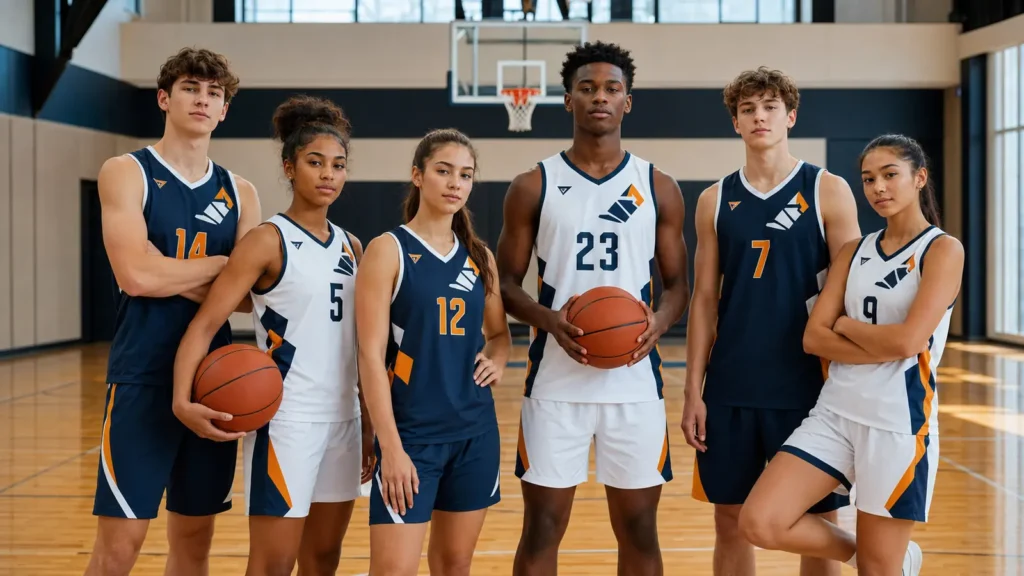
What “Best” Means for a Basketball Team Buyer
A professional buyer must ensure the uniform arrives before the season, fits the roster, complies with the competition, matches team colors, survives the intended care routine, and can be reproduced later.
That changes the definition of “best.” It is not a universal product ranking. It is a sourcing decision based on measurable requirements:
- Rule suitability: legal color zones, number sizes, contrast, logo areas, and home/away conventions.
- Roster suitability: youth and adult size coverage, women’s or unisex cuts, tall sizes, and allowance for growth.
- Performance: fabric weight, ventilation, stretch, drape, moisture handling, and freedom of movement.
- Durability: seam strength, binding quality, print durability, and resistance to snagging or pilling.
- Brand execution: accurate colors, readable numbers, clean artwork, and consistent placement.
- Program continuity: documented specifications, archived artwork, and a workable reorder policy.
- Commercial fit: unit cost, sample cost, personalization, packaging, freight, duties, and schedule risk.
The most expensive construction is not automatically the best. A heavily decorated jersey may be unnecessary for a youth club, while a basic stock jersey may not provide the control required by a school or private-label program.
Best Custom Basketball Jersey Options at a Glance
The following comparison is a practical starting point. Exact performance depends on the selected fabric, artwork, construction, and supplier.
| Jersey option | Best suited to | Main advantages | Main limitations | Procurement note |
|---|---|---|---|---|
| Fully sublimated jersey | Schools, clubs, academies, tournaments, multi-color team designs | Lightweight decoration, broad color and graphic freedom, names and numbers integrated into the design | Exact color reproduction requires controlled files, fabric, printing, and heat settings | Approve a physical color sample for critical brand colors |
| Cut-and-sew color-block jersey | Traditional school programs and repeat uniform systems | Strong visual structure, clear color blocking, fabric-based contrast | More seams and components create more alignment and shade-control points | Specify panel dimensions and seam tolerances |
| Screen-printed jersey | Simple designs and larger runs with limited colors | Economical for suitable quantities and simple artwork | Print hand, cracking, or opacity can vary by ink system and care | Test on the actual jersey fabric before bulk production |
| Heat-transfer jersey | Short runs, sponsor marks, names, or flexible personalization | Clean detail and flexible application | Film feel, edge lifting, or heat sensitivity can occur if materials and settings are poorly matched | Approve adhesion and wash testing on production fabric |
| Embroidered jersey | Premium crest, small chest mark, coachwear, ceremonial use | Dimensional appearance and durable small logos | Adds weight and backing; large areas may feel stiff | Keep embroidery compact and check the reverse side |
| Tackle-twill jersey | Heritage or varsity-inspired programs | Traditional layered appearance and strong visual depth | Higher labor, weight, and cost; more edges and stitch lines | Approve letter material, border width, and stitch density |
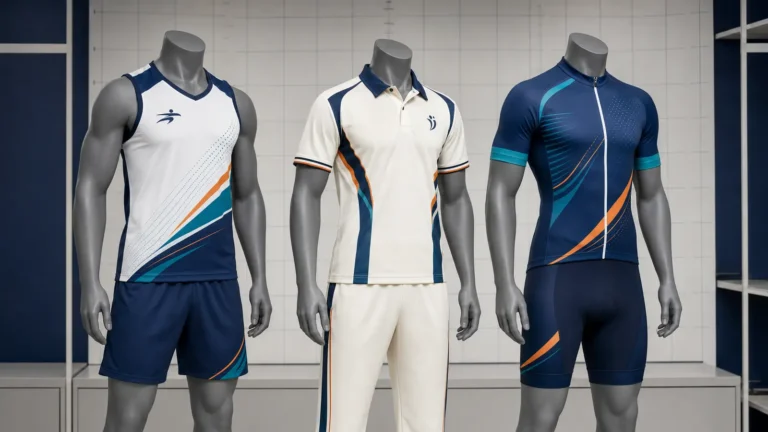
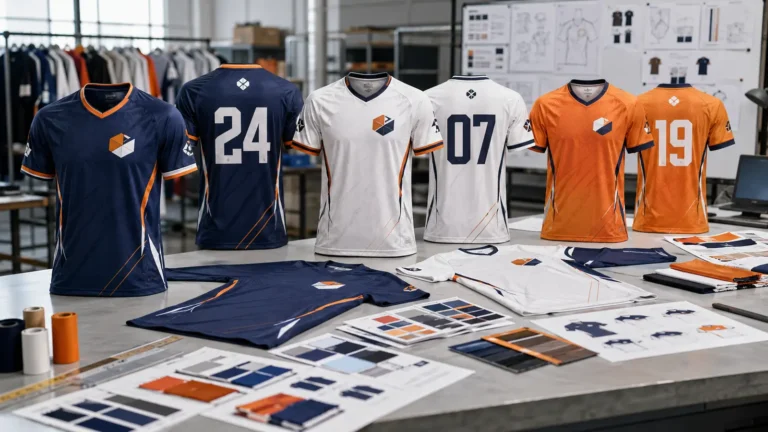
For many school and club buyers, a fully sublimated game jersey plus matching shorts is the simplest way to control complex graphics and unique player details. A hybrid approach can also work: use sublimation for the main body and a small embroidered badge or applied patch for selected branding, provided the competition rules allow it.
School Teams and Club Teams Have Different Priorities
School and club programs often use similar products, but their procurement pressures are not identical.
Schools may need approval from an athletic director, purchasing department, coach, and district office. They often keep a uniform for multiple seasons, so approved colors, broad size coverage, and replacement ordering matter. Before artwork, collect the official logo files, color standards, governing rules, home/away requirements, purchasing requirements, and roster sizes.
Clubs may prioritize distinctive graphics, sponsors, multiple age divisions, and fast roster changes. Decide whether every division uses the same design, whether sponsor areas vary, and how reorders work. A master design with controlled fields for name, number, division, and sponsor reduces errors.
| Decision area | School team priority | Club team priority |
|---|---|---|
| Approval | Institutional brand and purchasing approval | Owner, coach, sponsor, and tournament approval |
| Design lifecycle | Often intended for multiple seasons | May change by season, event, or age division |
| Size range | Broad student population and growth allowance | Multiple age groups, women’s cuts, adult staff |
| Reorders | Transfers, lost garments, multi-year continuity | Roster changes, new divisions, tournament additions |
| Branding | School name, mascot, approved colors | Club identity, sponsors, academy or event marks |
| Scheduling | School calendar and procurement deadlines | Tournament entry dates and rolling registrations |
Choose the Right Jersey Cut and Style
Basketball jerseys must allow overhead arm movement without exposing excessive side area or creating armhole binding. The correct cut depends on the roster, competition, and desired appearance.
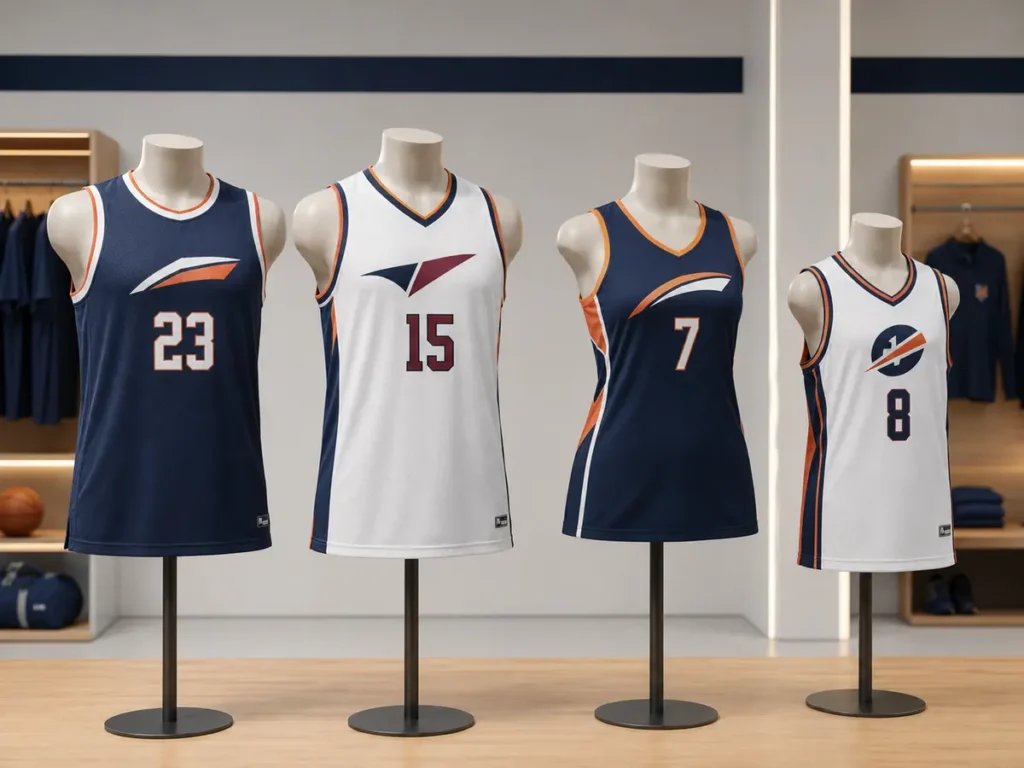
Crew neck or V-neck
A crew neck creates a traditional athletic appearance and provides a continuous binding curve. A V-neck can look more contemporary and visually lengthen the upper body, but the center point must be sewn cleanly. Neither is inherently better for performance. The decision should be based on team style, construction quality, and any rule restrictions.
Unisex, men’s, women’s, and youth cuts
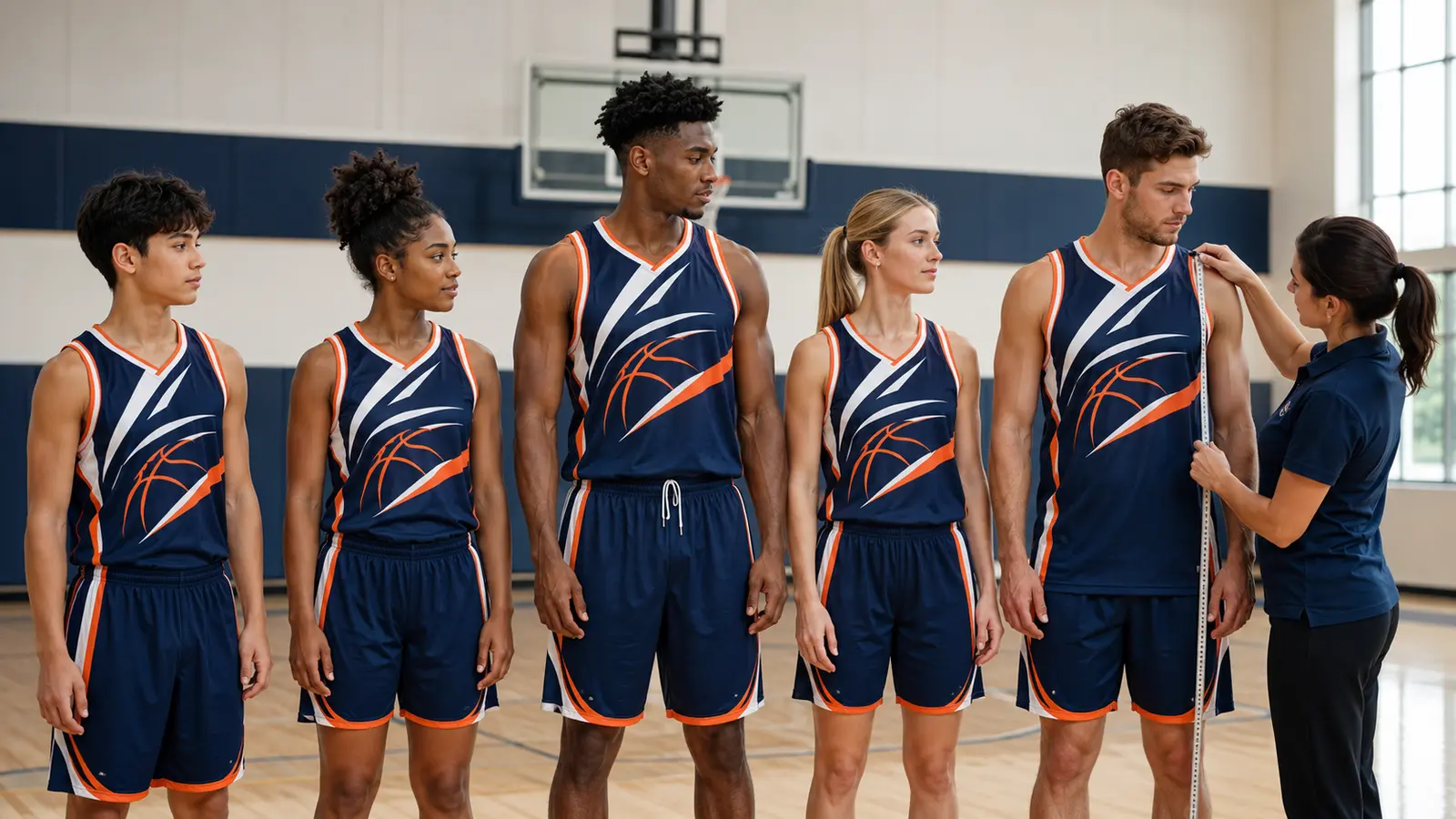
A single unisex pattern may simplify ordering, but it will not fit every roster equally well. A women’s athletic cut may use a different chest, waist, shoulder, and body-length relationship. Youth patterns require more than simply shrinking an adult garment; proportions, neck opening, armhole depth, and body length must be graded for younger players.
Ask the supplier whether size charts refer to body measurements or finished-garment measurements. These are not interchangeable. Finished-garment measurements allow a buyer to compare the jersey with a garment that already fits the player. Body measurements require the supplier’s intended ease allowance.
Reversible jerseys
Reversible jerseys can be useful for training, camps, and programs that need two color options in one garment. However, two layers may increase warmth and weight. Decoration and number visibility must work on both sides, and the neck and armhole construction must conceal or manage internal seams. For official games, confirm that the reversible design satisfies the competition’s color and marking rules in each configuration.
Fabric Selection: Weight, Ventilation, Stretch, and Opacity
Most modern basketball jerseys use polyester because it supports durable athletic constructions and several decoration methods. “Polyester,” however, is only a fiber category. Two fabrics with the same fiber content can perform very differently because of yarn, knit structure, weight, finish, stretch, and dyeing.
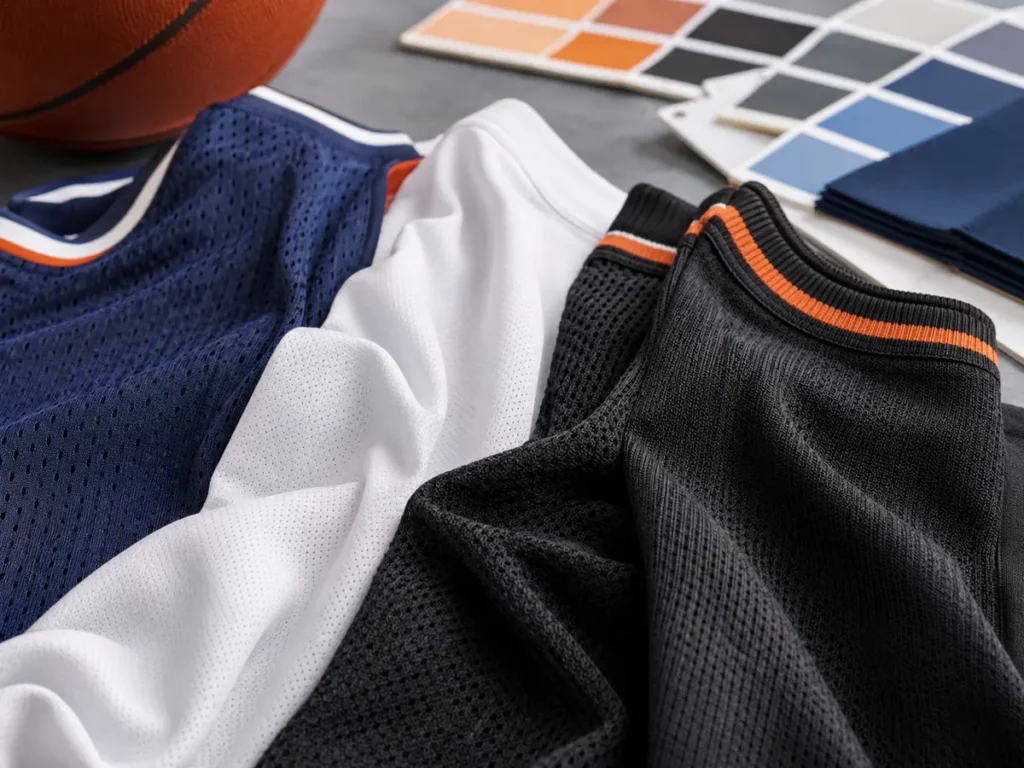
Lightweight micro-mesh
Micro-mesh supports airflow and a visibly athletic texture. It can be appropriate for fast play and warm gyms. Buyers should check snag resistance, opacity—especially in white—and whether printed artwork remains clear across the perforated surface.
Polyester interlock
Interlock has a smoother face than open mesh and can produce crisp sublimated graphics. It often balances drape, opacity, and print clarity. The trade-off may be less open airflow than a visibly perforated mesh, depending on weight and construction.
Double-knit and heavier structures
A denser knit can feel substantial and may improve opacity and shape retention. It may also add warmth and drying time. Heavier does not always mean more durable; seam design, yarn quality, stretch recovery, and care conditions also matter.
When comparing samples, evaluate:
- Fabric composition and exact supplier code.
- Weight in grams per square meter, if available and verified.
- Knit structure and visible perforation.
- Widthwise and lengthwise stretch.
- Recovery after stretching.
- White-fabric opacity under gym lighting.
- Hand feel against bare skin.
- Snagging and pilling tendency.
- Drying behavior after the intended wash process.
- Color response under indoor light and daylight.
Get Basketball Jersey Sizing Right Before Production
Sizing errors are among the most expensive uniform mistakes because a personalized jersey may not be reusable for another player. A roster spreadsheet should never be the first and only sizing tool.
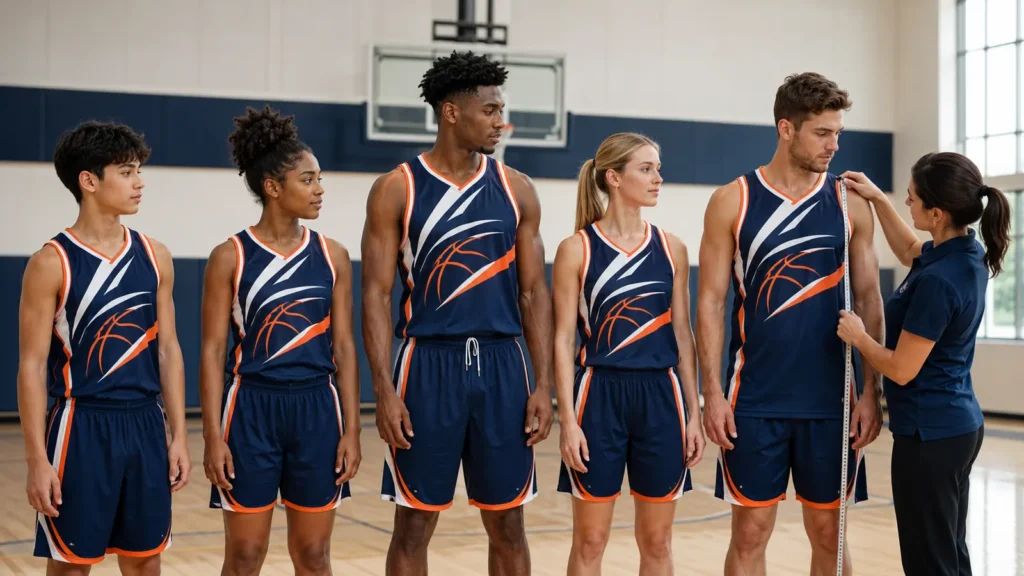
Use a three-step method:
- Review the supplier’s measurement method. Identify whether the chart uses garment width, chest circumference, body chest, body length, or another measure.
- Test a size set. Let representative players try physical samples over the same base layers they expect to wear.
- Approve roster sizes in writing. Record player name, printed name, number, jersey size, shorts size, cut, and quantity in separate columns.
Do not assume jersey and shorts sizes must match. A player may need a medium jersey and large shorts. Keep those fields independent.
For youth programs, consider both current fit and the intended use period. Excessive “room to grow” can create deep armholes, poor number position, and fabric interference. A controlled relaxed fit is better than simply ordering several sizes too large.
Ask the supplier for key finished-garment measurements and tolerances. Useful points include chest width, front body length, back body length, shoulder width, armhole depth, neck opening, and hem width. The specification should also state whether measurements are taken flat and whether the garment is relaxed or stretched.
Decoration Methods: Match the Finish to the Design
Artwork method should be selected together with the fabric and order structure, not after the jersey has been priced.
Sublimation
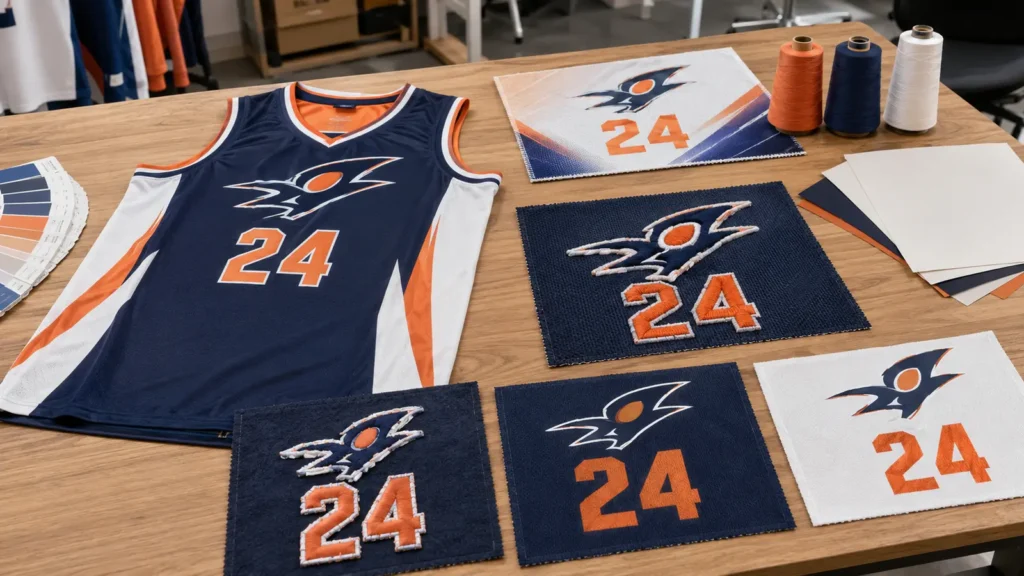
In dye sublimation, the design is printed with sublimation inks and transferred into suitable polyester fabric using heat and pressure. The surface remains relatively light because the image is not a thick layer sitting on top. Sublimation works well for gradients, all-over patterns, multiple colors, individual names, and player numbers.
Key controls include artwork color space, printer and ink profile, paper, fabric lot, transfer temperature, time, and pressure. A digital mockup cannot guarantee the exact appearance of a physical color, so schools with strict brand colors should approve a lab dip, strike-off, or physical printed sample.
Screen printing
Screen printing can be effective for simple, repeat graphics. Cost behavior depends on the number of colors, screens, placements, and order quantity. Buyers should review ink opacity on dark fabric, stretch behavior, print feel, edge definition, and compatibility with the intended wash process.
Heat transfer
Heat transfer is flexible for names, numbers, sponsor marks, and smaller quantities. Different films and transfer systems have different stretch, thickness, and wash performance. A supplier should validate time, temperature, pressure, peeling method, and adhesion on the actual production fabric.
Embroidery
Embroidery is best used selectively on basketball jerseys. A small crest can provide dimension, but a large dense design may become stiff or heavy. Review stitch count, backing, edge sharpness, reverse-side comfort, puckering, and placement away from high-flex or high-contact areas.
Tackle twill and appliqué
Tackle twill uses cut fabric letters or numbers stitched to the garment. It creates a traditional varsity appearance but requires accurate cutting, border alignment, and durable stitching. Multiple layers add weight and cost. Approve the exact material, number of layers, border dimensions, and stitch type.
Uniform Rules Must Be Confirmed Before Artwork Approval
Uniform requirements differ by governing body, country, age level, league, and season. A supplier can build to a written specification, but the buyer or team should obtain rule confirmation from its athletic administrator or competition organizer.
For U.S. high schools, the National Federation of State High School Associations publishes basketball resources and uniform guidance. Its uniform material illustrates, among other details, front and back number placement and minimum dimensions. The NFHS also continues to publish season-specific points of emphasis; the 2026–27 basketball points of emphasis specifically calls attention to properly worn, compliant uniforms. Buyers should use the current rulebook and their state association’s interpretation, not an old online template.
NCAA men’s and women’s basketball have their own current playing-rule and uniform resources. The NCAA men’s uniform guide states that game-jersey numbers are required on the front and back, centered horizontally, and clearly contrasting with the jersey. It also controls neutral zones, patches, and manufacturer marks. See the official NCAA men’s basketball playing-rules resources and NCAA women’s basketball playing-rules resources.
International competitions may follow FIBA rules, which differ in some respects from NBA, WNBA, and NCAA rules. Check the FIBA official basketball rules hub for the version valid on the competition date. FIBA’s 2026 rules were published in July 2026 but state an October 1, 2026 effective date, so timing matters.
Before final artwork, obtain written answers for:
- Permitted home and away base colors.
- Number ranges, digit height, stroke width, border, and contrast.
- School, player, club, sponsor, manufacturer, and memorial mark locations.
- Name placement and character limits.
- Allowed patterns within controlled jersey zones.
- Short design and color requirements.
- Rules for undershirts, sleeves, tights, headbands, and other team apparel.
- Any required pre-approval by the league, state association, or event.
This compliance review should happen before the sample, not after bulk production.
Construction Details That Affect Durability and Comfort
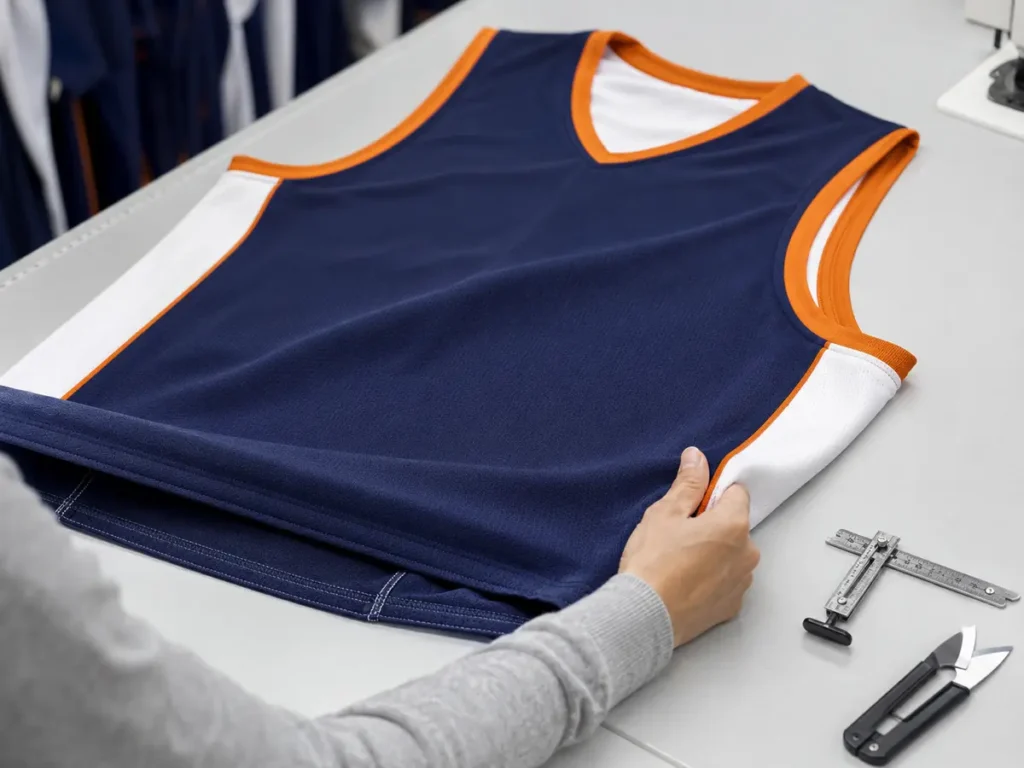
Inspect neck and armhole bindings for consistent width, smooth curves, and secure joining. Check shoulder and side seams for skipped stitches, waviness, twisting, and rough edges. Multi-panel artwork should align within the approved tolerance. The hem should lie flat, and reinforcement should not create a hard lump against the player. Inspect applied-number corners, embroidery backing, loose thread, sublimation ghosting, banding, stains, and panel color differences.
What Drives the Cost of Custom Basketball Jerseys?
A meaningful quotation should explain the product and the assumptions behind the price. Unit price alone is insufficient.
Major cost drivers include:
- Fabric type, weight, and number of fabric panels.
- Jersey only versus a jersey-and-shorts set.
- Youth, unisex, women’s, tall, or custom pattern requirements.
- Sublimation, screen colors, heat-transfer area, embroidery stitch count, or appliqué layers.
- Number of artwork placements and individualized names or numbers.
- Sample type and number of revisions.
- Order quantity and the number of size or design variations.
- Labels, hangtags, individual polybags, size stickers, and carton markings.
- Inspection, testing, freight, insurance, duties, and delivery terms.
- Rush scheduling or split shipments.
Request quotations on the same specification. If one supplier prices a lightweight sublimated jersey and another prices a heavier cut-and-sew jersey with embroidered marks, the unit prices are not directly comparable.
Planning a school or club uniform order? Send JIUMU your reference image or tech pack, team colors, governing rules, roster quantity, size range, logo files, personalization list, packaging needs, and target delivery date. Request a specification-based quotation through Contact JIUMU or explore custom team jerseys.
Approve a Physical Sample Before Bulk Production
A digital mockup confirms layout, but it cannot confirm fabric hand, fit, physical color, seam quality, print result, or decoration feel. A physical sample reduces uncertainty.
The sample approval should record:
- Sample identifier and date.
- Fabric code, color, and weight.
- Jersey cut, size, and finished measurements.
- Neck and armhole construction.
- Front, back, side, and short artwork.
- Number font, height, stroke, border, and position.
- Logo and sponsor dimensions and placements.
- Player-name font, case, spelling, and maximum width.
- Label and packaging details.
- Approved changes and any deviations that must not enter bulk production.
Keep the approved sample as the physical reference. If it changes, issue a new revision rather than relying on scattered messages.
Quality-Control Checklist for Bulk Jerseys
Quality control should compare bulk goods with the approved specification, artwork, color standard, size chart, and sample.
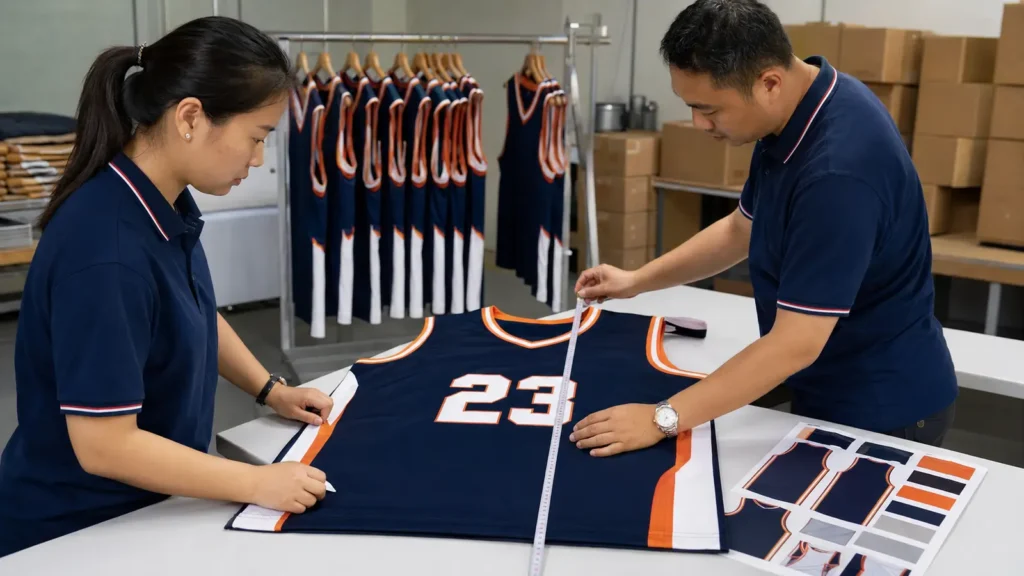
Artwork and personalization
- Count every roster line and compare it with the production list.
- Confirm name spelling, capitalization, accents, and number.
- Verify front and back number match.
- Check number and logo placement against approved measurements.
- Confirm sponsor versions by team or division.
Color and print
- Compare production color under controlled light with the approved physical reference.
- Check panels from different parts of the garment for shade consistency.
- Inspect sublimation for ghosting, banding, stains, and white marks.
- Inspect screen or transfer graphics for opacity, adhesion, edges, and stretch response.
Sewing and measurements
- Measure a defined sample from each size.
- Check neck, armhole, shoulder, side seam, and hem construction.
- Confirm left-right symmetry and panel alignment.
- Remove loose thread and reject skipped or broken stitches.
Inspection level and sampling method should be agreed before production. Buyers with formal quality requirements should state their test method and acceptance criteria in the purchase order.
Plan a Bulk Order Backward From the Required Date
Do not treat the supplier’s production time as the complete lead time. A realistic schedule includes specification development, artwork, internal approval, sample production, sample shipping, fitting, revisions, bulk production, inspection, export handling, freight, customs, and local distribution.
A safer workflow is:
- Confirm rulebook, buyer approvals, quantity, budget, and required delivery date.
- Send vector logo files, color references, roster range, and style references.
- Approve the quotation and written product specification.
- Review the digital mockup and roster template.
- Produce and evaluate the physical sample and size set.
- Issue one consolidated approval or revision list.
- Lock the final roster and personalization spreadsheet.
- Start bulk production only after written approval.
- Inspect bulk goods and verify packing.
- Ship with enough buffer for customs and local team distribution.
Information to Send for an Accurate Quotation
The fastest quotation is not the shortest inquiry. Send:
- Buyer type and destination country.
- Intended use: school games, club competition, practice, camp, retail, or promotion.
- Governing rule set and any local uniform guide.
- Jersey only or complete uniform.
- Required cut and size range.
- Estimated quantity by design.
- Home, away, and alternate colorways.
- Vector logo and sponsor files.
- Name and number requirements.
- Preferred fabric or performance requirement.
- Decoration method, if already decided.
- Private label, hangtag, packaging, and carton marking needs.
- Sample requirement.
- Target delivery date and preferred shipping method.
If a detail is undecided, state the performance goal instead. For example, ask for “a lightweight, opaque white jersey for a warm gym” rather than guessing a fabric code.
Questions to Ask a Custom Jersey Supplier
- Which jersey cuts and size ranges use separate patterns?
- Are measurements based on the body or the finished garment?
- What exact fabric code, composition, knit, and weight is quoted?
- How is critical color approved and controlled for repeat orders?
- Which decoration method is recommended for this artwork, and why?
- Can the supplier build to our league’s written uniform specification?
- What digital and physical samples are available?
- What information must be frozen before bulk production?
- How are roster names and numbers checked?
- What measurement and print tolerances will be used?
- How are defects, shortages, and incorrect personalization handled?
- Can the approved fabric, artwork, and specifications be archived for reorders?
- What is the minimum reorder quantity and likely color-variation risk?
- What packaging and carton-level identification are available?
- Which costs are excluded from the quoted unit price?
Clear answers matter more than generic claims.
Common Basketball Jersey Buying Mistakes
Designing before checking the rules
A dramatic graphic may conflict with a required uniform zone or reduce number contrast. Start with compliance boundaries.
Approving only a screen mockup
Screens display color differently, and a mockup cannot prove fit or fabric. Approve a physical sample for an important program.
Ordering one cut for everyone without testing
Roster diversity makes fit testing essential. Offer relevant cuts and allow jersey and shorts sizes to differ.
Sending roster data in messages
Names and numbers scattered across email or chat are easy to misread. Use one controlled spreadsheet with a final revision date.
Comparing prices without matching specifications
Low price may reflect a different fabric, fewer placements, basic packaging, or excluded freight. Normalize the quotation.
Ignoring future replacements
A one-season supplier decision can become a multi-season color-matching problem. Agree how artwork, fabric codes, and color references will be archived.
Using unsupported performance language
Terms such as “moisture-wicking,” “antimicrobial,” “recycled,” or “UV protective” should be supported by a defined fabric, finish, or documented test—not added as vague marketing copy.
Why JIUMU Is Relevant to School and Club Jersey Projects
JIUMU is a Guangdong-based B2B supplier established in 2010, serving buyers in the United States, Canada, the United Kingdom, and Europe. Its approved capabilities include OEM and ODM development, sublimation, embroidery, screen printing, heat transfer, patch options, fabric sourcing, Pantone color matching, private labels, hangtags, packaging customization, digital mockups, physical samples, bulk production, quality control, and export support.
The typical minimum order quantity is 50 pieces, subject to product structure and customization. That profile is relevant to schools, clubs, academies, uniform dealers, distributors, promotional companies, and private-label brands that need specification control rather than a consumer checkout experience.
JIUMU can also support a broader coordinated program through custom team uniforms, custom team jackets, custom hoodies, and custom team bags. Product details, quantities, artwork, and timing should be reviewed for each category.
Frequently Asked Questions
Final Recommendation
For most school and club programs, the strongest starting specification is a breathable polyester jersey in an approved athletic cut, with a physical size set, clear home and away contrast, and sublimated names, numbers, and graphics. Add embroidery or appliqué only when the desired appearance justifies the extra weight, cost, and construction complexity.
The decisive step is not choosing a template. It is converting the team’s rulebook, roster, design, fit, care routine, budget, and delivery date into one controlled specification. Approve the fabric, physical color, size chart, construction, artwork, and sample before bulk production. Then protect future reorders by archiving the approved materials and tolerances.
About JIUMU
JIUMU is a B2B supplier of custom teamwear, logo apparel, hats, uniforms, bags and branded merchandise. Its approved capabilities include OEM/ODM development, multiple decoration methods, private labeling, samples, bulk quality control and export support.