
How Chinese New Year Affects Apparel Production Lead Times
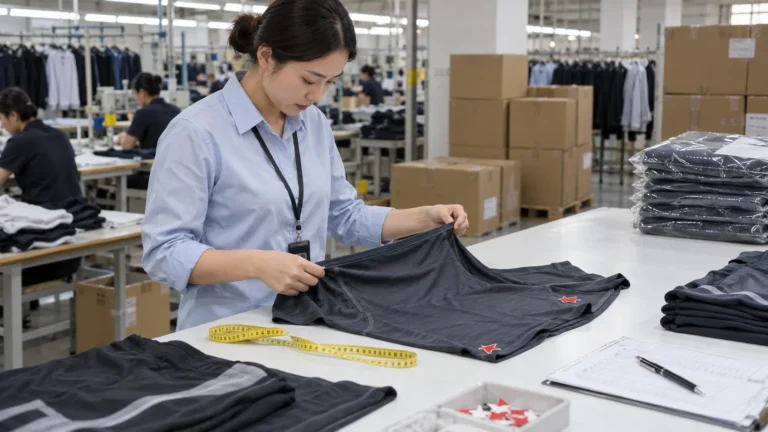
Chinese New Year can affect an apparel order for much longer than the dates printed on China’s public-holiday calendar. Fabric mills may stop accepting new dye lots before a sewing factory closes. Embroidery, printing, washing, testing and packaging partners may follow different calendars. Workers may leave early or return in stages. Freight demand can rise before the break, while carrier capacity may change during it. A factory can therefore finish the garments and still miss the intended pickup or sailing.
For buyers, the practical lesson is simple: do not add a fixed number of “holiday days” to a normal lead time. Build a project-specific calendar backward from the required arrival date, obtain written dates from every critical supplier and logistics provider, and place approval, inspection, rework and shipping buffers before the points at which those activities become unavailable.
Quick Answer
Chinese New Year affects apparel production in three overlapping ways. First, the official public holiday temporarily changes normal work schedules. Second, the operational slowdown can begin earlier and end later because factories, workers, material suppliers and subcontractors do not all stop and restart on the same dates. Third, the pre-holiday shipping rush and holiday carrier adjustments can tighten pickup, airfreight and ocean capacity.
To protect a spring delivery, ask the supplier for an order-specific annual closure plan, material-order cutoff, last sample-approval date, last feasible bulk-production start, inspection and rework window, cargo-ready date, logistics booking cutoff and post-holiday restart estimate. Treat these as connected dependencies, not one factory reopening date.
Annual calendar note — update before publishing or quoting: China’s State Council announced a nine-day Spring Festival public holiday for 2026, from February 15 through February 23, with adjusted working days on February 14 and February 28. This official period does not define an individual factory’s closure or full-capacity date. Future-year arrangements must be checked against the newest State Council notice and reconfirmed with the factory, material suppliers, subcontractors, inspector and forwarder.
Why the Official Holiday Is Not the Whole Production Window
An official holiday answers a legal-calendar question. A purchase plan needs answers to several operational questions: when will a mill accept the last custom-color order, when will the factory stop cutting new jobs, which outside processes remain available, when can an inspection be booked, when will completed cartons be collected, and when will every department be stable after the break?
These dates rarely form one clean block. An apparel factory may retain office staff while production is reduced. A fabric supplier may close earlier because a dyeing lot must finish, dry, pass inspection and ship before its own workers leave. A decoration partner may stop accepting new embroidery or printing files while it clears existing queues. A freight forwarder may continue working with reduced service, but the chosen sailing, flight or local pickup may no longer be available.
That is why a buyer should separate the calendar into at least five tracks.
| Timeline track | Date to request | Why it controls the order |
|---|---|---|
| Materials and trims | Last order date, last dispatch date, restart date | No cutting or assembly can proceed without approved inputs |
| Factory operations | Last new-job start, reduced-capacity dates, closure, phased restart | “Open” does not necessarily mean every line or skill is available |
| Outsourced processes | Cutoffs for dyeing, printing, embroidery, washing, testing or special packing | A single unavailable process can stop the complete order |
| Inspection and rework | Last booking date, inspection date, correction window, reinspection date | A failed or late inspection needs time before shipment |
| Logistics | Cargo handover, warehouse cutoff, documentation cutoff, sailing or flight | Finished goods are not delivered goods |
What Happens Before Chinese New Year
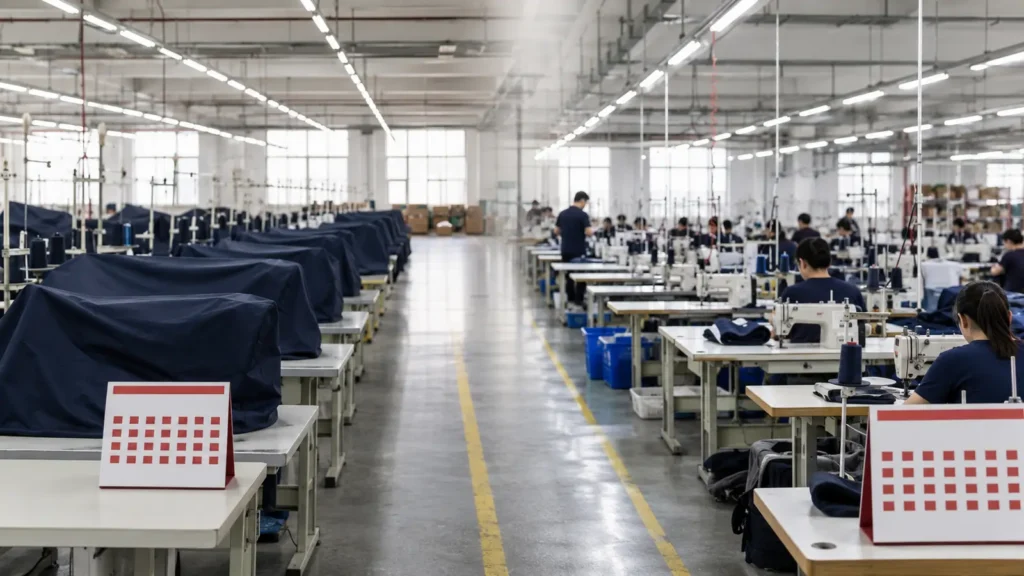
The greatest scheduling pressure often develops before the public holiday. Many buyers want cargo completed before the break, so material suppliers, sample rooms, sewing lines, decoration departments, QC teams and forwarders receive concentrated demand. Capacity that looked available in an early quotation may be allocated to another approved order while a buyer is still changing artwork or waiting for roster data.
Orders compete for confirmed capacity
A factory normally schedules a production slot after commercial and technical conditions are met. Depending on the supplier, that may require a deposit, approved sample or artwork, confirmed bill of materials, final quantities, size breakdown, personalization roster and packing instructions. An inquiry or unsigned quotation is not necessarily a capacity reservation.
Buyers should therefore ask what event actually locks the slot. The answer should state whether materials and production are reserved separately and what happens if approval arrives after the stated deadline. A supplier may still accept the order but move shipment to the post-holiday period, propose available materials, split the shipment or decline an unrealistic date.
Material cutoffs can arrive first
Custom-dyed fabric, special yarn, private-label elastic, molded hardware, zippers, patches, woven labels and printed packaging require their own preparation. A mill’s “last order date” is more useful than its final office day. It leaves time for raw-material availability, color approval, processing, inspection and delivery to the garment factory.
Locking materials does not mean accepting unverified substitutions. The purchase order and manufacturing specification should identify the approved fabric, composition, weight, construction, finish, color reference, trim source or article number, and substitution rule. If the exact material is unavailable, require written approval of a physical replacement sample and document any effect on price, performance, minimum quantity and timing.

Sampling and revisions consume the buffer
A sample may take only part of the development calendar. Artwork clarification, material sourcing, sample shipping, buyer review and a second version can take longer than sewing the first piece. If an approval arrives just before the production cutoff, the factory may have no safe rework window if the first bulk pieces expose a problem.
Create a sample schedule with dates for file handoff, factory questions, sample completion, international courier transit, buyer review, revision instructions and final written approval. Set one approver and a response deadline. When physical shipping time is too long, a video review or pre-production sample retained at the factory can support a decision, but it should not be treated as equivalent to every test that requires the buyer to handle, fit or wash the product.
Pre-holiday urgency increases error exposure
Urgency does not automatically cause defects, but it reduces the time available to detect and correct them. Late rosters, conflicting artwork, unapproved color changes, incomplete label files and rushed carton marks become especially dangerous when the responsible team or subcontractor is about to close.
Freeze the technical package before bulk production. Use a single active version of the tech pack, artwork set, size chart, bill of materials, roster and packing specification. Record the filename, version, approval date and approver. Any later change should become a controlled revision with a new commercial and scheduling review.
How to Build the Order Timeline Backward
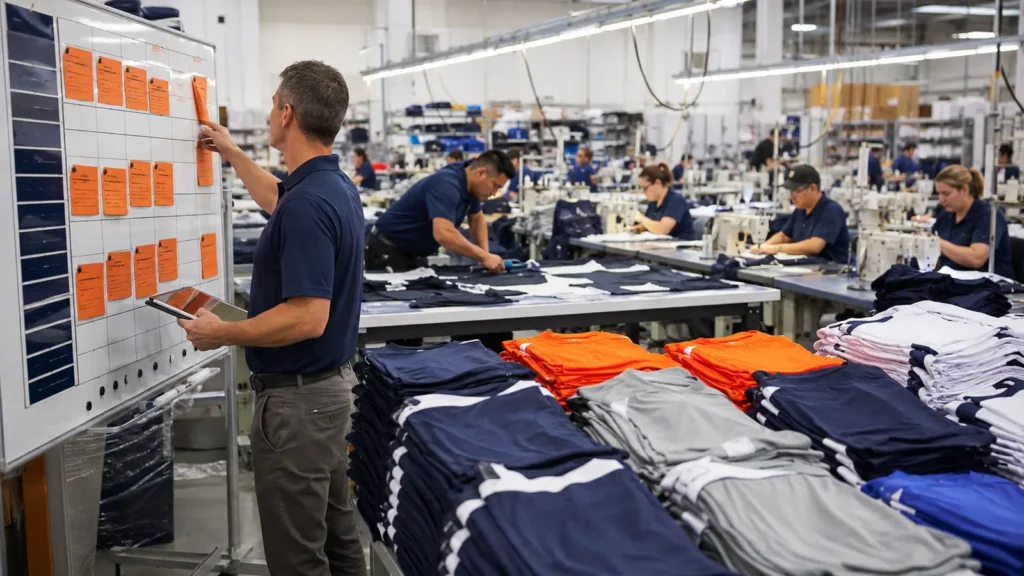
Start with the date on which the complete, cleared order must be available at the buyer’s facility—not the factory completion date. Then move backward through receiving, customs, international transport, origin handover, inspection, possible rework, packing, bulk production, pre-production approval, sampling, development and material reservation.
Step 1: Define the real required date
For a sports season, the required date is not necessarily the first game. The uniforms may need to arrive early enough for count reconciliation, player distribution, fit issue handling, sponsor checks and team photography. A retailer may need warehouse intake, relabeling, allocation and store delivery before launch. State both the event date and the latest acceptable delivery date, plus the consequence of missing it.
Step 2: Obtain a logistics plan
Ask the freight provider for origin pickup, export documentation, consolidation, terminal cutoff, planned departure, transit, customs and final-delivery assumptions. Lead time should state whether it is in calendar days or working days and whether it is port-to-port or door-to-door. Add a buffer for the project’s actual risk; do not hide that buffer inside an optimistic factory date.
Ocean carriers may adjust sailings around the holiday to match demand, and pre-holiday space can tighten as shippers move cargo early. A booking request is not the same as confirmed space. Record the service, booking status, cargo cutoff, documentation cutoff, planned departure and contingency route.
Step 3: Protect inspection and correction time
Pre-shipment inspection should occur when the agreed percentage is complete and enough goods are packed to inspect the product and packaging properly. It also needs to be early enough for corrective action. If an inspection happens on the last working day, a failed result may push the order beyond the break even if the original manufacturing date was met.
Schedule the first inspection, report review, rework, reinspection and release decision as separate milestones. The buyer or authorized representative should control shipment release according to the purchase agreement.
Step 4: Confirm bulk-production dependencies
Bulk time begins only after the stated start conditions are satisfied. Those conditions can include deposit receipt, material availability, final specifications, approved sample, confirmed size breakdown, roster lock and packaging files. Ask for the planned sequence: material inspection, cutting, decoration, sewing, finishing, inline QC, final QC and packing.
The supplier’s ordinary lead-time page can help at the inquiry stage, but the order-specific commitment should appear in the quotation, purchase order or manufacturing agreement. Review JIUMU’s MOQ & Lead Time guidance, then obtain a written schedule for the exact product, quantity and season.
Step 5: Reserve the sampling and approval window
Build at least one realistic revision decision into the calendar, even if the first sample is expected to pass. For complex products, custom-dyed materials or a new fit, a second sample may be necessary. A buyer can choose to approve with written corrections only when the correction is objective, low-risk and verifiable before bulk; the decision should not be automatic because the calendar is tight.
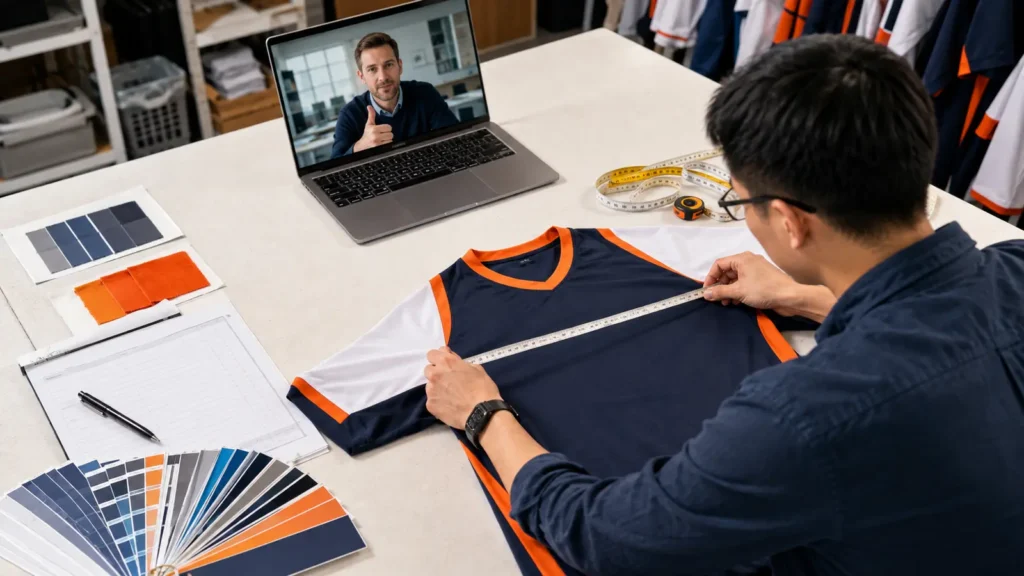
A Practical Backward-Planning Example
The following is a planning framework, not a universal promise. Enter supplier- and route-specific durations rather than copying the example values.
| Backward milestone | Planning question | Evidence to retain |
|---|---|---|
| Required arrival | When must cleared goods reach the final location? | Event plan or launch calendar |
| Delivery and customs | What route, importer process and clearance time apply? | Forwarder quote and shipping plan |
| International departure | Which confirmed sailing or flight supports arrival? | Booking confirmation and cutoffs |
| Cargo handover | When must packed cartons reach the carrier or warehouse? | Pickup booking and packing list |
| Shipment release | Who approves the inspection report? | Signed release or concession |
| Inspection and rework | Is there time to correct and reinspect? | Inspection booking and correction plan |
| Bulk completion | What does “complete” include—QC, labels and packing? | Production schedule and status report |
| Bulk start | Are all materials, files and approvals locked? | Production-ready checklist |
| Sample approval | Has the exact sample/version been approved in writing? | Approval record and Golden Sample |
| Materials locked | Have fabric, trims and substitutes been approved? | BOM and supplier reservation |
| Order confirmed | What payment and document conditions reserve capacity? | PO, agreement and deposit record |
The downloadable backward-planning CSV in this package converts these milestones into editable rows with owner, planned date, confirmed date, dependency, evidence and contingency fields.
How Much Buffer Is Enough?
There is no responsible universal buffer because the exposure differs by product and order. A repeat sublimated jersey using retained artwork has different dependencies from a new cut-and-sew jacket with custom-dyed fabric, embroidered patches, private labels and retail boxes. Airfreight to a major hub differs from consolidated ocean freight with several handoffs.
Assess buffer by asking four questions:
- How many unproven elements exist? New materials, fit, colors, components, suppliers and tests increase development uncertainty.
- How many external dependencies exist? Dye houses, printers, embroidery partners, laboratories, inspectors and special packaging suppliers create separate calendars.
- How costly is a missed date? A fixed tournament or school opening justifies more protection than a flexible stock replenishment.
- What recovery options are real? Available alternatives might include approved stock material, staged production, split shipment or a different transport mode. Each needs price and quality review.
A buffer is useful only if it remains available. Repeated artwork changes, late roster confirmation and delayed payments consume it. Show the buffer as an explicit management reserve and require escalation when a milestone threatens it.
Inspection, Rework and Shipment Release
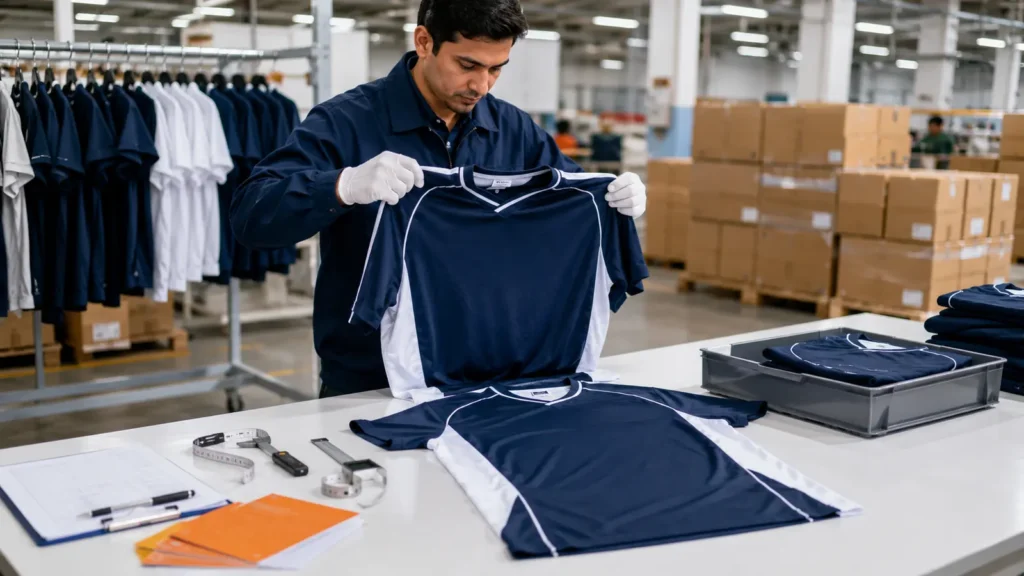
Pre-holiday inspection is not a ceremonial last step. It is the point at which product identity, quantities, workmanship, measurements, color, decoration, labels, personalization, packaging and carton information are compared with the approved requirements.
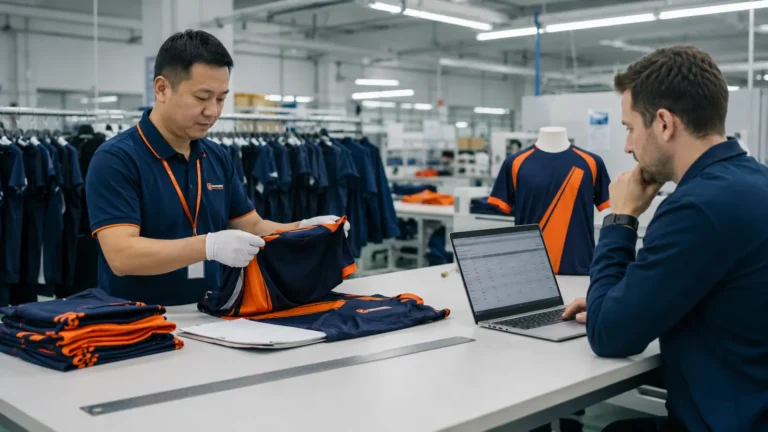
Provide the inspector with the active tech pack, purchase order, size chart, roster, artwork, Golden Sample, defect classifications, sampling plan and packing requirements. Identify which deviations require rejection, rework, buyer concession or replacement. If the report fails, isolate the affected goods, define the scope, correct the cause, reinspect the relevant quantity and record the final release.
Do not authorize shipment simply because the holiday is close. A defective order in transit is harder and more expensive to correct. Conversely, do not expect unplanned factory-wide sorting or replacement to finish after workers and key subcontractors have left. The schedule must reserve that possibility before closure.
Why Finished Goods Can Still Miss Shipment
“Goods ready” and “goods shipped” are different milestones. Cartons may be sealed while the factory waits for pickup, consolidation, customs documents, terminal acceptance, an aircraft allocation or a vessel departure. A late inspection report or packing-list correction can also miss a carrier cutoff even when production finished on the planned day.
For 2026, Maersk publicly advised early booking around Chinese New Year and described temporary blank sailings on its transpacific network. That is a route- and year-specific example, not a permanent rule for every carrier. Buyers should request current advisories, confirm space with their own logistics provider and maintain a documented alternative.
Useful shipping controls include:
- book against a realistic cargo-ready date rather than an aspirational production date;
- reconfirm pickup, warehouse and document cutoffs;
- verify carton count, dimensions, weight, labels and packing list before handover;
- identify who can correct export documents during reduced staffing;
- compare split shipment, airfreight and later ocean departure by total cost and delivery consequence;
- avoid switching transport modes without confirming packaging, dimensional weight, customs and destination handling.

What Happens After the Holiday
A factory’s announced reopening date may indicate that the office or site is open. It does not prove that every sewing operator, technician, quality inspector, material supplier and subcontractor is at full capacity. Incoming materials may be delayed, machines may need setup, and the factory may prioritize unfinished pre-holiday orders before starting new ones.
Request a phased restart check instead of one “back to work” date:
| Restart area | Confirmation question |
|---|---|
| Commercial and project team | Who is available to answer order and approval questions? |
| Material suppliers | Are approved materials physically dispatched or only promised? |
| Cutting and sewing | Are the required line, operators and capacity assigned? |
| Decoration and special processes | Are external or internal processes accepting this order? |
| QC and packing | Are inspection, finishing and packaging teams operational? |
| Logistics | Are pickup, warehouse and export services confirmed? |
For a new or resumed lot, inspect first-off production before assuming normal output. Check material identity, color, measurements, decoration, construction and packaging against the approved reference. A controlled restart can prevent a setup error from spreading through the lot.

Are Rush Orders Possible?
They may be, but “rush” should describe a verified alternative plan rather than pressure to ignore dependencies. Feasibility depends on available material, open capacity, decoration complexity, number of variants, sample status, testing, packing and transport.
Ask the supplier to separate options:
| Rush option | Potential benefit | Trade-off to approve |
|---|---|---|
| Use approved available material | Avoid custom material lead time | Color, weight, hand feel or performance may differ |
| Simplify decoration or packaging | Reduce external processes | Brand appearance changes |
| Split production | Ship essential quantity first | Higher cost and possible batch variation |
| Airfreight urgent cartons | Shorter transport segment | Higher freight cost and dimensional-weight exposure |
| Move entire delivery after restart | Preserve full specification | Missed event or launch date |
No option should bypass written sample approval, product safety requirements or an agreed inspection release. If the date is physically impossible, the supplier should say so and provide the earliest defensible alternative.
Buyer Checklist Before Paying a Deposit
Before confirming a holiday-sensitive order, obtain written answers to the following:
- exact product, quantity, size range, colorways and personalization scope;
- active tech pack, artwork, roster and packing versions;
- approved sample type and approval deadline;
- material availability, reservation status and substitution rule;
- factory and subcontractor cutoff, closure and restart estimates;
- production-slot reservation condition;
- bulk-production start condition and completion definition;
- inspection booking, defect rules, rework and reinspection window;
- cargo-ready date and shipment-release authority;
- transport mode, booking status and current logistics cutoffs;
- contingency decision owner and cost responsibility;
- update frequency and escalation trigger.
JIUMU’s Manufacturing Capabilities page explains how development, materials, decoration, sampling, production, inspection and export support connect. Buyers planning a sports season can also use the Team Uniform Order Planning Timeline once that page is confirmed live.
What to Send JIUMU for a Holiday-Sensitive Apparel Order
Send the information early enough for feasibility review:
- required delivery location and latest acceptable arrival date;
- event, season or launch date and consequence of delay;
- product types, quantities, size breakdown and colorways;
- editable logo and artwork files;
- Pantone or physical color references;
- tech pack, measurement chart and grading requirements;
- player roster or personalization file with one active version;
- fabric, trim, label and packaging specifications;
- compliance, testing and inspection requirements;
- preferred Incoterm and transport mode;
- sample requirement and decision-maker contact;
- acceptable contingency options, if any.
JIUMU has supported B2B custom teamwear, hats, uniforms and bags since 2010 in Guangdong, China. Typical schedules and MOQs depend on product, material, decoration, quantity, approval status and current capacity. For an order-specific calendar, use Contact Us and include the required arrival date—not only the requested factory completion date.
Frequently Asked Questions
Final Recommendation
Treat Chinese New Year as a network-planning event, not a fixed factory vacation. The resilient plan separates official dates from actual operating windows, locks materials and approvals early, protects inspection and rework time, confirms freight capacity, and verifies the post-holiday restart by department and dependency.
Update the calendar every year. Keep one controlled project schedule with owners, evidence and contingency decisions. When a milestone slips, recalculate the delivery plan immediately rather than allowing an obsolete promised date to travel through the order.
Planning a first-quarter delivery or spring teamwear program?
Contact Us with your specifications, quantity, delivery location and must-arrive date for an order-specific production and shipping review.