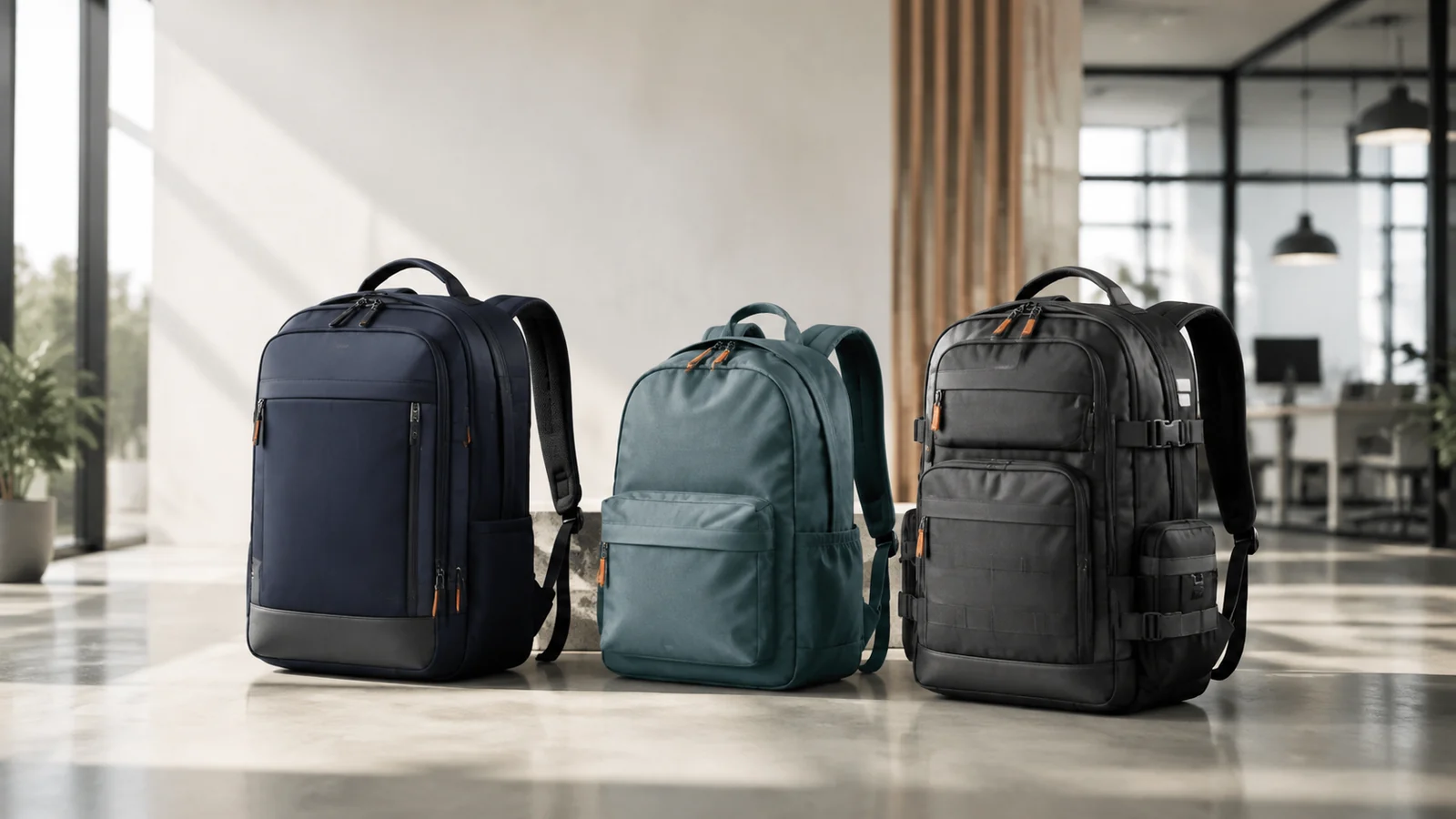
How to Choose the Right Backpack for Work, School or Projects
A backpack must carry a defined load, fit its users, survive a realistic routine, present the brand consistently and meet the project budget. A laptop commuter design may not suit books, while a general school bag may lack the organization needed for field projects.
This B2B guide covers use case, capacity, fit, materials, construction, customization, compliance planning, sampling and bulk quality control. Its purpose is to help buyers create a specification that a supplier can quote, sample and reproduce.
Quick Answer: Start with the load and the user, not the fabric name or catalog style. List what the backpack must carry, how long it will be worn, where it will be used, who will use it and how the logo must appear. Then choose capacity, compartment layout, shoulder system, shell and lining, reinforcement, hardware and decoration. Approve a physical sample against a written specification before bulk production. For schools, employers and project teams, one well-defined core design with controlled variants is usually easier to order and repeat than several unrelated bags.
Why the Backpack Decision Matters in B2B Purchasing
Retail shoppers can change models after one purchase. A B2B buyer may be committing to dozens, hundreds or thousands of units that must look and perform consistently. Small specification mistakes therefore multiply. A pocket that is 15 mm too narrow can make a device sleeve unusable. A logo that looks acceptable on screen can distort across a curved front panel. An attractive light-colored lining may show dirt quickly. A large number of compartments may increase sewing operations, sampling time and unit cost without improving the user experience.
The decision balances five outcomes:
- Functional suitability: the intended load fits without forcing zippers or concentrating weight in one area.
- User comfort: the back length, strap geometry, padding and adjustment range suit the intended users.
- Durability for the routine: load points, base, seams and hardware match the expected frequency and environment.
- Brand presentation: colors, logo method, labels and packaging remain consistent across the order.
- Commercial control: the specification can be sampled, inspected, packed and repeated within the buyer’s budget and schedule.
These outcomes are connected. A padded laptop compartment reduces usable space; embroidery backing can stiffen a panel; and a coating can affect hand feel, seam behavior and documentation. Decide priorities first and components second.
Backpack Selection Overview by Use Case
The table below is a starting point, not a fixed standard. Final dimensions and features should follow the actual load, target age and wearing conditions.
| Decision area | Work backpack | School backpack | Project or team backpack |
|---|---|---|---|
| Primary load | Laptop, charger, documents, personal items | Books, device, stationery, lunch and bottle | Tools, samples, PPE, documents, team kit or event materials |
| Typical design priority | Clean profile and device protection | Comfortable daily carry and simple organization | Load control, access and task-specific storage |
| Useful organization | Suspended laptop sleeve, document zone, quick-access pocket | Main book compartment, device sleeve, bottle pockets, easy front pocket | Modular pockets, wide opening, separate equipment or dirty-item zone |
| Back and straps | Structured padding, breathable contact fabric, luggage pass-through if needed | Adjustable padded straps sized for user group; sternum strap when justified | Wider straps, stable back panel and optional sternum or waist support for heavier loads |
| Material direction | Refined polyester or nylon with controlled structure | Durable, cleanable woven fabric with reinforced base | Abrasion-focused fabric, reinforced base and task-appropriate coatings |
| Branding direction | Subtle embroidery, woven label or small patch | School crest, mascot-inspired original artwork, name area or team colors | High-visibility project mark, department color coding or durable patch |
| Common sourcing mistake | Choosing a slim appearance before confirming device and cable volume | Using one adult pattern for every age group | Adding many pockets without defining what each pocket carries |
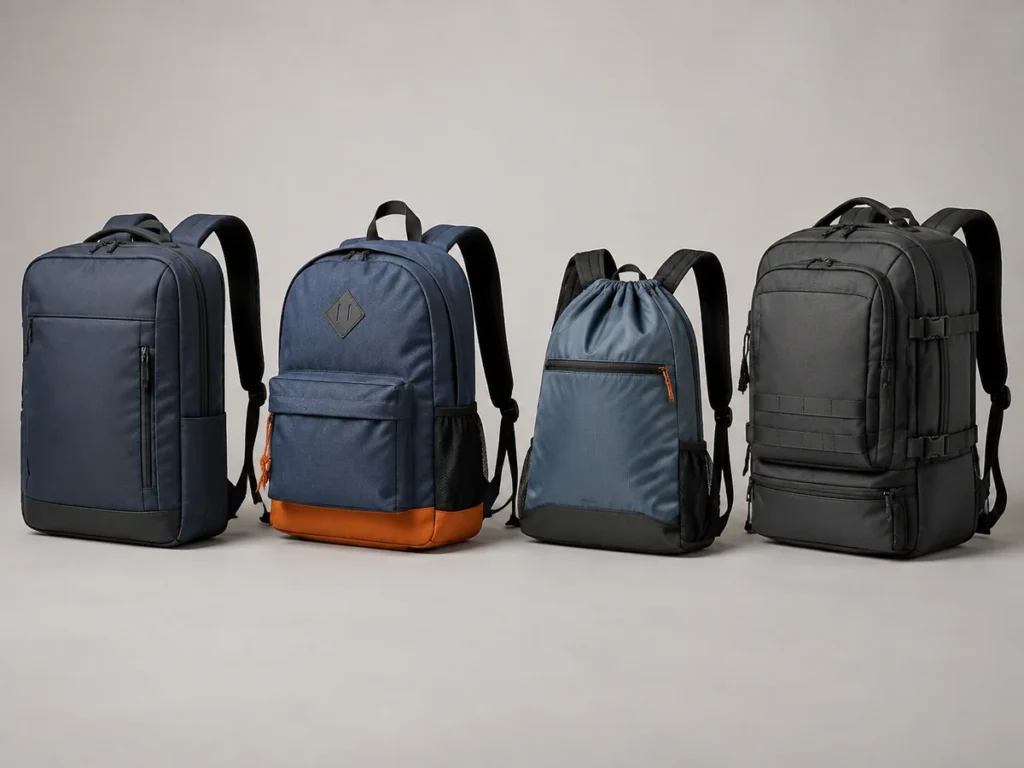
Work Backpacks: Prioritize Access, Protection and a Professional Profile
A work backpack should carry the daily kit without appearing overfilled. Start with the largest device, including its protective case, and specify the usable sleeve dimensions rather than only saying “fits a 15-inch laptop.” Nominal screen size does not define the full device dimensions. Leave a controlled tolerance, add padding at the back and face, and consider suspending the sleeve above the bottom so the device does not strike the floor when the bag is set down.
Documents and electronics should not compete for the same narrow space. A structured main compartment can preserve a clean silhouette, while a separate admin area can hold chargers, pens and access cards. If frequent airport or rail travel is expected, discuss a luggage pass-through, balanced top handle and opening style. Avoid claiming that a design is “TSA approved” unless a relevant, documented basis exists for the exact feature and market.
Professional appearance depends on proportion as much as color. Tonal zippers, limited external webbing and restrained logo placement often suit corporate programs; technicians may prioritize access and base protection instead.
School Backpacks: Design for the Actual Age Group and Timetable
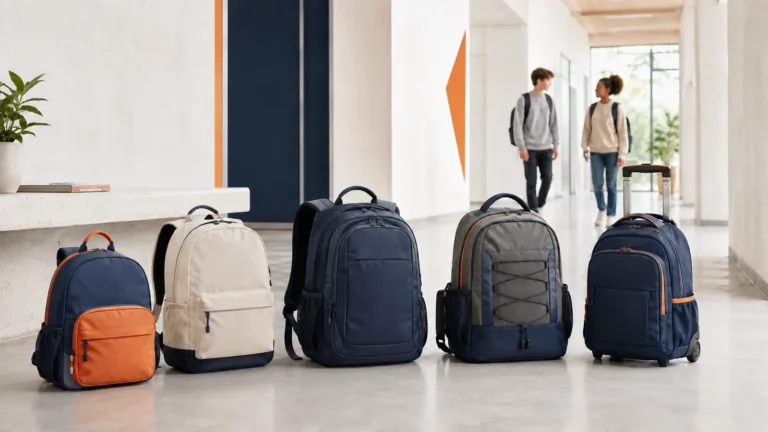
“School backpack” covers very different users. An elementary design, a high-school laptop bag and a university commuter pack should not share an identical pattern by default. Define the intended age band, typical body size, daily timetable, device dimensions and school storage conditions. Younger-user designs generally need shorter back panels, appropriate strap geometry, easy zipper pulls and straightforward compartments. Older students may need device protection, larger book capacity and organization for longer days.
Do not maximize liters without considering fit. A large bag encourages overpacking and can extend below the intended back area. The loaded bag should sit close to the body, and the shoulder straps should adjust without long loose ends. If a sternum strap is included, its position and adjustment range should be appropriate for the user group. Any safety, testing or labeling requirements must be confirmed for the target market and the product’s intended age classification.
For U.S. distribution, the Consumer Product Safety Commission explains that sizing, themes and decoration can make a backpack a children’s product. Products subject to CPSC-enforced rules may require applicable testing and certification, so classify the product before finalizing materials and trims.
Project and Team Backpacks: Let the Task Define the Architecture
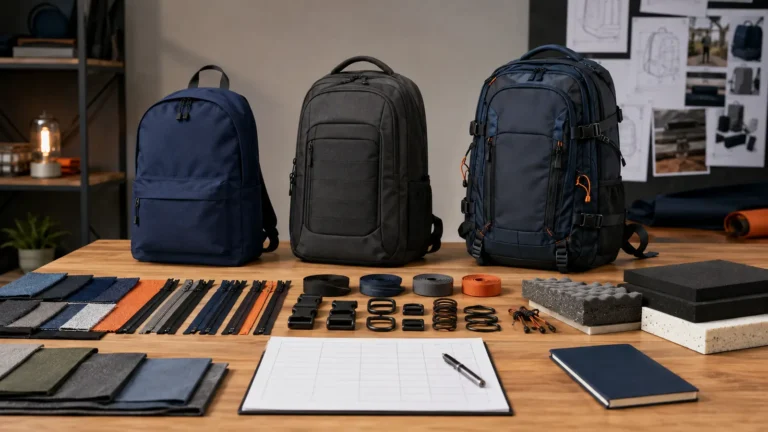
Project backpacks include construction-team bags, field survey packs, event crew bags, sales kits, sports staff backpacks, onboarding packs and branded merchandise for a defined program. The first question is: what must be separated? A dirty-item zone, document sleeve, sample organizer, cable compartment, bottle holder or helmet attachment should exist because of a real task, not because it appears in a catalog.
Create a packing list and rank items by access frequency. Keep dense items close to the back when practical and isolate hard or sharp components. Unusually heavy equipment may require a purpose-built platform and defined performance tests rather than merely thicker fabric.
How Much Capacity and Organization Do You Need?
Capacity in liters aids comparison but does not define usable space. Curved panels, padding, dividers and narrow openings reduce practical capacity.
Run a physical load trial with the real contents or accurate substitutes. Check that zippers close without strain, the bag keeps its shape and critical items remain accessible.
| Load profile | Starting capacity direction | Organization focus | Questions to validate in sampling |
|---|---|---|---|
| Light commute or event kit | About 12–18 L | Device sleeve and quick-access pocket | Does the charger fit? Is the opening wide enough? Does the bag stand or collapse as intended? |
| Daily school or general work | About 18–25 L | Main compartment, sleeve, front pocket and bottle storage | Can the real books and device fit together? Is the packed depth comfortable? |
| Full-day school, travel or project use | About 25–32 L | Separated zones and stable load placement | Can heavy items stay close to the back? Do pockets remain accessible when full? |
| Equipment-intensive use | Define from load mock-up | Custom dividers, reinforcement and wide access | Is a backpack the correct format? Which components need task-specific tests? |
These are planning ranges. Actual contents, dimensions and sample testing should control the specification.
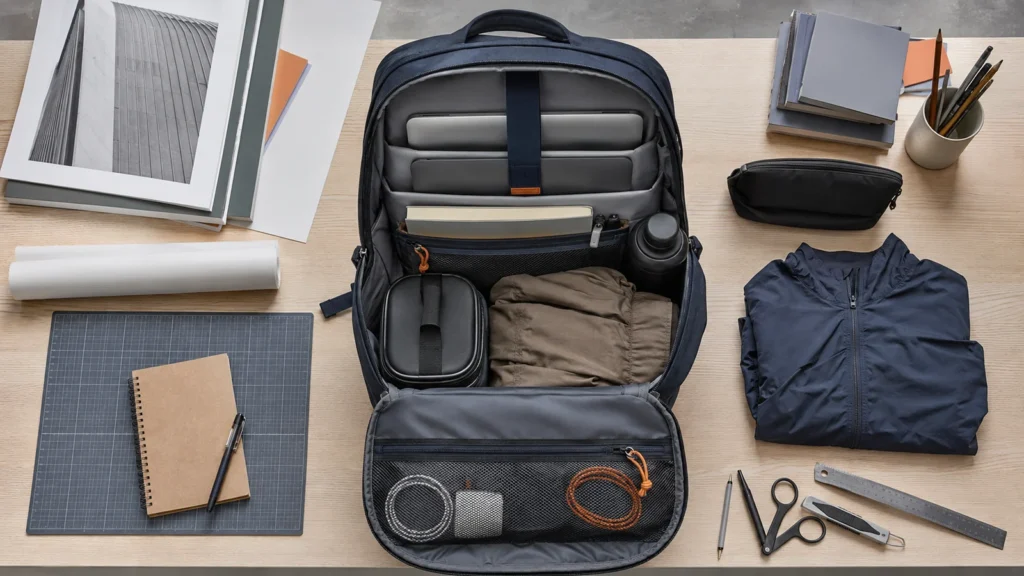
Translate Contents into Compartment Dimensions
Do not request “many pockets.” Request a purpose and minimum usable dimensions for each critical pocket. A side pocket can look large in a rendering yet fail to retain a full bottle when the main compartment is packed. A tablet pocket may have enough width but insufficient opening clearance. A front organizer may become too shallow after embroidery backing is added.
For each key compartment, record:
- intended item and maximum dimensions;
- opening width and closure type;
- padding or lining requirement;
- retention method, such as elastic, zipper, hook-and-loop or buckle;
- position relative to the wearer and other contents;
- whether the pocket must remain accessible when the bag is full.
This information turns subjective comments into measurable sample criteria.
Fit and Carry Comfort: Specify the System, Not Just “Padded Straps”
Comfort depends on load, back length, strap position and curve, adjustment, foam and edge finishing—not foam thickness alone. Thick narrow straps can still concentrate pressure, and added padding can retain heat.
Test the sample on the shortest and tallest representative users. Check whether the top pulls away, the bottom sits too low, buckles are reachable and strap ends are controlled. For heavier loads, review how straps and lower webbing are anchored. Use sternum or waist support only when the load and architecture justify it.
Backpack Materials: Compare the Complete Material System
Fabric denier is frequently treated as a quality score, but it mainly describes yarn linear density. It does not, by itself, establish abrasion resistance, tear strength, coating quality, colorfastness or finished product durability. Construction, yarn type, weave, coating, backing and test method all matter. Ask for a complete material specification and approve a physical swatch.
Common Shell Options
- Polyester: widely used, versatile and suitable for many corporate, school and promotional programs. Surface finish and backing can be adjusted for hand feel and structure.
- Nylon: often selected when buyers want a particular balance of weight, abrasion performance and technical appearance. Exact performance depends on construction and finish.
- Ripstop constructions: use a reinforcement grid intended to help control tearing. Grid appearance and actual test performance should be approved separately.
- Canvas and cotton-rich fabrics: offer a natural, lifestyle appearance but may require different care, structure and color-control planning.
- Coated or laminated fabrics: can improve resistance to moisture and add structure, but seams, zippers and openings remain potential entry points. “Water-resistant” and “waterproof” should never be used interchangeably without a defined construction and test method.
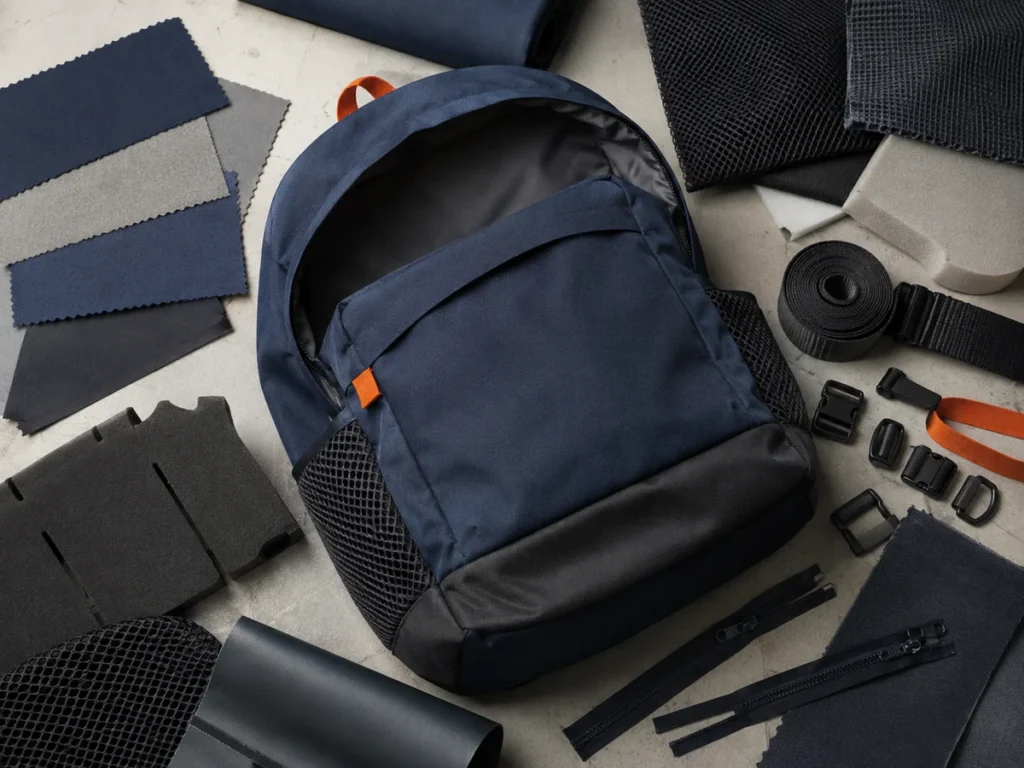
Lining, Foam, Mesh and Base Materials
Lining affects visibility, cleanability and perceived finish. A light lining helps users find small items but may reveal marks sooner. A branded lining can strengthen identity but adds artwork, color and minimum-order considerations. Foam should be specified by location and function: device protection, shoulder comfort, back structure or shape retention. Air mesh can improve surface ventilation and softness, but it must be evaluated for abrasion against clothing and edge durability.
The base receives repeated contact with floors, vehicles and outdoor surfaces. A reinforced woven base, coated panel or other abrasion-focused construction can be more valuable than adding heavier fabric to every panel. If the bag must resist wet ground, specify the exposure and testing expectation. A coated base does not make the entire backpack waterproof.
Color and Chemical Documentation
Approve color against a defined reference under agreed lighting. Fabric, zipper tape, webbing and plastic can reflect one target shade differently, so name the master component and acceptable variation.
Compliance documentation must follow the market and product classification. In the United States, the FTC states that covered textile products generally require labels identifying fiber content, country of origin and the responsible manufacturer or marketer. Whether a particular backpack and each component falls within a specific rule should be checked for the exact product. In the European Union, REACH places obligations on industry to manage chemical risks, and restrictions can apply to substances in consumer articles. Buyers should communicate destination markets, restricted-substance requirements and evidence expectations before material approval.
Construction Details That Influence Durability
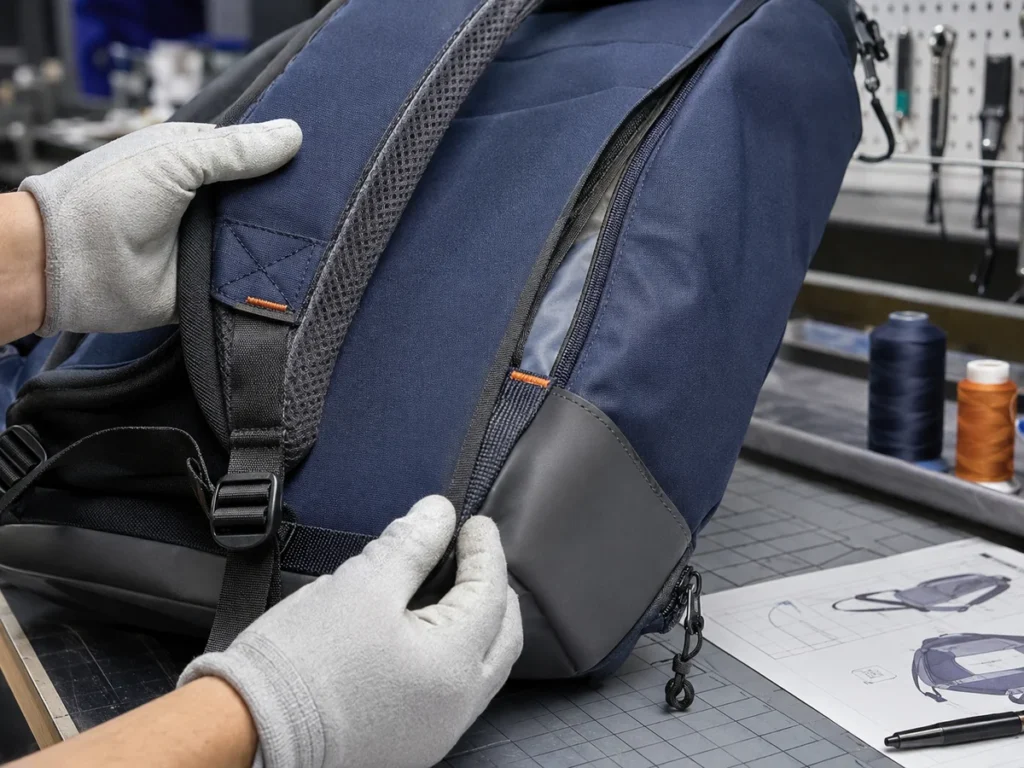
High-risk interfaces include strap attachments, zipper ends, pocket corners and base junctions. Inspecting them is more useful than judging fabric weight alone.
High-Priority Construction Checks
- Shoulder-strap attachment: confirm sufficient seam allowance, reinforcement and alignment. Ask how the construction distributes the expected load.
- Top handle: define whether it is a grab handle or intended for carrying a fully loaded bag. Reinforcement should match the stated use.
- Zipper installation: check smooth operation around curves, end stops, slider access and fabric clearance. A reputable zipper component cannot compensate for poor installation.
- Seam finishing: inspect bound or enclosed internal seams for skipped areas, exposed raw edges and excessive bulk.
- Pocket corners: verify reinforcement where a loaded pocket pulls against the body.
- Base and lower corners: look for sufficient material coverage, controlled shape and no exposed weak junctions.
- Strap adjusters: test slippage under a realistic load and confirm webbing width matches the hardware.
- Symmetry and shape: compare left and right straps, panel curves, pocket placement and finished dimensions.
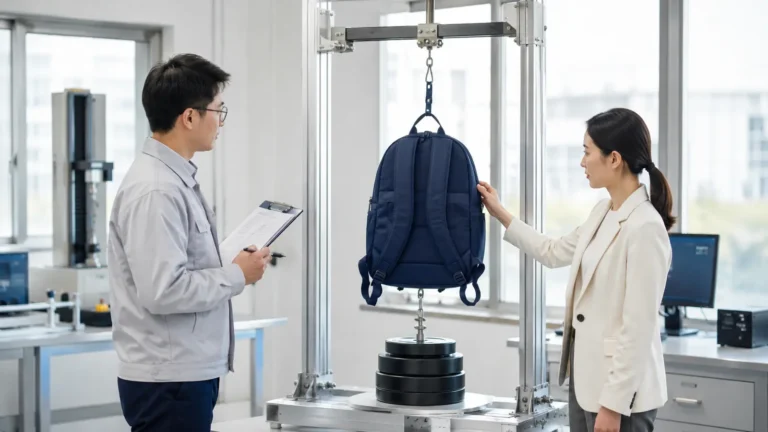
If a buyer needs quantified performance, the test method, specimen, conditioning, load, cycle count and acceptance threshold should be written into the specification. “Strong stitching” is not a test method.
Customization and Private-Label Options
Select branding for the actual panel and end use; decoration can behave differently over foam, seams and curves.
| Method | Visual character | Suitable applications | Points to approve |
|---|---|---|---|
| Flat embroidery | Textured, established appearance | Corporate marks, school crests, team identity | Stitch count, backing, small-detail legibility, panel distortion and reverse-side finish |
| Woven patch | Fine woven detail with defined edge | Detailed emblems and private-label programs | Border, attachment method, color and edge durability |
| Rubber/PVC-style patch | Dimensional, technical appearance | Outdoor, project and team bags | Mold detail, thickness, flexibility, attachment and target-market material requirements |
| Heat transfer | Clean graphic area and color flexibility | Events, promotional programs and certain technical shells | Adhesion, fabric compatibility, heat sensitivity and wash/abrasion expectation |
| Screen print | Efficient for suitable simple artwork and quantities | Promotional and school programs | Ink coverage, registration, hand feel and curing compatibility |
| Custom label or zipper pull | Subtle brand system | Retail, ecommerce and employee programs | Size, placement, artwork, material, mold or tooling implications and MOQ |
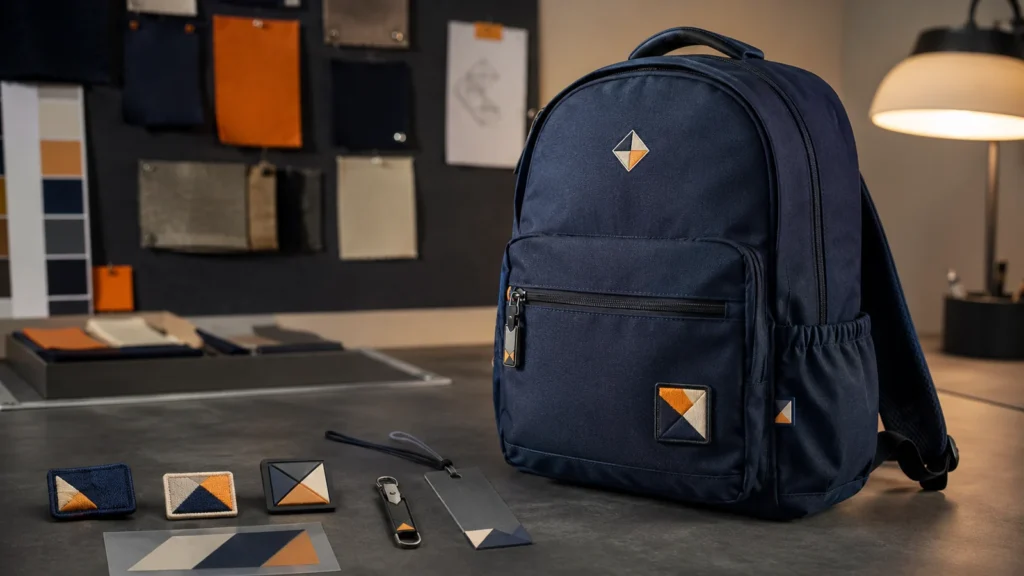
Keep artwork away from seams, pocket openings and high-flex areas unless the construction has been developed for that placement. Request an artwork proof with actual dimensions and placement measurements, then approve the decorated physical sample. Digital mockups are valuable for direction but do not reveal puckering, thread coverage, color reflection or patch thickness.
Planning a custom backpack program? Send JIUMU your target quantity, use case, reference images or tech pack, required dimensions, load list, destination market, colors, logo files, packaging and target delivery date. JIUMU can review OEM/ODM options, prepare a digital mockup and arrange a physical sample before bulk production. Explore custom team bags or request a quotation.
Cost Drivers: Where the Budget Actually Goes
Price is created by the complete bill of materials and production process, not by shell fabric alone. Important drivers include:
- total fabric consumption and fabric width efficiency;
- number of panels, compartments and sewing operations;
- lining, foam, reinforcement and structural boards;
- zipper length, slider count, buckles and custom hardware;
- logo method, artwork complexity, colors and placement count;
- custom-dyed materials or Pantone matching;
- labels, hangtags, individual packaging and carton requirements;
- sample rounds, testing, inspection and documentation;
- order quantity, color split and size or pattern variants;
- delivery terms, shipment method and target date.
Preserve features that protect the primary load and remove those without a defined job. One core body can support controlled color or logo variants, although small color splits may affect material minimums and efficiency.
Sample Approval and Quality-Control Checklist
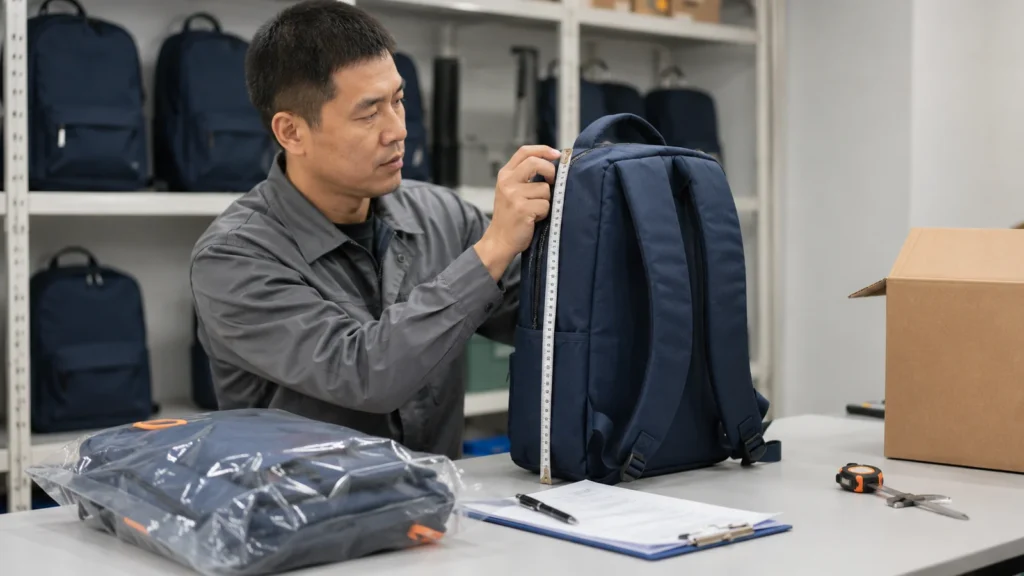
A physical sample should be evaluated as a production reference, not as a general impression. Create a written approval record with photographs and measurements. Mark every accepted change before bulk production begins.
Pre-Production Sample Review
- Confirm overall height, width and depth at defined measurement points.
- Pack the real intended contents and operate every closure.
- Confirm usable laptop sleeve and pocket dimensions.
- Review back length, strap spacing, strap curve and adjustment range on representative users.
- Compare shell, lining, webbing, zipper tape and hardware colors with approved references.
- Measure logo size and distance from agreed seams or panel edges.
- Inspect stitch consistency, seam allowance, binding, reinforcement and loose threads.
- Check zipper movement, buckle engagement and strap-adjuster slippage.
- Review labels, fiber and origin information, warnings if applicable, hangtags and packaging.
- Record the approved sample version, date and responsible approvers.
Bulk Inspection Planning
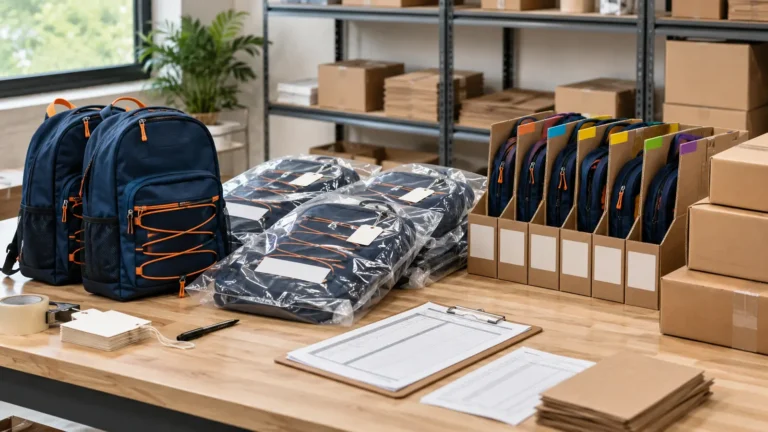
Define in writing how materials, in-line production and final goods will be checked, including sampling and order-specific defect criteria. Final checks can cover quantity, assortment, dimensions, workmanship, logos, closures, packaging and agreed tests. Retain the approved sample and specification as evidence.
How to Plan a Bulk Backpack Order
Step 1: Write the Use-Case Brief
State the buyer type, users, environment, daily load, wearing duration, distribution market and commercial goal. Include a ranked list of must-have, preferred and optional features.
Step 2: Send References and Dimensions
Provide a tech pack when available. Otherwise send clear reference images with notes explaining what to copy as a function—not third-party branding or protected artwork. Include the maximum device and item dimensions, preferred finished bag size and target capacity direction.
Step 3: Confirm Materials and Decoration
Choose shell, lining, foam, mesh, webbing, hardware and color references. Supply vector logo artwork and define decoration size, color and location. Confirm private labels, hangtags and packaging.
Step 4: Review the Digital Mockup
Use the mockup to confirm proportions, color blocking, pocket placement and logo scale. Treat it as an artwork and design checkpoint, not final proof of material or fit.
Step 5: Approve a Physical Sample
Run the load trial, fit review and construction checklist. Consolidate comments into one controlled revision list. Re-sample when a material, pattern, structure or decoration change could materially affect the result.
Step 6: Freeze the Production Specification
Create one approved package containing drawings, measurements and tolerances, material references, color standards, artwork, logo placement, labels, packaging, tests, inspection criteria, quantities and assortment.
Step 7: Confirm Production and Shipping Milestones
Agree when materials are approved, when production begins, when inspection occurs and when goods are expected to ship. Lead time depends on design complexity, material availability, customization, sample approval and order quantity; it should be confirmed for the exact project.
What to Send for an Accurate Backpack Quotation
A concise RFQ reduces assumptions. Send:
- use case and target user group;
- destination country or countries;
- total quantity and quantity by color or artwork;
- target finished dimensions or capacity direction;
- list and dimensions of critical contents;
- reference images, sketches or tech pack;
- shell, lining, padding and hardware preferences;
- logo vector file, method, size, colors and placement;
- private-label, hangtag and packaging requirements;
- required compliance documentation or buyer test protocol;
- target delivery date and preferred shipping terms;
- target price range, if available, with clarity on what it includes.
If some details are unknown, identify them as open decisions. A supplier can then propose controlled options rather than silently filling gaps.
Questions to Ask a Backpack Supplier
- What information confirms usable capacity and device fit?
- Which materials are standard, and which require custom minimums?
- How will color be approved across fabric, webbing, zippers and hardware?
- Which logo methods suit the chosen panel?
- What does sampling include, and how are revisions handled?
- How are strap attachments, zippers and dimensions checked?
- Can the supplier follow buyer-defined tests and inspection criteria?
- What labeling or documentation inputs are needed for the destination?
- How do color or artwork splits affect MOQ, cost and schedule?
- What is retained to support repeat-order consistency?
Common Backpack Buying Mistakes
Choosing by Appearance Before Defining the Load
A slim visual reference can become bulky when required to carry books, equipment and a jacket. Start with contents, then refine silhouette.
Using Fabric Denier as the Only Durability Metric
High denier does not correct weak strap attachment, poor seam control or unsuitable hardware. Review material construction, finished product design and relevant test evidence together.
Requesting “Waterproof” Without a Test Definition
Coated fabric, covered zippers and seam sealing are separate decisions. Define expected exposure and test method. If protection from brief rain is sufficient, state that instead of creating an unsupported waterproof claim.
Approving Only a Digital Rendering
A rendering cannot verify fit, capacity, material hand, color under light, zipper operation or decorated-panel behavior. Use it before—not instead of—a physical sample.
Adding Features Without a User Need
Every extra pocket, buckle and seam adds material, labor and another potential defect point. Link each feature to a real item or task.
Ignoring Market and Age Classification Until the End
Children’s product obligations, chemical restrictions, labeling and buyer protocols can affect materials and documentation. Communicate destination and user group before sourcing begins.
Comparing Quotes with Different Specifications
Two prices are not comparable if one includes a lined laptop compartment, custom hardware and individual packaging while another assumes a basic shell. Issue the same RFQ and list exclusions.
Why Source Custom Backpacks with JIUMU?
JIUMU is a Guangdong-based B2B supplier established in 2010, serving the United States, Canada, the United Kingdom and Europe. It supports custom bags alongside teamwear, hats, uniforms and branded merchandise.
Available capabilities include OEM and ODM development, digital mockups, physical samples, fabric sourcing, Pantone color matching, embroidery, screen printing, heat transfer, woven and rubber/PVC-style patches, custom labels, hangtags and packaging. Bulk production, quality control and export support can be planned around the approved specification. JIUMU’s typical MOQ is 50 pieces, subject to product construction, materials and customization.
Buyers can coordinate the product body, logo, labeling, packaging and repeat-order requirements as one program. The right starting point remains a clear brief and an approved sample.
Frequently Asked Questions
Final Recommendation
To choose the right backpack for work, school or projects, define the load, user and environment first. Convert those facts into measurable capacity, compartment, fit, material, construction and branding requirements. Use a physical sample to verify what a digital mockup cannot, then freeze an inspection-ready specification before bulk production.
The strongest backpack program is not the one with the most features. It is the one in which every feature has a job, every critical dimension can be checked, and every production decision supports the user and the buyer’s brand.
Request a Custom Backpack Quotation: Share your reference image or tech pack, quantity, colors, dimensions, intended contents, logo files, packaging, destination market and target delivery date. JIUMU will review the specification, identify open decisions and discuss mockup, sampling and bulk-order options. Email zhengdong@jiumugear.com, message +86 18507502899, or contact JIUMU.