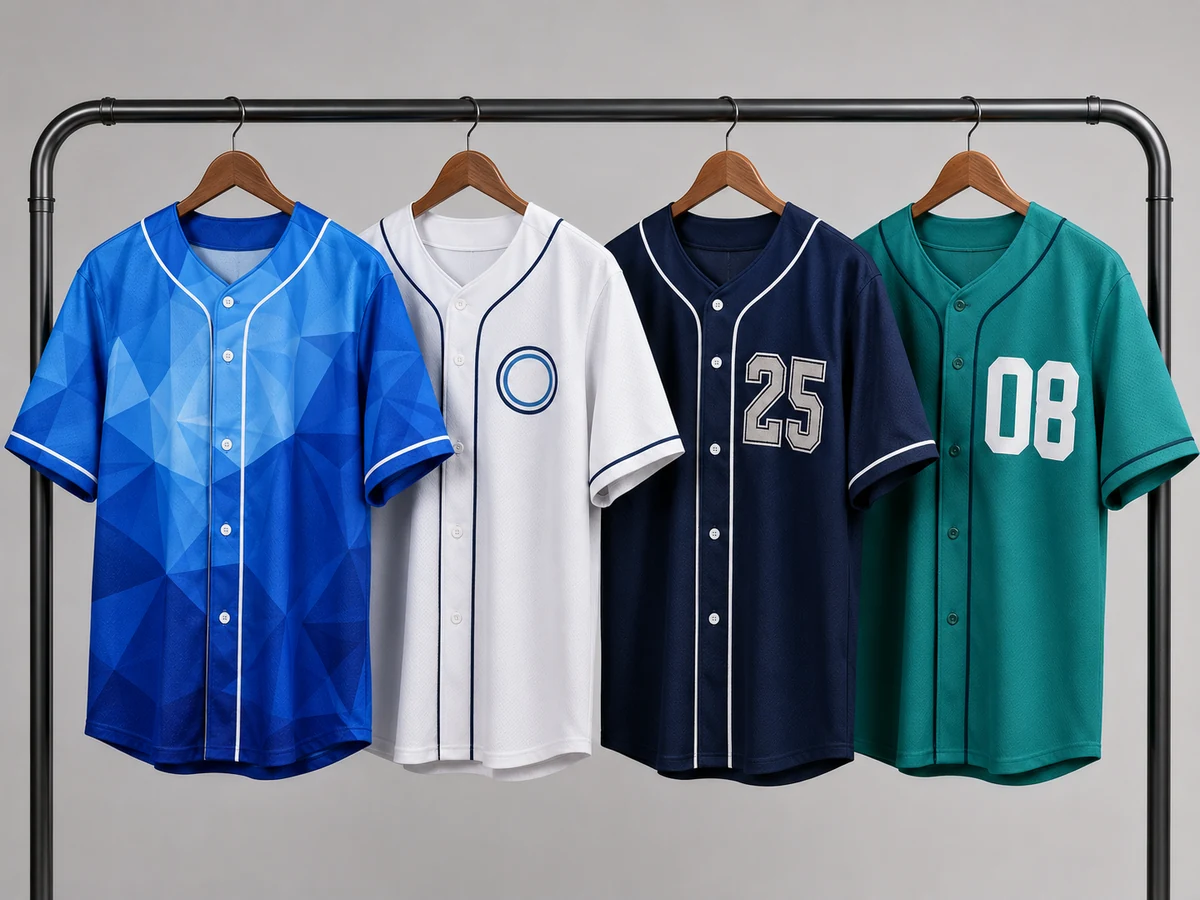
How to Wash a Baseball Jersey Without Damaging Logos, Names or Numbers
A baseball jersey has to survive more than one kind of wear. Game use exposes it to sweat, body oils, dust, grass, clay and repeated movement. Laundry then adds water, detergent, friction, spinning and heat. If the jersey also carries a team logo, player name, number, sponsor mark, sleeve patch or custom label, the wrong care routine can damage the decoration before the base fabric is worn out.
For a player washing one jersey, the solution is a careful routine. For a school, club, academy, distributor or uniform dealer, the larger challenge is consistency: every player, parent or equipment manager should receive instructions that match the fabric and decoration method used in the order. This guide explains how to wash a baseball jersey safely, how care changes by logo method and how buyers can turn those instructions into a repeatable teamwear policy.
Important: Always follow the permanent care label first. The label is specific to the complete garment—including fabric, trim, buttons and decoration—while this article provides conservative general guidance.
Quick Answer
To wash a baseball jersey without damaging logos, names or numbers, read the care label, repair loose parts, fasten the buttons, turn the jersey inside out and place it in a mesh laundry bag when extra protection is needed. Wash it separately or with similar lightweight colors in cold water on a gentle, low-spin cycle using a small, appropriate amount of mild detergent. Avoid chlorine bleach and fabric softener unless the care label specifically permits them. Remove the jersey promptly, reshape it and air-dry it away from strong direct heat. Do not iron directly over printed, transferred or appliquéd decoration.
Nike’s published sports-jersey guidance similarly recommends checking the label, turning the garment inside out, using cold water and a gentle cycle, avoiding fabric softener and air-drying rather than applying dryer heat. adidas also advises checking the label, using mild detergent and avoiding direct ironing over logos or mesh on its performance apparel. These principles are a sound starting point, but the sewn-in label remains the controlling instruction for a specific jersey.
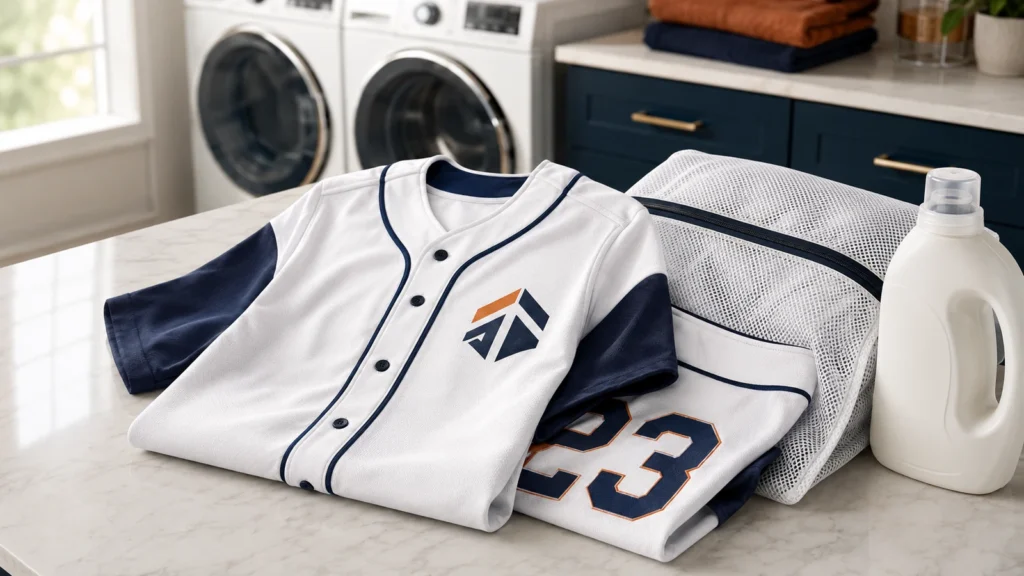
Prepare the jersey, detergent and protective mesh bag before starting the wash.
Build Wash Testing Into a Baseball Jersey Order
Team buyers should record the jersey fabric, button and trim construction, decoration method, care-label wording, intended wash frequency, colorfastness expectations, sample wash-test procedure, roster, and repeat-order requirements. Approve a production-intent sample after washing it under the planned team-care process.
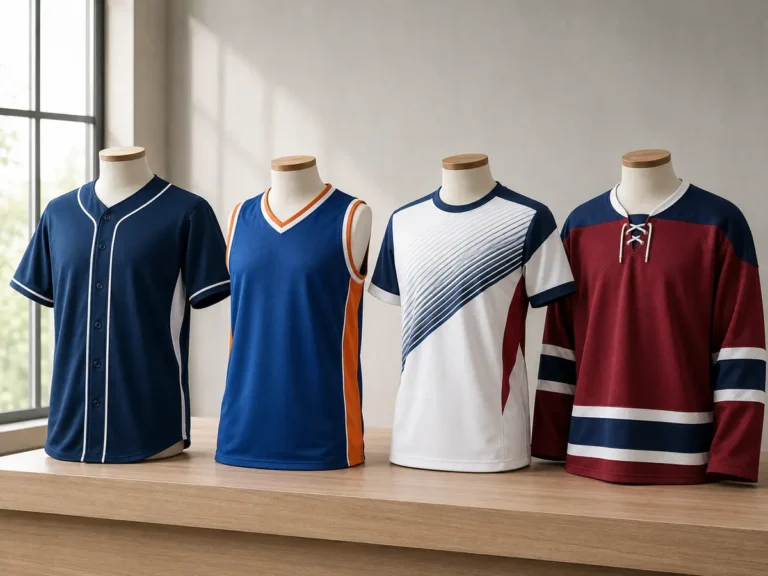
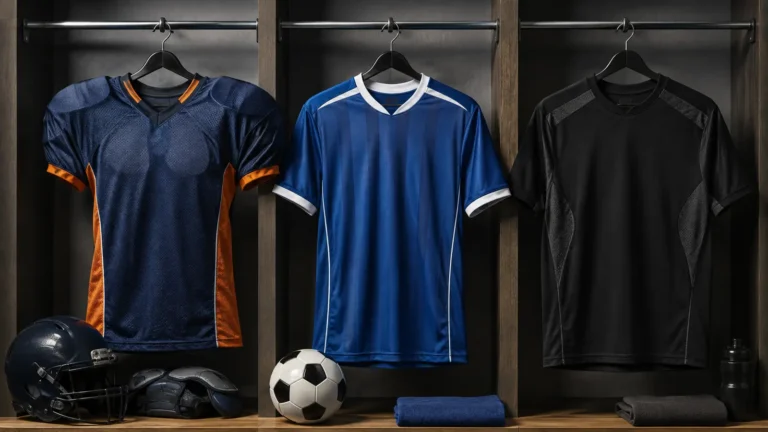
Compare custom baseball jerseys and complete baseball uniform packages, then request a baseball jersey quotation with your artwork and roster.
The Safe Baseball Jersey Washing Process at a Glance
| Stage | Recommended action | What it protects | Main mistake to avoid |
|---|---|---|---|
| Inspect | Read the care label; check buttons, seams and decoration | The complete garment | Using a generic routine that conflicts with the label |
| Sort | Separate darks, lights, lint producers and rough hardware | Color and surface finish | Washing with towels, denim, zippers or hook-and-loop closures |
| Pretreat | Blot stains with a compatible product on an inconspicuous area first | Fabric and decoration | Scrubbing aggressively across a logo or number |
| Prepare | Fasten buttons, turn inside out and use a mesh bag if useful | Names, numbers, patches and piping | Leaving exposed graphics to rub against the drum |
| Wash | Cold water, gentle cycle, low spin, mild detergent | Shape, color and applied graphics | Hot water, heavy agitation or excess detergent |
| Dry | Remove promptly, reshape and air-dry | Adhesives, print surfaces and fit | High dryer heat or ironing directly over decoration |
| Store | Make sure the jersey is fully dry; hang or fold without sharp creases | Odor control and graphic condition | Packing it damp or folding through a thick patch |
The key idea is to control four sources of damage: heat, friction, harsh chemistry and mechanical stress. A cold, gentle wash reduces all four, while inside-out washing shields the decorated face from repeated contact with the machine and other garments.
Why Logos, Names and Numbers Can Be Damaged in Laundry
Baseball jerseys are often made from polyester mesh, interlock or another synthetic performance knit. The body fabric may tolerate repeated washing, but the decoration can behave differently because it may sit on the surface, use adhesive, contain several layers or rely on thread and backing.
Heat can affect applied decoration
Heat-transfer films, some screen-print systems and appliqué assemblies can include heat-sensitive layers. Repeated high-temperature washing, tumble drying or direct ironing can contribute to lifting edges, cracking, distortion or unwanted gloss. Even when a decoration remains attached, excessive heat may affect the surrounding knit or cause a difference in shrinkage between components.
Friction wears exposed surfaces
During a normal cycle, a jersey rubs against the drum and the other items in the load. Rough cotton towels, denim, open zippers and hook-and-loop fasteners increase surface abrasion. An exposed number can crease against itself, and raised embroidery or tackle twill can catch on hardware. Turning the jersey inside out and avoiding overloaded machines reduces that contact.
Strong chemicals may change color or finish
Bleach, concentrated stain removers and incompatible laundry additives can alter color, attack fibers or affect a print surface. The risk is not identical for every jersey, so a blanket statement that one additive is always safe would be misleading. Check the care label and the detergent or stain-treatment instructions, then test an inconspicuous area when compatibility is uncertain.
Heavy agitation stresses seams and attachments
Loose buttons, already-lifted transfer edges and damaged stitches may deteriorate during washing. A pre-wash inspection is therefore part of cleaning, not a separate maintenance task. Repairing a small problem before the cycle is usually easier than replacing a detached number afterward.
Step 1: Read the Care Label Before Washing
The care label has priority because it should account for the garment as a complete product. The U.S. Federal Trade Commission explains that care instructions must consider washing, bleaching, drying, ironing and necessary warnings. Its business guidance also states that non-detachable components such as trim must be considered when preparing instructions.
For a baseball jersey, look for:
- whether machine washing or hand washing is specified;
- permitted water temperature;
- bleach restrictions;
- tumble-dry, line-dry or flat-dry instructions;
- ironing restrictions;
- warnings such as washing separately or with like colors; and
- any special note about closing fasteners or removing detachable parts.
If the label has become unreadable, contact the seller or uniform program manager and identify the order, fabric and decoration method. Do not guess that a previous team’s care instructions apply simply because the jersey looks similar.
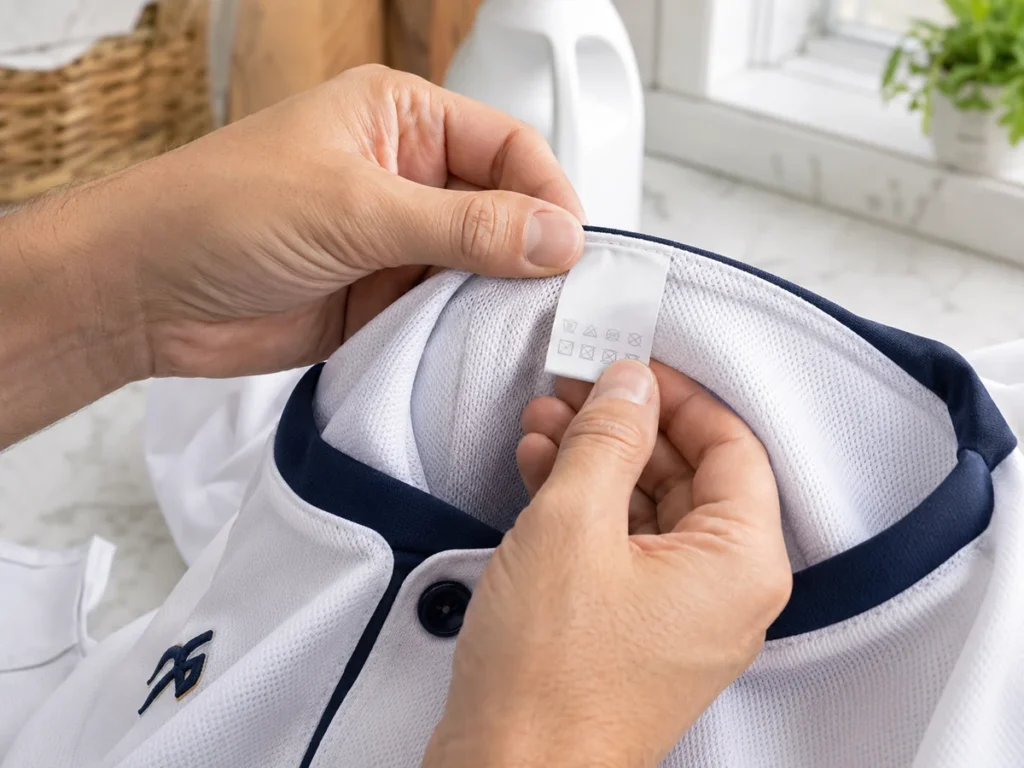
The permanent label should govern the washing and drying method for the complete jersey.
Step 2: Inspect and Sort the Jersey
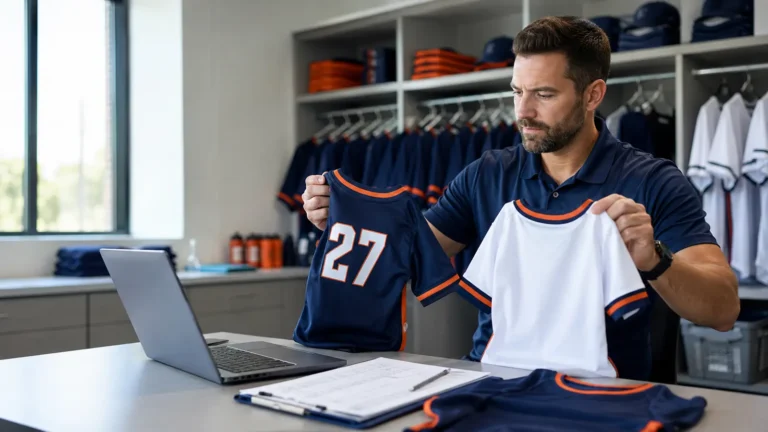
Before treating stains, look at the front placket, buttons, piping, underarm seams, hem, sleeve patches, name, number and logo. Note any lifting edge, loose thread, cracked print or partially detached patch. Do not trim structural threads or pull at a lifted area. Set a damaged jersey aside for repair.
Then sort the laundry. Keep dark, bright and light colors in compatible groups, especially during early washes. Avoid mixing jerseys with towels or fleece that can release lint, and avoid loads containing exposed zippers, metal hardware or hook-and-loop closures. Wash very muddy garments separately after removing loose soil.
For a team batch, sorting by both color and decoration method is useful. A set of fully sublimated jerseys may have a different approved care specification from a small group with stitched appliqué, even if all items use polyester.
Step 3: Pretreat Dirt, Grass, Clay and Sweat Carefully
Stain treatment should target the stained fabric without turning the logo into the scrubbing surface.
- Allow wet clay or mud to dry when appropriate, then gently remove loose particles with a soft brush or cloth.
- Blot the area from the outside toward the center. Do not spread the soil.
- Apply a small amount of care-label-compatible mild detergent or stain treatment to an inconspicuous area first.
- Work on the plain fabric around the stain with fingers or a soft white cloth. Avoid hard brushing over prints, transfers, twill edges and embroidery.
- Allow only the contact time recommended by the product manufacturer.
- Rinse or wash as directed. Do not let an unapproved chemical dry on the jersey.
For blood, start with cold water because heat can make protein stains harder to remove. For colored clay, grass or unknown stains, avoid improvising mixtures that combine several household chemicals. A treatment appropriate for white baseball pants may not be suitable for a decorated jersey.
If a stain overlaps a logo, name or number, use the least aggressive method permitted by the label and seek professional advice for a high-value or irreplaceable garment. Permanent discoloration is preferable to destroying an entire decoration through harsh scrubbing.
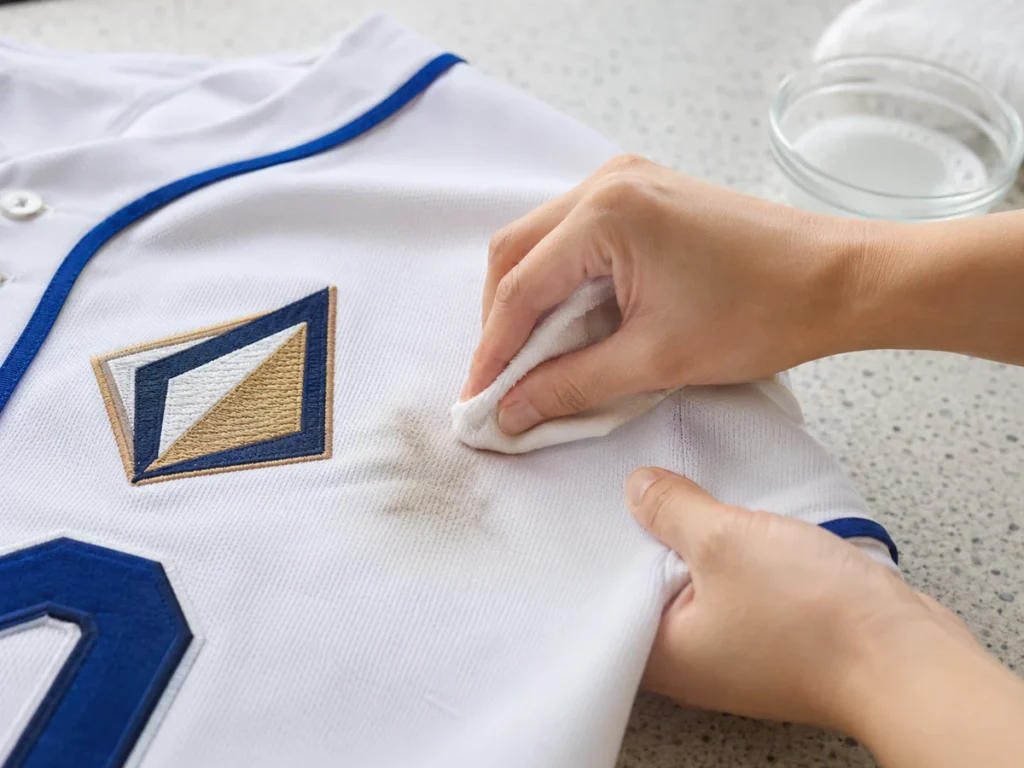
Blot the fabric and keep aggressive brushing away from raised or applied decoration.
Step 4: Turn the Jersey Inside Out and Reduce Friction
Fasten the baseball jersey’s buttons unless its care instructions say otherwise. This helps the placket retain its alignment and reduces loose hardware movement. Close any permitted zipper, remove detachable accessories and place small washable parts in their own mesh bag.
Turn the jersey fully inside out. Smooth the sleeves and body rather than leaving the garment twisted. The reverse side of the name and number should face outward, while the visible decorated face is protected inside the garment.
A large mesh laundry bag adds another layer of friction control, especially for:
- stitched tackle twill;
- raised embroidery;
- several sleeve patches;
- an older jersey with sound but delicate graphics;
- a small mixed load; or
- a team item that cannot easily be replaced.
The bag should be large enough for the jersey to move and rinse. Compressing it into a small bag creates folds and may prevent effective cleaning.
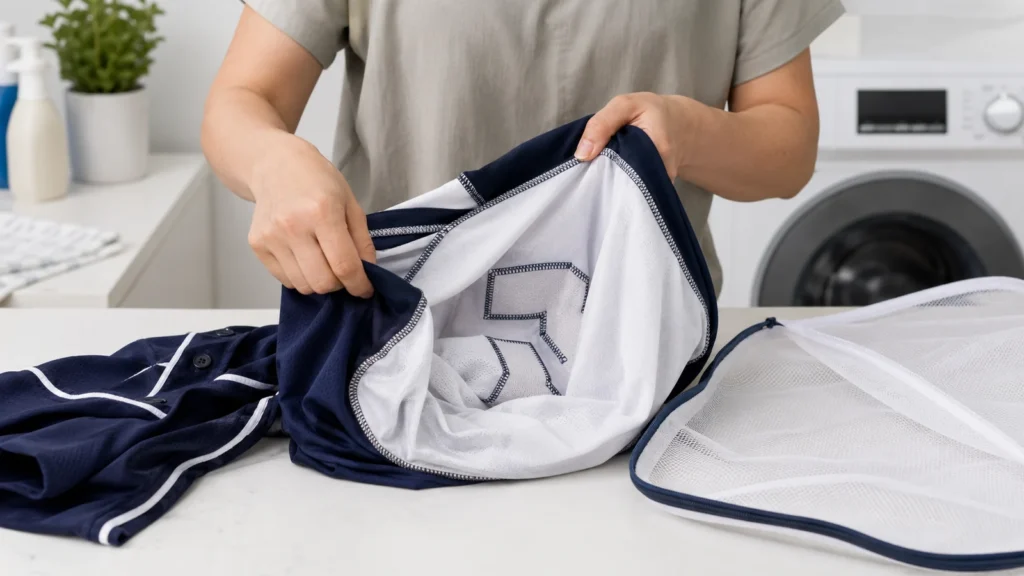
Inside-out washing reduces direct abrasion on the visible side of the decoration.
Step 5: Choose the Right Machine Settings
If the label permits machine washing, a conservative default is cold water, a gentle or delicate cycle and low spin. Select the label’s stated temperature when it differs. Use a washer large enough for the garments to circulate and rinse; do not pack a whole team’s uniforms into one overfilled drum.
Use mild detergent that is compatible with the fabric, color and machine type. More detergent is not automatically cleaner. Excess product can be difficult to rinse from densely loaded performance fabric and may contribute to residue or retained odor. Measure according to the detergent instructions, washer type, load size and local water conditions.
Do not add chlorine bleach or fabric softener unless the jersey’s instructions permit it. Many performance-apparel care guides advise avoiding fabric softener. If odor persists, first check for overloading, delayed drying, too much detergent, poor rinsing or storage while damp rather than immediately adding stronger chemistry.
Recommended machine setup
| Setting | Conservative starting point | Why it helps | When to change it |
|---|---|---|---|
| Water | Cold | Limits heat exposure and helps protect many colors and applied graphics | Follow a different temperature on the care label |
| Cycle | Gentle or delicate | Reduces agitation and garment-to-garment friction | Use hand washing if required by the label |
| Spin | Low | Reduces stretching and hard creasing | Follow machine and label guidance |
| Load | Small to medium; similar lightweight items | Gives room for circulation and rinsing | Split a large team batch into more loads |
| Detergent | Mild, correctly measured | Cleans without unnecessary concentration | Use only compatible specialty treatment when justified |
| Additives | None by default | Avoids unverified chemical interaction | Use only when the label and product directions permit |
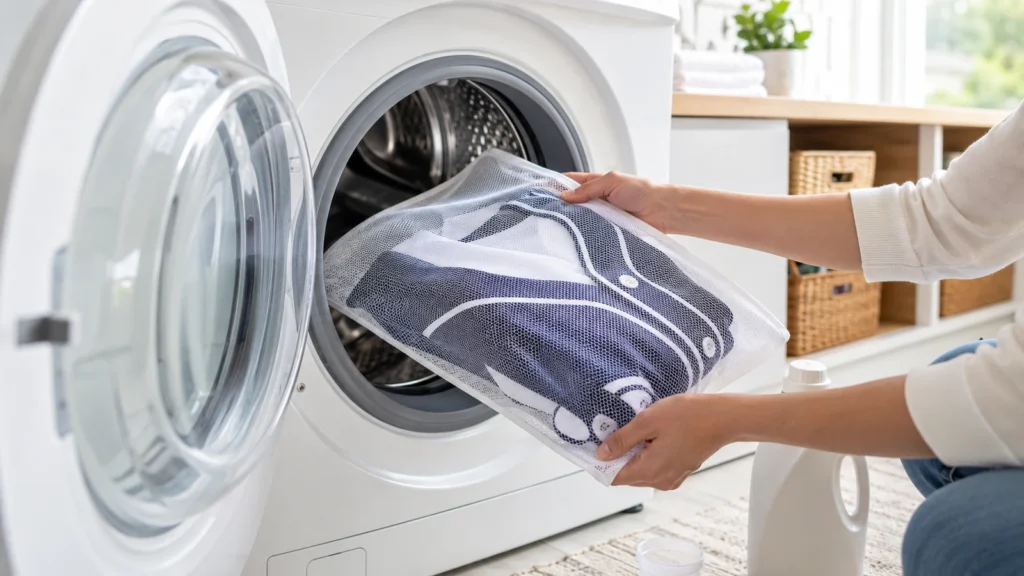
Use a roomy mesh bag, a compatible detergent and a cycle that matches the sewn care label.
How Washing Changes by Decoration Method
The safest routine is determined by the most sensitive component, not just the polyester body. Buyers should confirm the construction with their supplier instead of identifying it only by appearance.
| Decoration method | How it is constructed | Main laundry risk | Conservative care emphasis |
|---|---|---|---|
| Sublimation | Dye is transferred into suitable synthetic fabric rather than added as a thick surface layer | Fabric damage, color transfer from other garments or heat effects on trims | Follow label; wash with compatible colors; avoid harsh chemistry |
| Embroidery | Thread is stitched through the fabric, often with backing | Snagging, abrasion, thread damage or distortion | Turn inside out; use a mesh bag; avoid rough mixed loads |
| Tackle twill or appliqué | Cut fabric layers are stitched and may also use bonding materials | Edge lifting, catching, creasing and layer distortion | Low agitation; roomy load; air-dry; do not iron directly |
| Screen printing | Ink layer is deposited on the surface | Abrasion, cracking, sticking or heat-related change | Inside out; low friction; avoid high heat |
| Heat transfer | Film or transfer is bonded to the surface | Edge lifting, cracking, gloss change or adhesive stress | Cold gentle wash when label permits; air-dry; no direct iron |
| Woven or rubber-style patch | A separate patch is stitched or bonded to the garment | Edge wear, deformation or bond failure | Confirm attachment method; protect in a mesh bag; keep heat low |
Sublimation is often selected for complex team graphics because the colored design does not form a heavy film on top of the fabric. That does not make the entire jersey indestructible: buttons, labels, piping, thread and any added patch still need to be considered.
Embroidery and tackle twill are physically raised. They can tolerate normal wear when properly constructed, but their exposed edges and threads benefit from lower friction. Heat-transfer and screen-printed elements require particular attention to heat and surface rubbing.
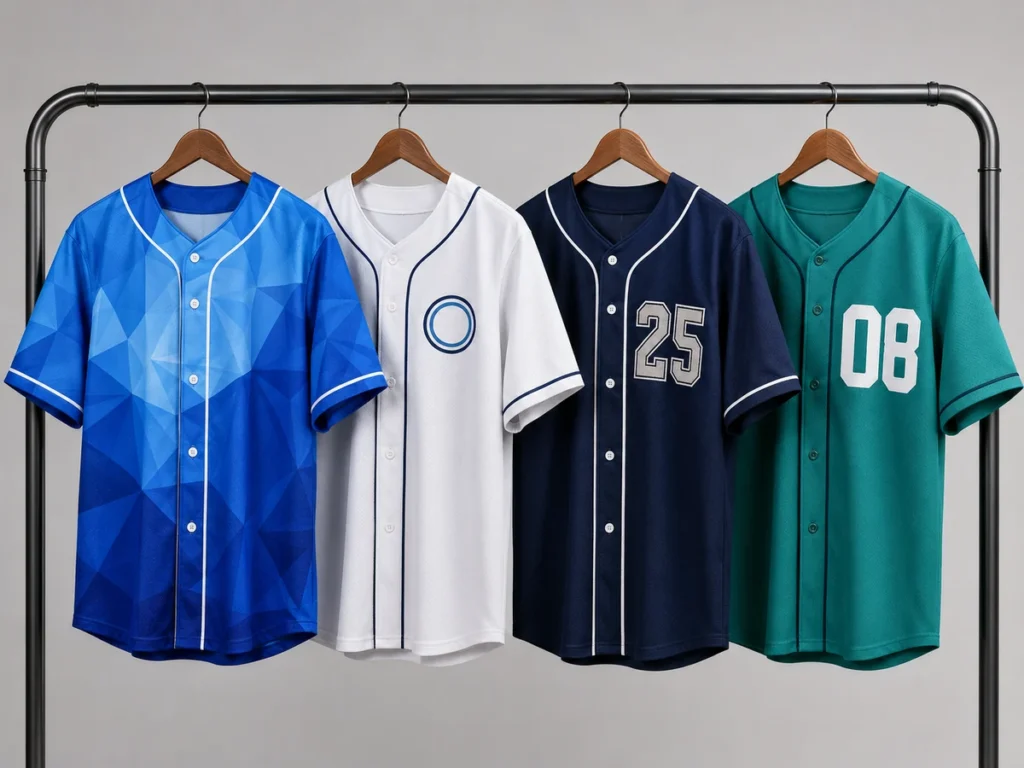
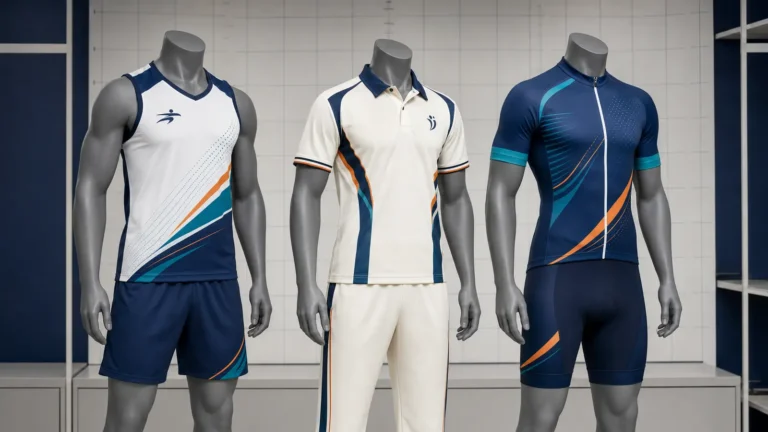
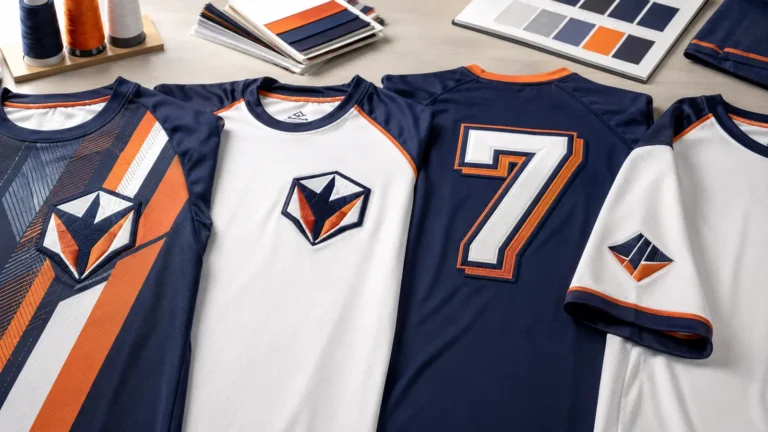
Sublimation, embroidery, stitched appliqué and surface transfers present different care risks.
When Hand Washing Is the Better Choice
Hand washing is appropriate when the care label requires it, when a jersey has delicate attachments or when a valuable older garment needs minimal mechanical stress. It is not automatically safer if the jersey is twisted, scrubbed or soaked in an unsuitable chemical.
Use a clean basin with the temperature specified on the label. Dissolve a small amount of compatible mild detergent in the water before adding the jersey. Turn the garment inside out, immerse it and gently move the water through the fabric. Press stained plain fabric between your fingers, but do not scrub across graphics. Rinse until the water is clear and the detergent is removed.
Support the wet jersey with both hands. Do not lift it by the collar, a sleeve or a number, and do not wring it. Press out water gently, or roll the jersey in a clean colorfast towel if the care instructions allow. Then reshape it for drying.
Step 6: Air-Dry Without Distorting the Jersey
Drying is where a correct wash can still be undone. Nike’s jersey-care guide advises avoiding the dryer because heat can damage letters, numbers and other details over time. For many customized jerseys, air-drying is the cautious choice when the care label permits it.
Remove the jersey promptly after washing. Do not leave it compressed in the drum. Support the wet fabric, smooth the placket, align the seams and reshape the body and sleeves. Lay it flat on a clean drying rack or hang it on a broad, smooth hanger if the label permits hanging. Keep thick decoration flat and avoid sharp folds through transfers or appliqué.
Dry in a ventilated area away from radiators, hair dryers and other concentrated heat. Avoid prolonged harsh sunlight, which may affect some colors. Make sure the jersey is dry on both sides before storage.
If the label explicitly allows tumble drying, use only the permitted setting. A general internet recommendation cannot override the tested care instruction for the specific garment.
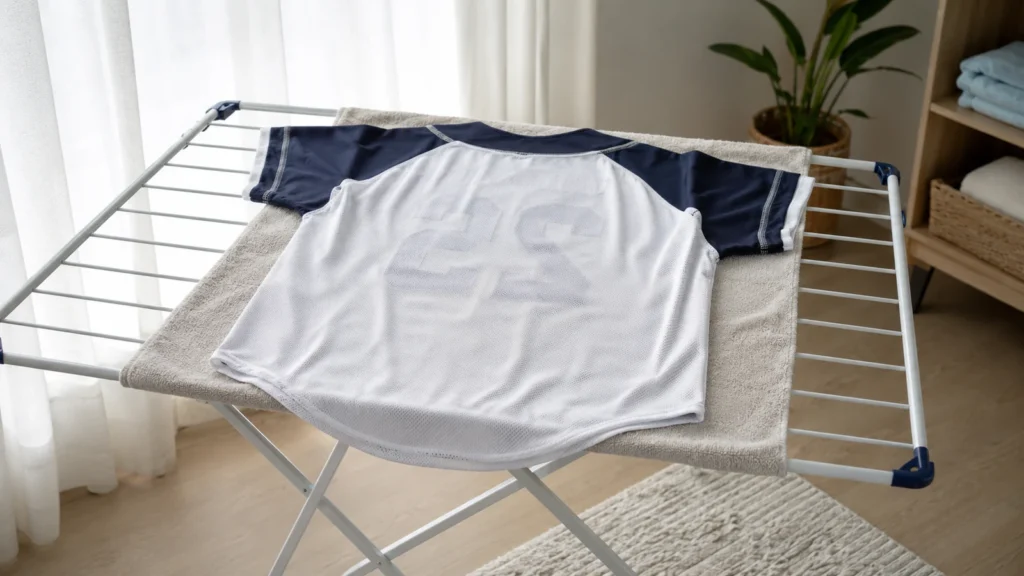
Reshape the jersey and dry it with airflow rather than concentrated heat.
Ironing, Steaming and Removing Wrinkles
Do not place a hot iron directly on a logo, printed name, number, transfer, patch or synthetic mesh panel. Heat and pressure can flatten embroidery, melt or gloss a film, distort fabric or transfer color to the iron.
First check whether ironing is allowed at all. If a cool iron is permitted, keep the jersey inside out, use the specified temperature and place a clean pressing cloth between the iron and the fabric. Work around decorated areas. A garment steamer also introduces heat and moisture, so it should not be assumed safe without care guidance.
Most minor wrinkles relax when a jersey is reshaped immediately after washing and dried with adequate space. Good handling reduces the need for corrective heat.
A Repeatable Team Laundry SOP
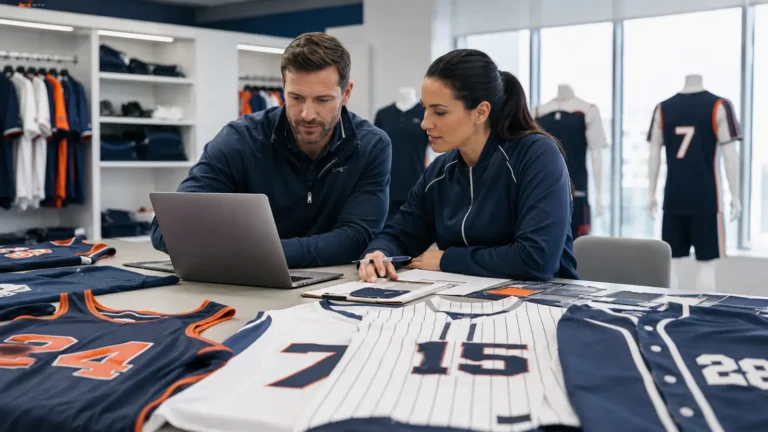
Schools, clubs and academies should not rely on each player remembering a different social-media tip. A one-page standard operating procedure can reduce preventable damage and simplify replacement decisions.
Intake and inspection
Assign a batch or player identifier that does not require writing on the jersey. Record serious stains, missing buttons, torn seams and lifted decoration before washing. Photograph unusual damage when responsibility or repair approval must be tracked.
Sorting
Separate by care instruction, color family, soil level and decoration sensitivity. Remove belts, protective gear and other items that are not approved for the same wash. Count jerseys before and after the process.
Washing
Use documented washer settings, detergent dose and maximum load size. Equipment staff should not substitute products without approval. Keep a simple wash log for recurring problems such as residue, odor or color transfer.
Drying and return
Reshape and air-dry in a clean, ventilated zone. Inspect the jersey again when dry. Return it only after confirming that the number, name, patches, buttons and seams remain secure.
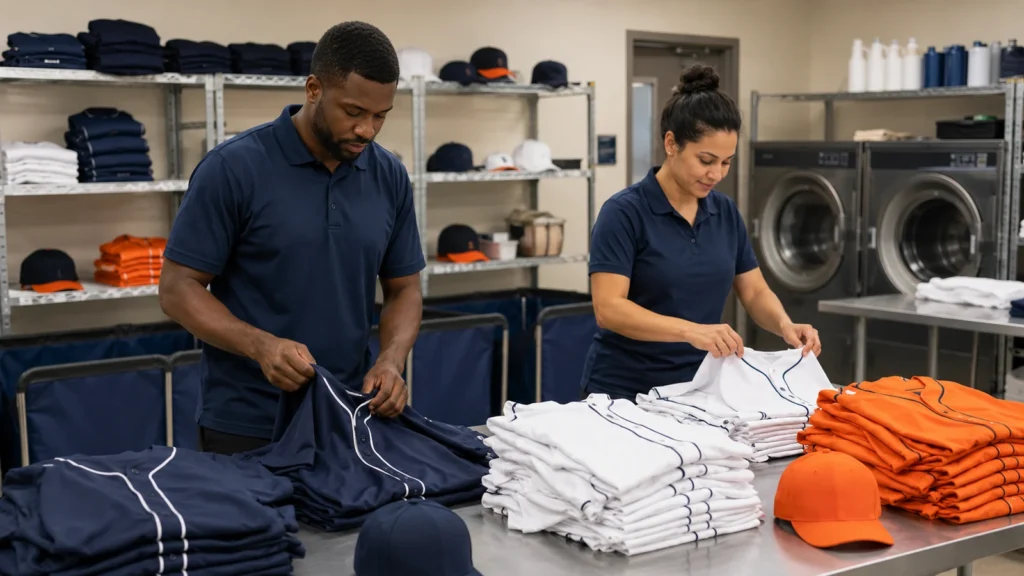
A documented sorting and inspection process makes care more consistent across a full roster.
Quality Control and Care Instructions for Bulk Buyers
Care performance begins before the jerseys reach the team. When approving a custom order, buyers should request a sample that represents the final fabric, color, trim, decoration, labels and packaging. A plain fabric swatch does not test the interaction of every component.
Include these points in sample approval:
- fabric composition, knit and weight;
- exact decoration method for each logo, name and number;
- attachment method for patches and appliqué;
- button and piping construction;
- permanent care-label wording and placement;
- wash and drying method communicated to end users;
- appearance before and after any agreed supplier testing;
- acceptable tolerance for puckering, edge lift, color change and dimension change; and
- packaging method after the garment is fully dry.
The FTC’s U.S. guidance makes care labeling a product-level issue: washing, drying, ironing, bleaching and warnings must be considered, and instructions need to account for non-detachable components. Buyers selling in several markets should confirm applicable local labeling requirements with qualified compliance resources; do not assume one symbol system or label format satisfies every destination.
For repeat orders, keep the approved artwork, color references, fabric specification, decoration details and care label under version control. If the decoration or substrate changes, review the care instruction again.
What to Send a Supplier for a Care-Ready Quotation
A useful quotation request gives the supplier enough information to recommend a compatible construction and identify items that need confirmation.
Send:
- jersey style and intended sport level;
- adult and youth size quantities;
- target fabric composition, weight or performance requirement;
- team colors or Pantone references;
- vector logo artwork and placement dimensions;
- roster data for names and numbers;
- preferred decoration method, or permission to recommend one;
- sleeve patches, sponsor marks, labels and hangtags;
- destination market and required label language;
- packaging requirements;
- target delivery date; and
- expected laundry environment, such as individual home care or centralized team washing.
This information helps connect visual design to practical use. A school that centrally launders 150 jerseys may need different documentation and batch consistency from a limited promotional run.
Planning a new uniform order? Share your artwork, roster, quantities, colors, fabric preference, decoration method, packaging needs and target date with JIUMU. Explore custom team jerseys or complete baseball team uniform packages before requesting a specification-based quotation.
Common Baseball Jersey Washing Mistakes
Ignoring the sewn label
General care advice is not a substitute for product-specific instructions. A label can require hand washing, prohibit an additive or specify a drying method.
Washing with towels, denim or open fasteners
Heavy, rough items increase friction and lint. Exposed zippers and hook-and-loop closures can scrape or snag jersey surfaces.
Scrubbing directly over a number
Hard brushing may abrade ink, transfer film, thread or appliqué edges. Treat the surrounding fabric gently and use only a compatible product.
Using hot water “for hygiene” without checking
Heat may conflict with the label and decoration system. Follow the tested care method and address team hygiene through a complete laundering and drying process rather than improvising temperature.
Adding extra detergent or several laundry boosters
Overdosing can make rinsing harder. Combining unverified products also makes the cause of color or surface damage difficult to identify.
Overloading the washer
An overfilled drum reduces circulation, cleaning and rinsing while increasing compression and creasing.
Tumble-drying or ironing on high heat
Concentrated heat is a common risk for transferred, printed and layered decoration. Air-dry when the label permits, and never iron directly over graphics.
Storing the jersey before it is fully dry
Damp storage encourages persistent odor and can transfer color or create deep creases. Check thick patches and folded areas before packing.
How JIUMU Supports Custom Baseball Jersey Programs
JIUMU supplies premium B2B custom teamwear, logo apparel, uniforms, hats, bags and branded merchandise for schools, sports teams, clubs, distributors, uniform dealers and private-label brands in North America and Europe.
Available capabilities include OEM and ODM development, sublimation, embroidery, screen printing, heat transfer, woven and rubber/PVC-style patches, fabric sourcing, Pantone color matching, private labels, hangtags, packaging customization, digital mockups, physical samples, bulk production, quality control and export support. Typical MOQ is 50 pieces, subject to product structure and customization.
For baseball-jersey buyers, the practical value is specification alignment. Fabric, decoration, roster personalization, label content and packaging should be reviewed as one system. JIUMU can prepare a mockup and sample for approval before bulk production, then retain confirmed specifications to support repeat-order consistency.
Frequently Asked Questions
Final Recommendation
The safest way to wash a baseball jersey is a controlled process: inspect the complete garment, follow its label, separate it from rough items, pretreat stains gently, turn it inside out, reduce heat and friction, use the correct detergent dose and air-dry when permitted. The logo method matters, but so do the base fabric, buttons, trim, labels and any added patch.
For teams and B2B buyers, care should be part of product specification and sample approval—not an afterthought printed after production. Confirm the decoration method, approve permanent care instructions and give every user the same concise routine.
Sources and Further Reading
- Federal Trade Commission — Clothes Captioning: Complying with the Care Labeling Rule
- Nike — How to Wash a Sports Jersey Properly
- adidas — CLIMACOOL Clothing Care Guidance
Request a custom baseball jersey quotation from JIUMU. Send your reference design or tech pack, roster, quantity, size breakdown, colors, logos, decoration preferences, label language, packaging and target delivery date. Visit custom team uniforms or contact JIUMU, email zhengdong@jiumugear.com, or use WhatsApp/phone +86 18507502899.