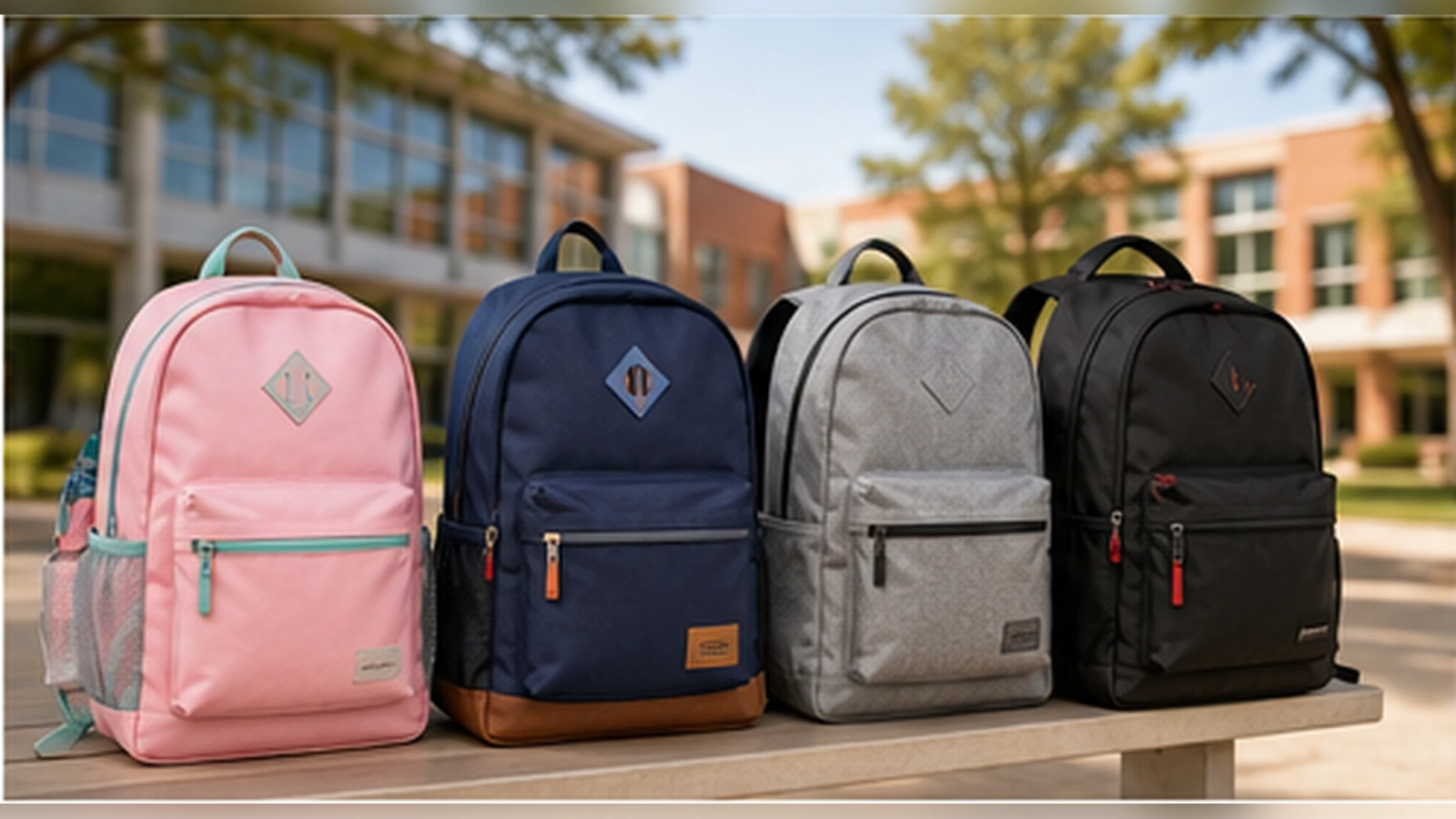
Best School Backpacks in 2026: A Complete B2B Buyer’s Guide
Buying the best school backpacks in 2026 is not simply a matter of choosing an attractive design. For schools, distributors, promotional product companies, retailers and private-label brands, the right backpack must meet several commercial requirements at the same time.
It should be comfortable enough for students to carry regularly, durable enough to survive an academic year, practical enough to organize books and devices, and suitable for the buyer’s target price point. For customized programs, it must also present school logos, team colors or brand identities consistently across a complete order.
It should be comfortable enough for students to carry regularly, durable enough to survive an academic year, practical enough to organize books and devices, and suitable for the buyer’s target price point. For customized programs, it must also present school logos, team colors or brand identities consistently across a complete order.
The best option for one buyer may not be the best option for another. An elementary school may prioritize lightweight construction and simple compartments. A high school may need padded laptop storage. A promotional campaign may focus on cost-effective logo visibility, while a premium retail brand may require custom fabrics, metal hardware, private labels and retail-ready packaging.
Quick Answer: What Are the Best School Backpacks in 2026?
The best school backpacks in 2026 are durable, age-appropriate bags with comfortable shoulder straps, reinforced stress points, practical storage and materials selected for the intended price level and market.
For everyday school use
18–25 L, padded straps, bottle pockets and reinforced stitching provide a practical starting specification.
For older students
Add a correctly sized padded laptop sleeve, stronger base construction and organized storage for devices and chargers.
For B2B programs
Approve physical materials, a production sample, logo placement, packaging and quality standards before bulk production.
- Durable polyester, nylon or Oxford fabric
- Padded and adjustable shoulder straps
- Reinforced top handle and load-bearing points
- A spacious main compartment with practical organization
- Reliable zippers and reinforced base construction
- A padded laptop compartment for older students
- Custom logo and private-label options
- Packaging organized by school, color, grade or delivery location
Why School Backpack Selection Matters for B2B Buyers
A school backpack is used more frequently and under more demanding conditions than many promotional products. It may carry textbooks, notebooks, lunch containers, sports clothing, stationery, chargers, water bottles and electronic devices.
A poorly planned backpack can create problems throughout the supply chain. Weak stitching may lead to complaints. An incorrect capacity may make the product unsuitable for the target age group. Limited logo space may reduce branding impact. A complicated structure may increase production cost without adding meaningful value.
A successful school backpack program is not necessarily the one with the most features. It is the one in which every feature supports the buyer’s actual use case.
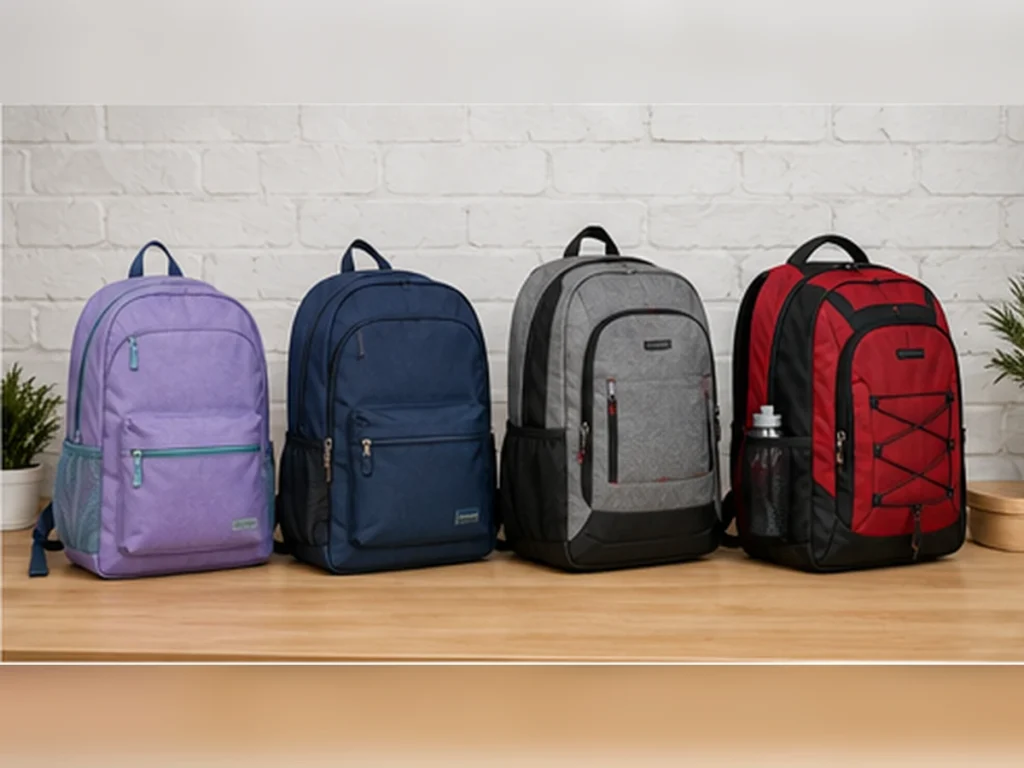
Different student groups require different backpack sizes, structures and storage features.
School Backpack Types: A B2B Comparison
| Backpack type | Best for | Recommended capacity | Important features | Typical B2B use |
|---|---|---|---|---|
| Lightweight elementary backpack | Younger students | 12–18 liters | Low weight, simple organization, easy zippers | Primary schools, children’s programs |
| Standard everyday school backpack | General student use | 18–25 liters | Reinforced straps, front pocket, bottle pockets | Schools, wholesalers, retailers |
| Laptop school backpack | Middle and high school students | 20–30 liters | Padded device sleeve, cable organization | Technology programs, secondary schools |
| Large-capacity student backpack | Heavy daily loads | 25–35 liters | Multiple compartments, reinforced base | High schools, boarding programs |
| Sports and school backpack | Students carrying athletic gear | 25–40 liters | Shoe or wet compartment, bottle storage | School teams, sports clubs |
| Promotional school backpack | Campaigns and student giveaways | 12–22 liters | Simple construction, large logo area | Charities, events, education campaigns |
| Premium private-label backpack | Retail and branded collections | 18–30 liters | Custom hardware, lining, labels and packaging | Retailers, lifestyle brands |
| Eco-positioned backpack | Sustainability-focused programs | Depends on design | Recycled or selected lower-impact materials | Schools, brands, corporate programs |
1. Best Lightweight Backpacks for Elementary Schools
Elementary school backpacks should be designed around smaller body proportions and lighter daily loads. A large adult-style backpack may look impressive in a product image, but it can be unsuitable for younger students.
The main priorities are low empty-bag weight, adjustable shoulder straps, easy-to-operate zipper pulls, a simple main compartment, a front pocket, a side water-bottle pocket and clear student-name identification. A capacity of approximately 12 to 18 liters is suitable for many younger-student programs, although the final dimensions should be based on the buyer’s actual books, folders and lunch containers.
For school-distributed bags, adding a writable name label inside the backpack can simplify ownership identification. Reflective piping or reflective accents may also be considered when visibility is part of the program specification.
2. Best Everyday Backpacks for Middle School Students
Middle school students generally need more capacity and better organization than younger students. A versatile design normally includes one large main compartment, a secondary organization compartment, a front quick-access pocket, dual side pockets, padded shoulder straps and a padded back panel.
A capacity between approximately 18 and 25 liters is a practical starting point. Buyers should not specify capacity based only on age. The dimensions of local textbooks, binders, tablets and school supplies should also be considered.
3. Best Laptop Backpacks for High School Students
Technology is central to many secondary-school programs, making device protection an important purchasing requirement. A laptop school backpack should include a padded compartment that separates the device from books and other hard objects.
Buyers should confirm the actual internal sleeve dimensions rather than relying on a general description such as “fits most laptops.” Useful features include a secure sleeve closure, padding at the bottom of the device compartment, water-resistant outer fabric, charger organization, reinforced shoulder straps and strong base construction.
Buyer’s tip: A laptop sleeve should not end directly at an unpadded bottom seam. A suspended or padded-bottom sleeve can provide additional protection when students place the backpack on the ground.
4. Best Large-Capacity Backpacks for Heavy School Loads
Some students carry multiple textbooks, sportswear, lunch containers, art materials or equipment for extracurricular programs. As capacity increases, construction becomes more important.
Look for reinforced shoulder-strap attachments, wide padded straps, strong zipper tape and sliders, a durable bottom panel, internal load distribution and bar-tack reinforcement at stress points. Capacity may range from approximately 25 to 35 liters for larger student backpacks.
5. Best School Backpacks for Sports Teams and Clubs
Students participating in school sports often need one bag for both academic and athletic use. A combined school-and-sports backpack may include a main compartment, laptop section, separate shoe compartment, wet/dry separation, bottle pockets, ventilated panels, a reinforced base and individual player identification.
This type of backpack is suitable for baseball, softball, basketball, soccer, volleyball, track and multi-sport programs. Player names, initials, numbers or team roles may be applied through embroidery, heat transfer or printed identification panels.
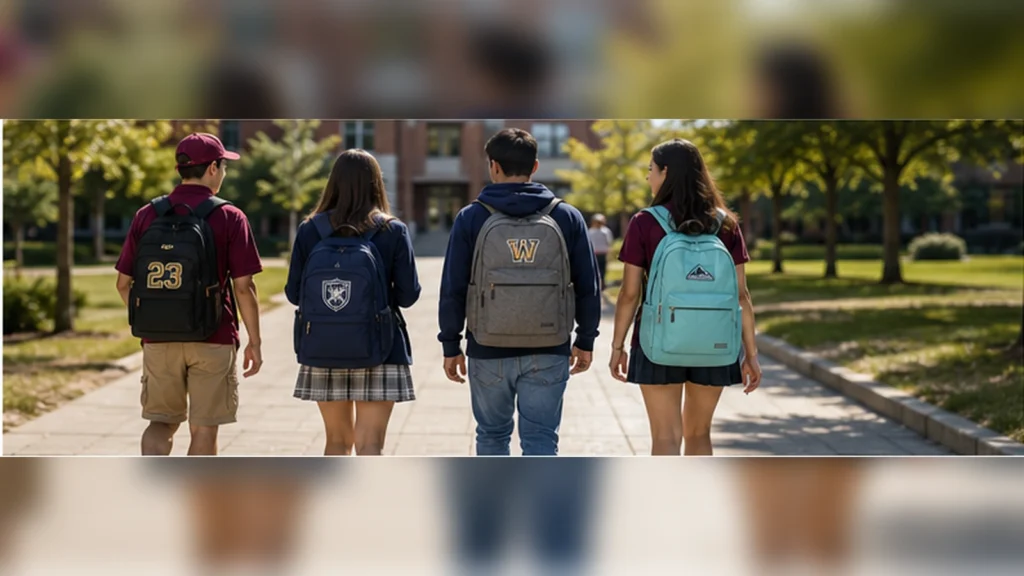
Coordinated backpacks and teamwear can create a consistent school or sports-program identity..
—— Custom School & Team Bags
Need matching school and sports backpacks?
JIUMU can develop customized backpacks with school colors, original team branding, player personalization, laptop storage, shoe compartments and distribution-ready packaging.
6. Best Promotional School Backpacks for Bulk Programs
Promotional school backpacks are commonly used for student giveaways, educational campaigns, nonprofit programs, trade events and back-to-school promotions. The objective is normally to achieve practical value and visible branding at a controlled unit cost.
A promotional backpack may use a simplified one- or two-compartment design, standard polyester fabric, screen-printed or heat-transfer logos, basic adjustable shoulder straps and simple individual packaging.
Cost control should not mean ignoring essential construction. Even an entry-level promotional backpack should have secure strap attachments, functional zippers and stitching appropriate for the expected load.
7. Best Premium Backpacks for Retail and Private-Label Brands
Private-label buyers require more product control than a buyer purchasing a standard backpack with a printed logo. A premium private-label school backpack may include an exclusive body pattern, custom fabric and lining, Pantone color matching, branded zipper pulls, custom hardware, woven labels, rubber patches, hangtags, barcodes and retail packaging.
The most effective private-label products are designed as a complete system. Exterior fabric, lining, webbing, zipper tape, hardware, thread and logo colors should be reviewed together instead of as separate elements.
8. Best Eco-Positioned School Backpacks
Schools and brands developing an environmentally positioned program may consider recycled polyester, selected recycled components, reduced packaging or longer-life construction. Sustainability claims should be based on documented material information rather than general marketing language.
Ask which component contains recycled material, what percentage is recycled, whether documentation is available, how the material affects color consistency and abrasion resistance, and whether packaging can be reduced.
How to Choose the Right School Backpack Material
Material affects appearance, durability, weight, water resistance, print performance and price. The material name alone is not enough. “Polyester” can refer to many constructions and quality levels.
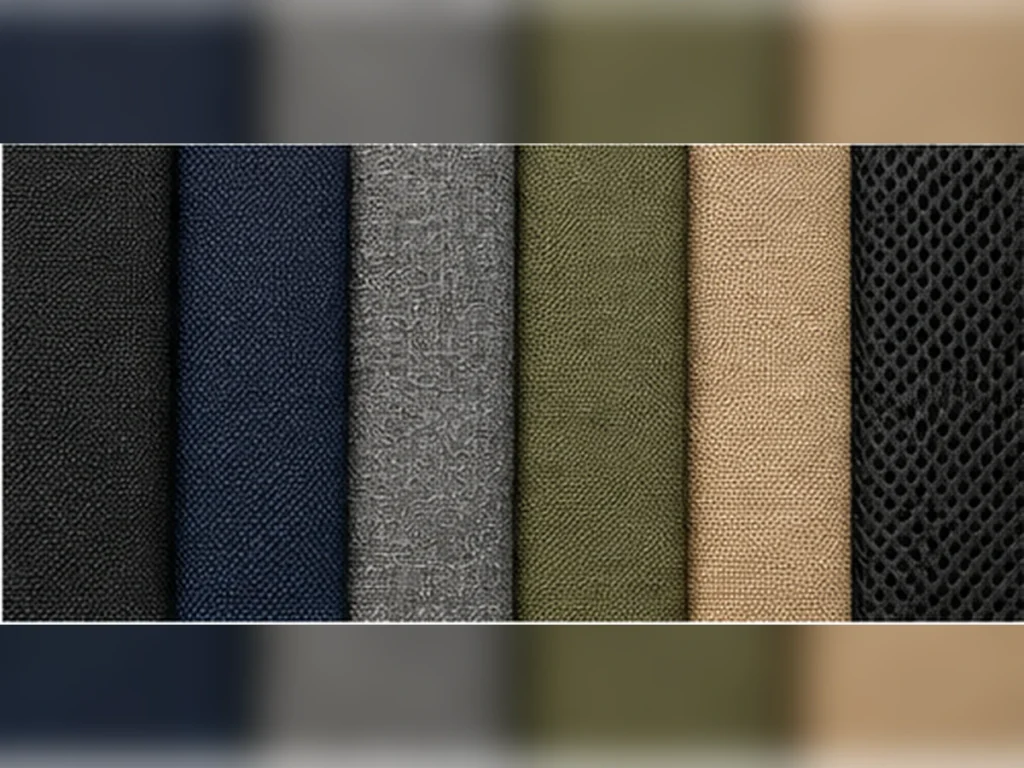
Material selection affects weight, durability, appearance, decoration and price.
| Material | Advantages | Limitations | Recommended applications |
|---|---|---|---|
| Standard polyester | Cost-effective, versatile and available in many colors | Quality varies by weight and coating | Promotional and general school backpacks |
| High-density polyester | Improved structure and durability | Higher cost than basic polyester | Daily school use and wholesale collections |
| Nylon | Lightweight, strong and premium in appearance | Usually higher cost | Premium school and laptop backpacks |
| Oxford fabric | Durable woven appearance and good structure | Can feel heavier depending on specification | School, sports and equipment backpacks |
| Ripstop fabric | Reinforced grid structure and technical appearance | Not required for every school application | Sports, outdoor and performance programs |
| Canvas | Natural or lifestyle appearance | Heavier and may require treatment | Fashion, retail and private-label collections |
| PU leather accents | Premium branding detail | Usually best used as an accent | Fashion trims, logo patches and handles |
| Mesh | Ventilation and visibility | Limited protection when used alone | Side pockets, sports panels and ventilation |
What Fabric Specification Should Buyers Request?
A complete specification may include fiber type, fabric construction, weight or density, surface texture, backing or coating, water-resistance treatment, color standard, abrasion expectation, intended decoration method, lining material and reinforcement material.
Buyers should request material swatches before approving a customized backpack. Colors can look different under factory lighting, office lighting, daylight and photography conditions. Pantone references should be treated as targets while recognizing that fabric texture and coating affect the final appearance.
What Size School Backpack Should You Order?
Backpack dimensions should be determined by actual contents, not only by the student’s age. Before confirming dimensions, prepare a load test using the actual or equivalent books, folders, devices and bottles.
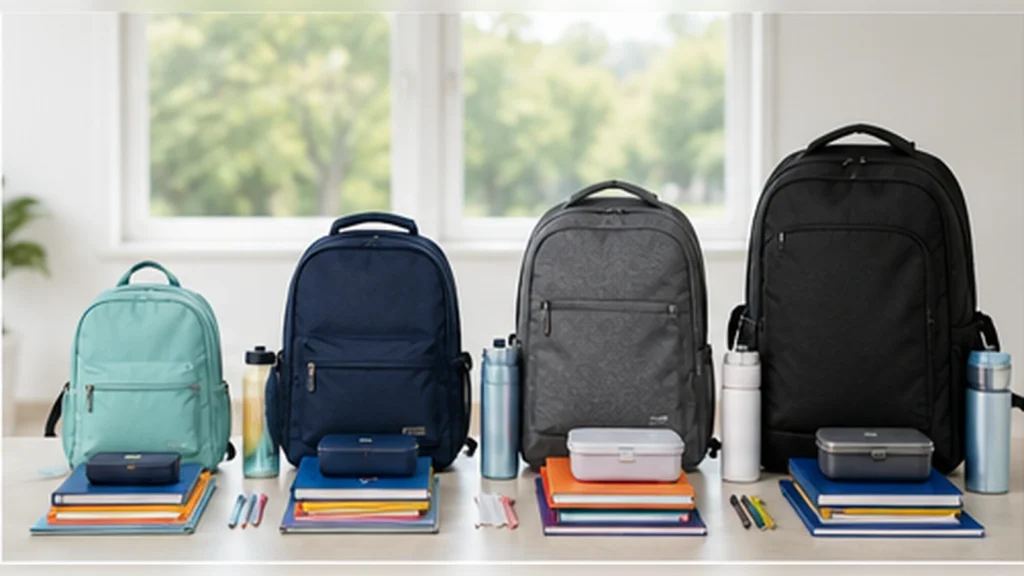
Backpack capacity should be selected according to the student’s actual books, devices and daily supplies..
| User group | Suggested starting capacity | Typical contents |
|---|---|---|
| Young elementary students | 12–18 liters | Small folders, books, lunch and bottle |
| Older elementary students | 15–22 liters | Folders, notebooks, lunch and stationery |
| Middle school students | 18–25 liters | Books, binders, tablet and personal items |
| High school students | 20–30 liters | Laptop, textbooks, charger and lunch |
| Sports students | 25–40 liters | School items, uniform, shoes and bottle |
| University or commuter students | 22–35 liters | Laptop, documents, books and daily essentials |
Important Measurement Points
Ask the manufacturer to provide overall height, width and depth; main-compartment dimensions; laptop-sleeve dimensions; bottle-pocket width; shoulder-strap length; top-handle drop; estimated product weight; packaging dimensions; and carton dimensions.
Capacity is not the only measurement that matters. A heavily padded backpack may provide more structure but also increase empty-bag weight. Measure both usable space and finished product weight.
Comfort and Ergonomic Features
Padded Shoulder Straps
Shoulder straps should provide sufficient width and padding for the intended load. The upper and lower attachment areas should be reinforced because they are critical stress points.
Adjustable Strap Length
The adjustment range should suit the target age group. Buyers ordering for both younger and older students may require two sizes or a carefully tested adjustment range.
Padded Back Panel
Back padding can improve comfort and prevent hard contents from pressing directly against the user. Breathable mesh may be added for a more technical appearance and improved airflow.
Balanced Compartment Design
Heavy items should remain close to the back panel whenever possible. A laptop sleeve positioned against the back normally supports better load distribution than a device compartment located at the front.
Lightweight Construction
More padding is not always better. Buyers should balance cushioning with empty-bag weight, price and the age of the intended student.
Construction Details That Determine Backpack Durability
Two backpacks made from the same outer fabric can perform very differently because of their internal construction, stitching and hardware.
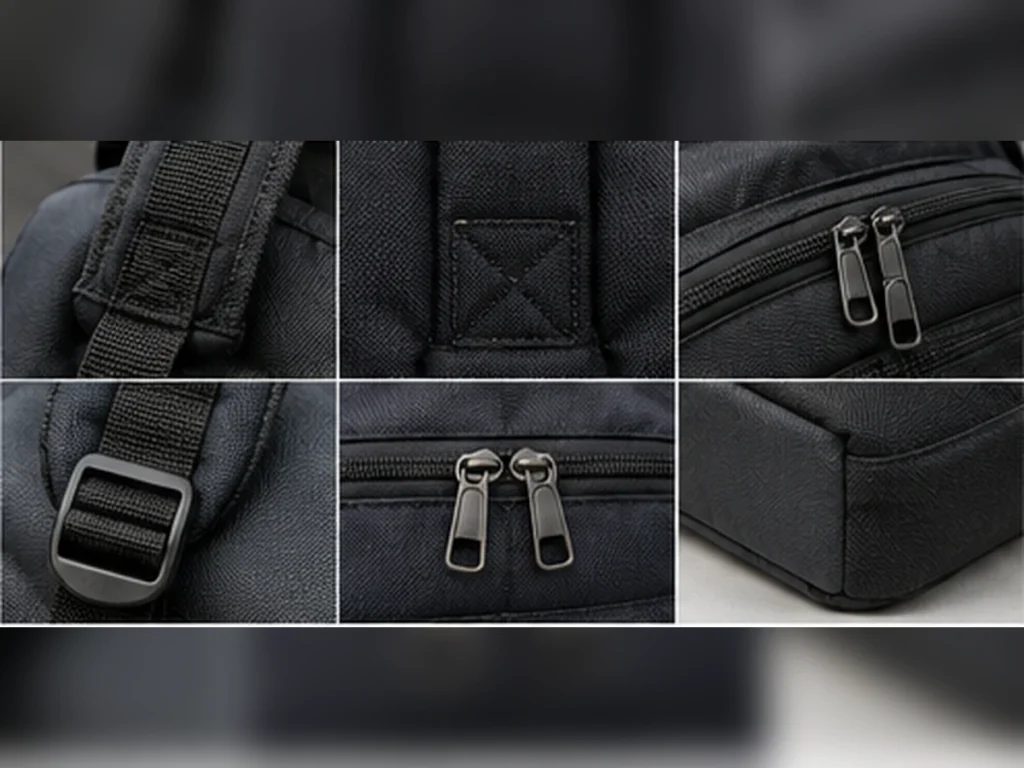
Reinforcement at load-bearing points is an important part of backpack durability…
Reinforced Stress Points
Important locations include upper and lower shoulder-strap attachments, top-handle attachments, zipper ends, side-pocket openings, compression-strap anchors and internal laptop-sleeve attachments. Reinforcement may use extra fabric layers, webbing, bar-tack stitching or reinforced seams.
Zippers
Evaluate zipper size, slider quality, puller design, tape strength, opening smoothness, corner performance and resistance to fabric catching. A zipper that works on an empty sample should also be tested when the backpack is fully loaded.
Base Construction and Lining
The bottom of a school backpack is frequently placed on floors, benches, buses and outdoor surfaces. A reinforced base can improve performance. Lining provides a cleaner interior, protects internal seams and supports a more premium appearance.
Customization Options for School Backpacks
Customization allows a standard bag to become part of a school identity, merchandise collection or private-label product line.
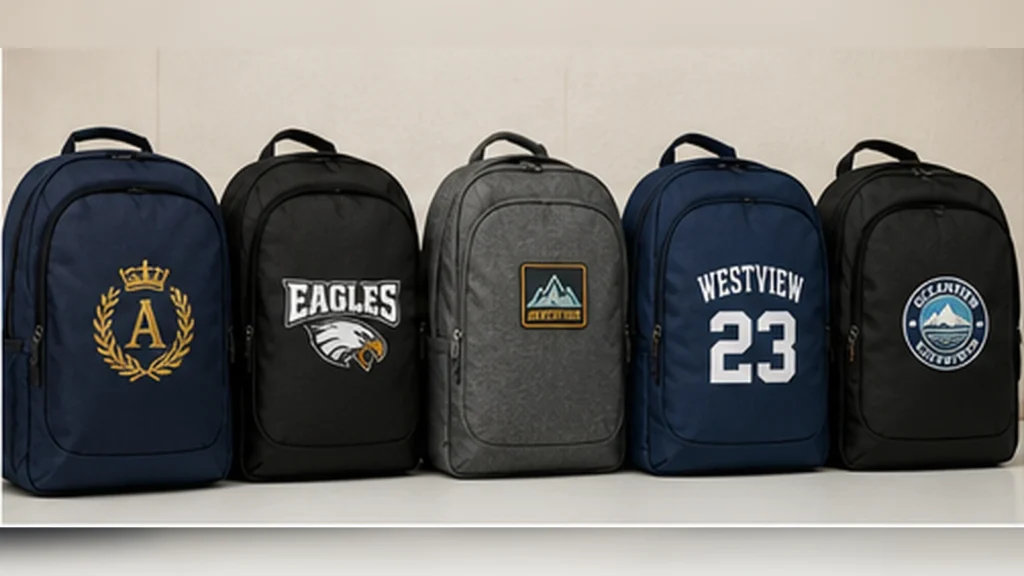
Logo methods should be selected according to the artwork, material and desired brand position.
Embroidery
Embroidery creates a textured and durable appearance. It works well for school crests, initials and premium brand marks. Buyers should review stitch count, thread colors, logo size, backing, placement and fabric stability.
Screen Printing
Screen printing is often suitable for simple logos and larger bulk orders. It performs well on flat panels and can provide cost-effective branding.
Heat Transfer
Heat transfer is useful for multicolor artwork, player names, student numbers and smaller order variations. Buyers should define the desired finish, flexibility and durability.
Sublimation Printing
Sublimation is suitable for compatible polyester materials and designs requiring all-over graphics, gradients or complex color patterns. Artwork should be developed around pattern pieces, seams and print alignment.
Custom Patches and Labels
Woven patches can reproduce detailed logos. Rubber or PVC patches create a modern dimensional appearance. Leather or faux-leather labels are suitable for premium, heritage or fashion-oriented collections.
Private-Label Development
A complete private-label program may include an exclusive backpack pattern, custom fabric, custom lining, branded zipper pulls, woven labels, hangtags, retail barcodes and custom packaging. Every approved component should be documented in a final specification sheet.
—— OEM / ODM Development
Develop a custom school backpack collection with JIUMU
JIUMU supports schools, sports organizations, wholesalers, promotional buyers and private-label brands with structure development, material sourcing, custom logos, individual personalization, packaging and bulk production.
School Backpack Sourcing Trends B2B Buyers Should Watch in 2026
School backpack purchasing in 2026 is being shaped by a combination of device use, more specialized student programs, demand for coordinated merchandise and greater scrutiny of material and supply-chain claims. Buyers do not need to follow every trend, but they should understand which developments affect specification, cost and long-term product relevance.
More Device-Specific Storage
Generic laptop sleeves are increasingly being replaced by storage designed around actual school-issued devices. Professional buyers are asking for defined sleeve dimensions, suspended bottoms, soft interior surfaces and separate space for chargers, cables or power banks. For programs using both tablets and laptops, a divided device compartment may provide better protection than one oversized pocket.
Cleaner, More Versatile Exterior Design
Many schools and retail buyers are favoring clean backpack bodies that can work across classrooms, commuting, clubs and casual daily use. Neutral navy, black, grey, olive and muted accent colors remain practical for repeat orders because they coordinate easily with uniforms and team apparel. Visual interest can be added through controlled piping, zipper colors, lining, patches or small contrast panels rather than complex all-over decoration.
Modular Branding for Multi-School Programs
Distributors and school groups often want one core backpack structure that can be customized for multiple campuses, houses, grades or teams. A standardized bag body with interchangeable logo patches, embroidery files, color panels or name fields can simplify sampling and production management. This approach may also improve repeat-order consistency because the core material and construction remain unchanged.
Distribution-Ready Personalization
Personalized names and numbers are no longer only a sports-team feature. Schools increasingly use individual identification for student kits, technology programs, clubs and graduation packages. The operational challenge is not the decoration alone; it is data accuracy and packaging. Buyers should define the spreadsheet format, proofing process, placement standard and packing method before production begins.
Evidence-Based Material Claims
Buyers are more cautious about broad claims such as “eco-friendly,” “waterproof” or “heavy duty.” A stronger B2B specification explains what the claim means: the recycled-content percentage, fabric coating, water-resistance test, abrasion requirement or reinforcement method. Clear specifications reduce the risk of marketing language exceeding the product’s documented performance.
Coordinated School Merchandise Programs
Backpacks are increasingly purchased as part of a larger branded program rather than as an isolated item. Schools, sports organizations and distributors may coordinate the same logo, color system and packaging across backpacks, caps, hoodies, jackets, jerseys and travel bags. A shared supplier can help manage artwork, Pantone targets and packaging standards, although each product category should still have its own approved sample and specification.
What Determines the Cost of a Custom School Backpack?
A realistic quotation depends on the complete construction, not only the exterior appearance. Two backpacks with similar product photos may have substantially different costs because of fabric density, internal reinforcement, lining, padding, zipper quality, decoration and packing requirements.
| Cost factor | How it affects the product | How buyers can manage cost |
|---|---|---|
| Fabric specification | Higher-density fabrics, special coatings and documented recycled materials normally increase material cost. | Match material performance to the intended product life and price position. |
| Backpack structure | More panels, compartments, curved seams and internal dividers increase cutting and sewing labor. | Remove pockets that do not support a real user need. |
| Padding and reinforcement | Foam, base panels, bar tacks and extra webbing improve structure and load performance. | Concentrate reinforcement at actual stress points rather than adding padding everywhere. |
| Zippers and hardware | Branded, waterproof-style, metal or customized components can create a premium result but raise cost. | Use upgraded hardware where the user interacts most frequently and standardize secondary components. |
| Logo method | Embroidery stitch count, patch tooling, print colors and individual personalization affect setup and unit cost. | Simplify overly detailed artwork and consolidate logo variations where possible. |
| Order quantity and colors | Many small color runs reduce material and production efficiency. | Use a core body color with smaller customizable accents for multi-school programs. |
| Packaging | Retail boxes, hangtags, inserts, barcodes and sorting by student or location add materials and labor. | Choose packaging based on the actual distribution workflow, not appearance alone. |
| Testing and inspection | Laboratory tests, third-party inspections and detailed reporting add cost but may be required by the buyer or market. | Define required tests before sampling so they can be included in the original quotation. |
For a useful price comparison, ask shortlisted suppliers to quote the same specification and clearly identify any substitutions. A lower quotation is not directly comparable when it removes lining, reduces fabric density, changes the zipper, simplifies reinforcement or excludes packaging. A specification-based comparison is more reliable than comparing product photographs and unit prices alone.
Quality-Control Checklist for Bulk School Backpack Orders
Quality control should begin before production, not only after the backpacks are completed.
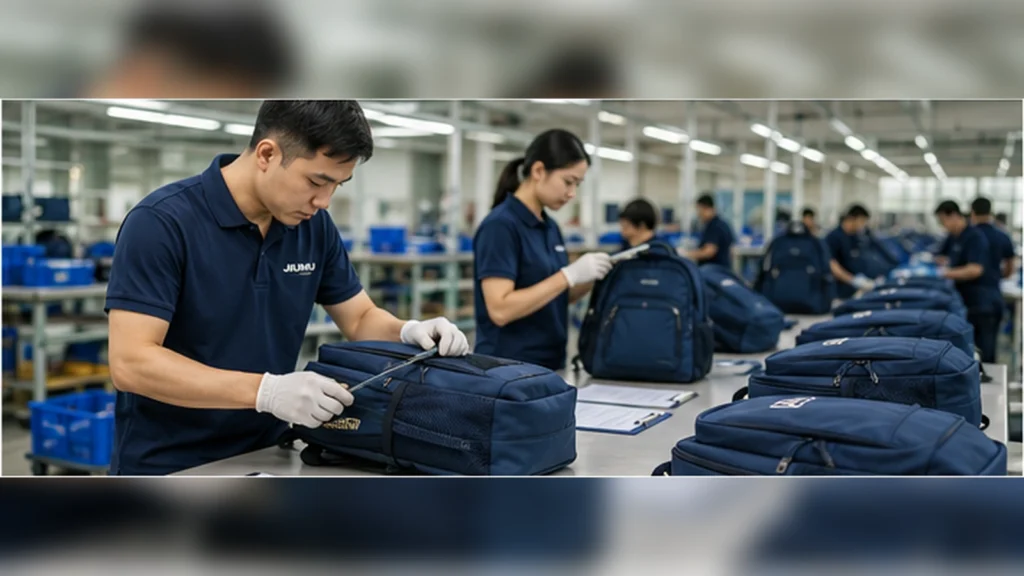
Product dimensions, stitching, zippers, logos and packaging should be checked before shipment.
Pre-Production Approval
- Final product dimensions and capacity
- Exterior fabric, lining and reinforcement
- Color references and approved swatches
- Logo artwork, size, method and position
- Zippers, buckles, webbing and hardware
- Padding, labels, packaging and carton markings
During-Production Inspection
- Cutting accuracy and color consistency
- Stitch quality and reinforcement
- Logo consistency and pocket alignment
- Zipper and hardware installation
- Workmanship cleanliness
Final Inspection
- Overall appearance and dimensions
- Logo position and color
- Zipper function and strap adjustment
- Seam strength, loose threads, stains and marks
- Packaging accuracy, quantity and carton labels
Depending on the program, buyers may also define static load testing, strap pull testing, zipper cycle testing, seam-strength evaluation, abrasion testing, water-resistance testing, colorfastness evaluation or packaging drop testing.
How to Plan a Bulk School Backpack Order
Define the buyer profile
Identify whether the customer is a school, district, distributor, retailer, nonprofit, uniform dealer, promotional company or private-label brand.
Define the target user
Specify age, grade, expected load, device dimensions, sports requirements and usage environment.
Establish the price position
Choose promotional, entry-level, standard, upgraded, premium or private-label positioning.
Prepare artwork
Provide vector logos, Pantone references, dimensions, placement, label artwork and packaging files.
Confirm variations
List quantities by color, school, grade, team, logo, personalization and delivery destination.
Approve a physical sample
Review fabric, weight, padding, capacity, zipper performance and the real logo result.
Plan distribution packaging
Pack by student, grade, team, school, color, retail SKU or delivery location.
Document repeat-order standards
Retain approved swatches, artwork, specifications and packaging details for future orders.
Questions to Ask a School Backpack Manufacturer
Product Development
- Can the supplier modify an existing structure or develop from a technical drawing?
- Are digital mockups and physical samples available?
- Can custom fabrics, colors, hardware and linings be sourced?
Manufacturing and Quality
- Which backpack styles does the factory produce regularly?
- How are shoulder straps and handles reinforced?
- How is quality checked during and after production?
- Can the supplier maintain colors and construction across repeat orders?
Commercial Terms
- What is the minimum order quantity per design and color?
- What is the sample cost and production lead time?
- What packaging is included in the quotation?
- What information is required for an accurate quotation?
Common Buying Mistakes to Avoid
Choosing Only by Unit Price
The lowest quotation may use lighter fabric, less padding, simpler reinforcement or lower-cost hardware. Compare complete specifications rather than prices alone.
Using One Size for Every Student
A backpack designed for high school students may be too large for younger children. Consider separate sizes or carefully test a mid-size design.
Ignoring Actual Device Dimensions
A “laptop backpack” does not automatically fit every school-issued device. Confirm complete dimensions, including the protective case.
Approving Color Only on a Screen
Digital displays do not represent fabric colors consistently. Review physical swatches for brand-sensitive projects.
Adding Too Many Compartments
Extra pockets can increase labor and material use while reducing usable interior space. Include only storage that supports the intended contents.
Skipping Realistic Load Testing
An empty backpack may appear well made but behave differently when filled. Test the sample using realistic books, devices, bottles and sports equipment.
Why Work With JIUMU for Custom School Backpacks?
Established in 2010, JIUMU provides B2B custom teamwear, logo apparel and bag solutions for schools, sports teams, distributors, promotional product companies and private-label brands across international markets.
For school backpack projects, JIUMU can support standard and custom structures, fabric and color selection, embroidery, screen printing, heat transfer, custom patches, laptop storage, equipment compartments, names and numbers, private labels, hangtags, organized packaging, sample development, bulk production, quality control and export support.
JIUMU is particularly suitable for buyers who want school backpacks coordinated with custom caps, jerseys, team jackets, hoodies and complete school or sports merchandise packages. Working with one supplier can help maintain more consistent logos, colors, packaging and order organization.
Frequently Asked Questions
Final Buying Recommendation
The best school backpacks in 2026 are not defined by one material, one size or one popular design. The best product is the backpack that matches the student group, daily load, branding objective, budget and distribution plan.
- Define the target user and actual contents.
- Select capacity and dimensions using real load tests.
- Compare complete material and construction specifications.
- Review shoulder straps, zippers, seams and reinforcement.
- Include only compartments students actually need.
- Match the logo method to the fabric and brand position.
- Approve physical materials and a finished sample.
- Document every component before production.
- Plan packaging and distribution in advance.
- Choose a supplier capable of repeat-order consistency and quality control.
—— Start Your Project
Develop Your Custom School Backpack Program With JIUMU
Send JIUMU your reference image or product concept, quantity, dimensions, logo artwork, colors, compartment requirements, packaging needs and target delivery schedule.